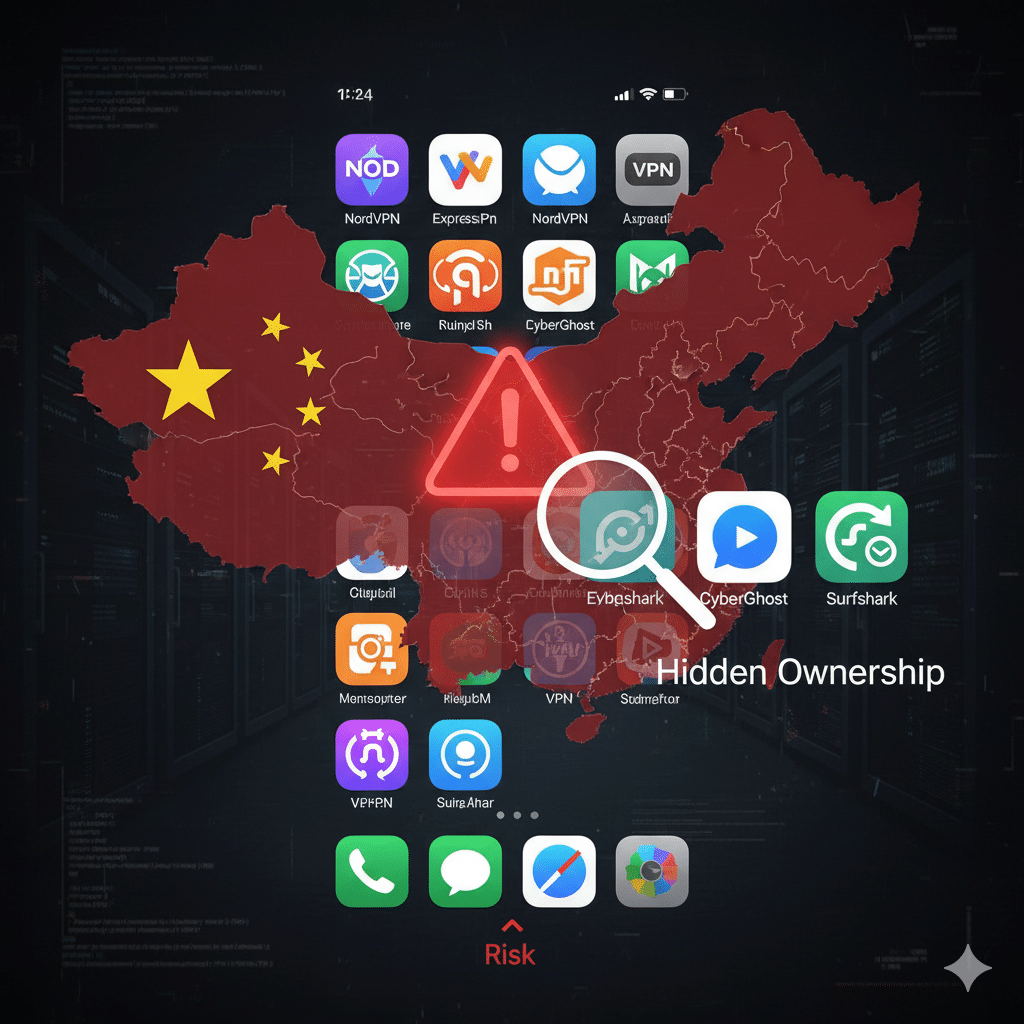

New research and investigative reporting have exposed a worrying pattern: dozens of widely downloaded free Android VPN apps are covertly linked to a handful of China-connected companies or incorporate SDKs and domains that route data to Chinese infrastructure(Free & Popular Android VPN Apps). These apps — many boasting millions of downloads combined — position themselves as privacy tools while raising questions about data handling, opaque ownership and legal exposure under Chinese laws.
What investigators found
A team of researchers (including groups at Arizona State University and Citizen Lab) identified three families of Android VPN apps that together have hundreds of millions of Google Play downloads, and several of those apps show covert technical links to China-based infrastructure. The study flagged insecure implementations and shared backends that suggest a small number of companies control many seemingly independent apps.
The Tech Transparency Project (TTP) followed up with its own probe and singled out at least 17 free VPN apps with undisclosed ties to China — including apps that trace back to a Shanghai-based firm with alleged military links (Qihoo 360 appears in several investigations). Many of these apps remain available on Google Play and Apple’s App Store despite the findings.
Why this matters for users
VPNs are commonly used to protect privacy, secure connections on public Wi-Fi, and bypass geo-restrictions. But when a VPN app is effectively controlled by entities in jurisdictions with expansive data-access laws, the trust model collapses: “no-logs” promises become difficult to verify, and user metadata or even traffic may be accessible to third parties. Investigators warn that bundled SDKs, mislabeled ownership and weak encryption multiply the risk of data leakage or covert surveillance.
Security analysts emphasise practical concerns: many free VPNs rely on ad networks or obscure monetization strategies, which increases data collection incentives. Several flagged apps also request broad device permissions that are unnecessary for basic tunnelling, raising red flags about over-collection.
Data points and scale
HelpNetSecurity and affiliated researchers reported that the three linked app families together account for 700 million+ downloads on Google Play — an enormous user base at risk if the technical links are confirmed.
TTP’s report highlighted 17+ free VPN apps with hidden Chinese ownership and pointed to at least five apps allegedly tied to Qihoo 360, a firm blacklisted by U.S. authorities.
Comparitech’s analysis found traces of Russian and Chinese SDKs in a sample of free VPNs, illustrating that foreign infrastructure fingerprints are a recurring pattern.
Expert reaction & implications for policy
Privacy advocates and researchers call these findings “a wake-up call” for app-store vetting, supply-chain transparency and user education. The debate now spans platform responsibility (should Google/Apple ban or better flag such apps?), national security (are certain VPNs a data-exfiltration risk?), and consumer protection (how to spot risky free VPNs?). Several commentators have urged app stores to require clear ownership disclosure and stronger technical audits for apps that handle network traffic.
What users should do right now
Avoid unknown free VPNs with millions of downloads but little corporate transparency.
Check publisher details and privacy policies — if ownership is obscured behind shell companies, treat the app with caution.
Prefer audited, reputable providers (look for independent security audits and clear jurisdictional claims).
Watch permissions: a VPN should not need access to SMS, contacts or unnecessary device APIs.
Use paid, trusted services where a clear business model reduces the incentive to monetize user data.
Conclusion
The discovery that many popular free VPN apps are tied—directly or indirectly—to Chinese-linked companies is a serious privacy story with global reach. While not every flagged app will necessarily be malicious, the scale of the downloads and the repeated pattern of opaque ownership and risky technical practices mean users and regulators must treat free VPNs with increased skepticism. For anyone who uses a VPN to protect sensitive data, the safest path remains choosing well-known, audited providers and avoiding “too good to be true” free apps that may expose rather than protect you.