
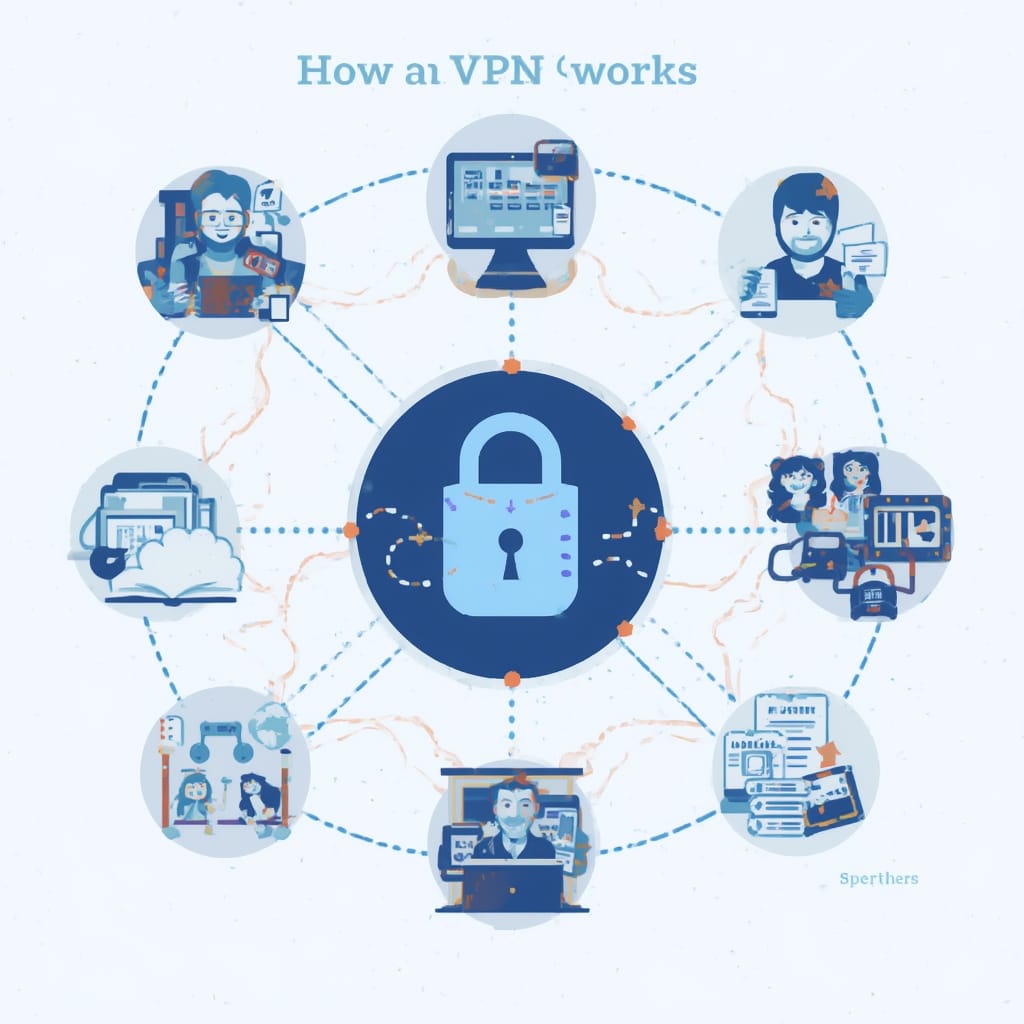

Introduction: Why Knowing how a vpn works Matters Today
In 2025 the internet landscape is more fragmented than ever. From streaming services locked to the United States, to online banking portals that block traffic from abroad, a solid grasp of how a vpn works is essential for anyone who wants unrestricted, secure access.
At its core, a VPN creates a tunnel between your device and a remote server. This tunnel shields your data from prying eyes, whether you are browsing from a coffee shop in London, a co‑working space in Toronto, or a hotel in Sydney. Understanding the VPN encryption process helps you choose the right protocol for your location and your threat model.
Many newcomers think a VPN is just a “privacy button.” In reality, the how a vpn works involves authentication, key exchange, and packet encapsulation. The VPN encryption process varies between OpenVPN, WireGuard, and IKEv2, each offering different speed‑security trade‑offs for users in the United Kingdom, Germany, or Brazil.
For readers who prefer visual explanations, the Reddit community has a popular “Explain Like I’m Five” thread that breaks down the basics of how a VPN works in plain language. It’s a great starting point before diving into the technical details of the VPN encryption process.
Finally, the CNET guide to VPNs offers a concise overview of why how a vpn works is crucial for protecting personal data on public Wi‑Fi, especially for travelers moving between the US, Mexico, and the Philippines.
Step‑by‑Step Instructions: Setting Up Your VPN Correctly
1. Choose the Right Protocol Based on Your GEO Location
If you are streaming Netflix US content from Canada, you’ll benefit from the speed of WireGuard. Knowing how a vpn works lets you select a protocol that balances latency and security. The VPN encryption process for WireGuard uses modern cryptography (ChaCha20‑Poly1305) that is lightweight enough for mobile devices in Australia.
2. Register with a Trusted Provider
When signing up, verify that the provider logs zero traffic and offers servers in the regions you need – e.g., a server in New York for US‑only services, a server in Frankfurt for EU compliance. Understanding how a vpn works ensures you ask the right questions about no‑log policies and jurisdiction.
3. Install the VPN App on Your Device
For iPhone users, download the official app from the App Store and follow the quick start guide. Detailed guidance can be found at how to set up a VPN on iPhone. During installation, you’ll be prompted to allow a VPN configuration profile – this is where the VPN encryption process is actually applied to your traffic.
4. Configure the Connection Manually (Optional)
Advanced users may prefer manual configuration. On iOS, go to Settings → General → VPN → Add Configuration. Choose the protocol (e.g., IKEv2) and input the server address, remote ID, and authentication credentials. Knowing how a vpn works helps you understand why each field matters – the server address points to the tunnel endpoint, while the remote ID validates the server’s certificate during the VPN encryption process.
5. Test the Connection
After connecting, verify your new IP address using a geo‑IP lookup tool. Ensure the location matches the server you selected (e.g., Tokyo for Japanese services). A successful test proves the how a vpn works chain – from authentication to data encapsulation – is functioning.
6. Optimize for Specific Use Cases
Sports bettors often need ultra‑low latency. If you are in the UK and want to place bets on a European platform, check the dedicated article can you use a VPN to sports bet for server recommendations. Knowing the VPN encryption process helps you choose between UDP (faster) and TCP (more reliable) tunnels.
7. Set Up on Android Devices
Android users can follow the step‑by‑step guide at how to set up a VPN on Android. After installing the app, enable “Always-on VPN” in the settings to ensure every app, including gaming and banking, routes through the tunnel. This reinforces the how a vpn works principle that no traffic should leak.
8. Verify No DNS Leaks
Run a DNS leak test after connecting. If you see your ISP’s DNS servers, you may need to enable “DNS leak protection” in the app. This step directly ties to the VPN encryption process, which should encapsulate DNS queries inside the encrypted tunnel.
9. Enable Kill Switch
The kill switch cuts internet access if the VPN drops, preserving privacy. Most modern clients have this feature turned on by default. Understanding how a vpn works clarifies why the kill switch is a safety net for the VPN encryption process – it prevents unencrypted data from leaking.
Tips for Maximizing Security and Performance
Use Multi‑Hop Servers for Extra Anonymity
Multi‑hop routes send your traffic through two or more VPN servers. This adds layers to the how a vpn works chain, making it harder for adversaries to trace the origin. The VPN encryption process is performed at each hop, providing double encryption.
Choose Servers Near Your Physical Location for Speed
Latency grows with distance. If you are in New Zealand, a nearby Auckland server will outperform a distant Los Angeles node. Knowing how a vpn works helps you balance speed versus geo‑restriction bypass.
Keep Your App Updated
Developers regularly patch vulnerabilities in the VPN encryption process. An outdated client may revert to weaker ciphers, weakening the entire tunnel.
Consider Split Tunneling for Bandwidth‑Heavy Apps
Route only specific apps (e.g., banking) through the VPN while letting video streaming go directly to the ISP. This reduces load on the how a vpn works tunnel and improves overall performance without compromising security for critical traffic.
Test Different Protocols Quarterly
Network conditions change. Periodically switch between WireGuard, OpenVPN UDP, and IKEv2 to see which gives the best VPN encryption process speed for your region (e.g., US, EU, Southeast Asia).
Beware of Free VPN Myths
While some free services claim they can replace paid options, they often log data or inject ads. For a quick check on iPhone, see free VPN for iPhone. However, remember that a truly private how a vpn works requires robust encryption, which most reputable free apps lack.
Alternative Methods to Achieve the Same Goals
Smart DNS Services
Smart DNS only reroutes DNS queries, allowing geo‑unblocking without full encryption. If you only need to watch US Netflix from Germany, this can be faster. However, it does not protect against ISP monitoring because the VPN encryption process is absent.
Tor Browser for Anonymity
Tor routes traffic through multiple volunteer nodes, offering stronger anonymity than most VPNs. The trade‑off is slower speeds, making it unsuitable for high‑definition streaming but perfect for journalists in Brazil seeking privacy.
SSH Tunneling
Creating an SSH tunnel to a remote server can act as a lightweight VPN. This method uses the same principles of how a vpn works (encryption, authentication) but requires technical knowledge to set up on Linux or macOS.
Mobile Carrier VPNs
Some carriers (e.g., AT&T in the US) offer built‑in VPNs for corporate users. These are often optimized for low latency but may be subject to carrier jurisdiction, impacting the VPN encryption process policies.
Conclusion: Mastering how a vpn works Empowers Safer, Faster Browsing
By now you should understand the core mechanics behind how a vpn works, from key exchange to data encapsulation, and how the VPN encryption process safeguards each packet.
Whether you’re a traveler in South Africa needing a US IP, a gamer in South Korea looking for low‑latency servers, or a sports bettor in the UK chasing odds, the actionable steps above give you a repeatable framework. Remember that the how a vpn works is not a one‑time setup but a continuous habit: keep your app updated, test protocols, and audit DNS leaks.
Finally, security is a layered approach. Combine a reputable VPN with strong passwords, two‑factor authentication, and regular software patches. The synergy between a well‑configured tunnel and a solid VPN encryption process creates the best defense against surveillance, hacking, and geo‑restriction headaches.
Take the knowledge you’ve gained about how a vpn works and apply it today. Your online freedom, privacy, and performance across continents—from the US to Canada, from Australia to India—depend on it.
“`



