

Introduction
Whether you’re streaming Netflix from New York, accessing corporate resources in London, or protecting your Wi‑Fi on a café in Sydney, the question how do i setup a vpn on a mac comes up again and again. In 2025, macOS offers built‑in VPN support, but many users still wonder about the exact steps, the best protocols, and the pitfalls to avoid.
This guide answers the question how do i setup a vpn on a mac while also covering the related search setup vpn on macbook. We’ll walk you through a complete step‑by‑step process, share insider tips for speed and stability, and even explore alternative methods such as third‑party apps and command‑line tools.
By the end of this article you’ll not only know how do i setup a vpn on a mac but also feel confident customizing settings for different GEO locations, ensuring that you stay private wherever you travel.
Step‑By‑Step Instructions
1. Collect Your VPN Provider Details
Before opening any settings, gather the server address, account name, password, and the type of VPN protocol (e.g., IKEv2, L2TP/IPsec, or Cisco IPSec). Most reputable providers (NordLayer, ExpressVPN, ProtonVPN) display this information in the account dashboard. For corporate networks, ask your IT department for the internal gateway and shared secret.
2. Open macOS Network Preferences
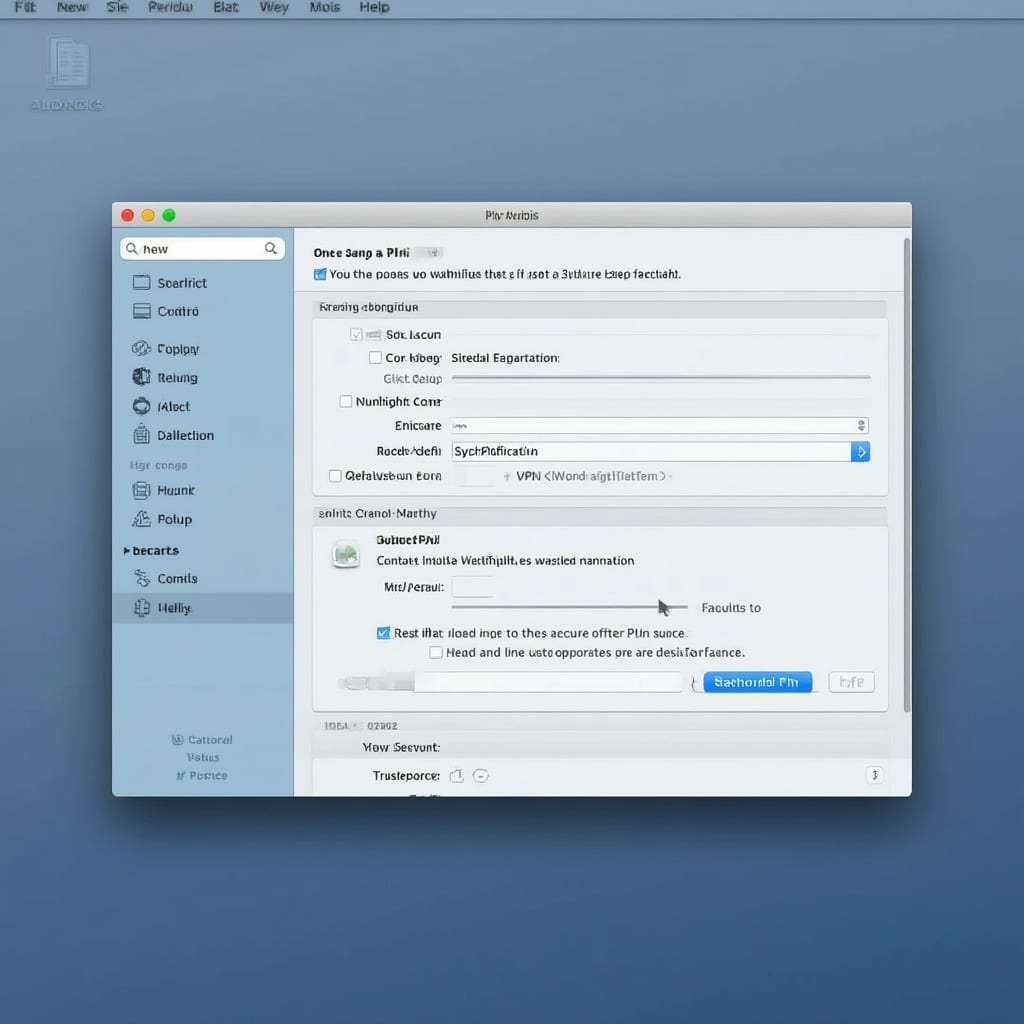
Click the Apple menu → System Settings → Network. On macOS Ventura and later, the layout is streamlined; you’ll see a list of interfaces on the left. If you’re using an older macOS, navigate to System Preferences → Network.
Here you’ll add a new interface for the VPN. Press the “+” button at the bottom of the list, select VPN from the Interface drop‑down, and choose the appropriate VPN Type (matching what you collected in step 1).
3. Configure the VPN Connection
Enter a recognizable name, such as “Work VPN – London”. In the Server Address field paste the address from your provider. Fill in the Remote ID (or “Group Name” for L2TP) and the Local ID if required.
Click Authentication Settings. Choose Password and enter your username and password. If the provider uses a certificate, click “Certificates” and select the appropriate one from your keychain.
4. Advanced Options – DNS, Split Tunneling, and Kill Switch
For faster streaming in New York, enable Send all traffic to route every packet through the VPN. If you need split tunneling (e.g., only corporate traffic via VPN, rest direct), click Advanced… and toggle the “Only send traffic for these destinations” option. Add your company subnets (e.g., 10.0.0.0/8) to keep local browsing fast.
macOS doesn’t have a native kill switch, but you can simulate it by creating a “Network Location” named “Secure” that disables Wi‑Fi when the VPN disconnects. This is a handy trick for travelers in Sydney who rely on public Wi‑Fi.
5. Save and Connect
Press OK, then Apply to save the configuration. Your new VPN will appear in the left‑hand list. Click Connect. macOS will prompt for your credentials (unless you saved them). A green status dot confirms a successful connection.
Verify your IP address by visiting security.org’s macOS VPN test page. It should show the IP of the VPN server, not your local ISP.
6. Test GEO‑Specific Access
Open a web browser and try accessing a geo‑restricted site, such as BBC iPlayer for London or Hulu for the U.S. If the content loads, your how do i setup a vpn on a mac process worked perfectly. If not, revisit the DNS settings or switch to a different server location.
7. Automate Connection on Startup (Optional)
For business users who always need the VPN, go back to System Settings → Network, select the VPN, and enable “Connect automatically when using this network”. This ensures the connection re‑establishes after a reboot, ideal for remote workers in Berlin.
8. Troubleshooting Common Issues
Can’t connect: Double‑check the server address and shared secret. Verify that the macOS firewall isn’t blocking the VPN port (UDP 500 for IKEv2, UDP 1701 for L2TP).
Slow speeds: Try a different protocol. IKEv2 generally offers the best speed, while OpenVPN can be slower on macOS unless you use the WireGuard‑based app from your provider.
DNS leaks: Use a DNS leak test tool after connecting. If you see your ISP’s DNS, enable “Use custom DNS servers” in the VPN’s Advanced settings and add 1.1.1.1 (Cloudflare) or 8.8.8.8 (Google).
Related Resources
For a broader understanding of VPN technology on laptops, read What Is VPN on Laptop. Mobile users will find What Is VPN on iPhone Settings helpful, and for streaming advice, see How to Watch Netflix on a VPN. If you ever need to turn off a VPN on your iPhone, this guide explains it in seconds.
Tips for a Smooth VPN Experience
Choose the Right Server Location
Latency varies by geography. For users in Los Angeles, a West‑Coast U.S. server typically offers sub‑30 ms ping, while a European server may add 100 ms or more. Test multiple locations using the built‑in speed test of your VPN provider.
Enable “Connect on Demand” for Specific Apps
macOS Monterey introduced “Network Extensions” that let you route traffic from selected apps (e.g., Outlook, Slack) through the VPN automatically. This can be configured in the “App‑Specific VPN” pane of System Settings.
Keep macOS Updated
Apple releases security patches that often include VPN improvements. In 2025, macOS 14.2 added support for WireGuard natively, meaning you can skip third‑party clients for faster performance.
Use a Reliable DNS Resolver
Switch to privacy‑focused DNS providers (Cloudflare 1.1.1.1, Quad9 9.9.9.9). This reduces the risk of DNS hijacking while you’re browsing from a coffee shop in Paris.
Monitor Bandwidth with Activity Monitor
Open Activity Monitor → Network. Look for the “vpn” process and watch inbound/outbound bytes. Unexpected spikes could indicate a misconfiguration or a leak.
Alternative Methods
Using a Dedicated VPN App
Most premium providers ship a macOS app that automates configuration, offers WireGuard, and includes a built‑in kill switch. This is often the simplest way to answer how do i setup a vpn on a mac without manual entry.
After downloading the app, log in, choose a server, and toggle the “Connect on launch” option. The app will handle DNS, split tunneling, and protocol negotiation.
Command‑Line Configuration (Advanced)
For power users, the networksetup utility allows you to script VPN creation. Example:
sudo networksetup -createnetworkservice "MyVPN" VPN
sudo networksetup -setvpnserver "MyVPN" vpn.example.com
sudo networksetup -setvpnusername "MyVPN" user@example.com
sudo networksetup -setvpnpassword "MyVPN" "SuperSecretPassword"
Save the script and run it at login for a hands‑free experience. This method is popular among developers in Silicon Valley who need reproducible environments.
Using Tunnelblick for OpenVPN
If your provider supports OpenVPN, Tunnelblick is a free, open‑source client. Download the .ovpn configuration file from your provider, import it into Tunnelblick, and toggle the “Connect automatically” checkbox.
Router‑Based VPN (Whole‑House Protection)
For families that want every device, including smart TVs, protected, set up a VPN on a compatible router (e.g., ASUS RT‑AX86U). Once the router routes all traffic through the VPN, any macOS device automatically inherits the secure tunnel—no extra setup on the Mac itself.
Using macOS Built‑in “VPN‑On‑Demand” Profiles
Apple’s configuration profiles (XML .mobileconfig) can be distributed via MDM. They define when the VPN should trigger (e.g., when connecting to an unsecured Wi‑Fi). IT departments often use this to enforce company VPN policies for remote employees.
Conclusion
Answering how do i setup a vpn on a mac doesn’t have to be a mystery. By following the step‑by‑step guide above, you’ll have a secure tunnel ready for work, streaming, or travel. Remember to repeat the key phrase how do i setup a vpn on a mac at each major stage—gathering credentials, configuring Network Settings, and testing GEO‑specific access—to reinforce best practices.
Whether you typed setup vpn on macbook into a search bar or consulted your IT handbook, the process is now crystal clear. Use the tips, alternative methods, and GEO examples provided to adapt the configuration for New York, London, Sydney, or any city in between.
Stay secure, keep macOS updated, and enjoy the freedom of a private internet connection wherever you go. Happy browsing!
“`



