
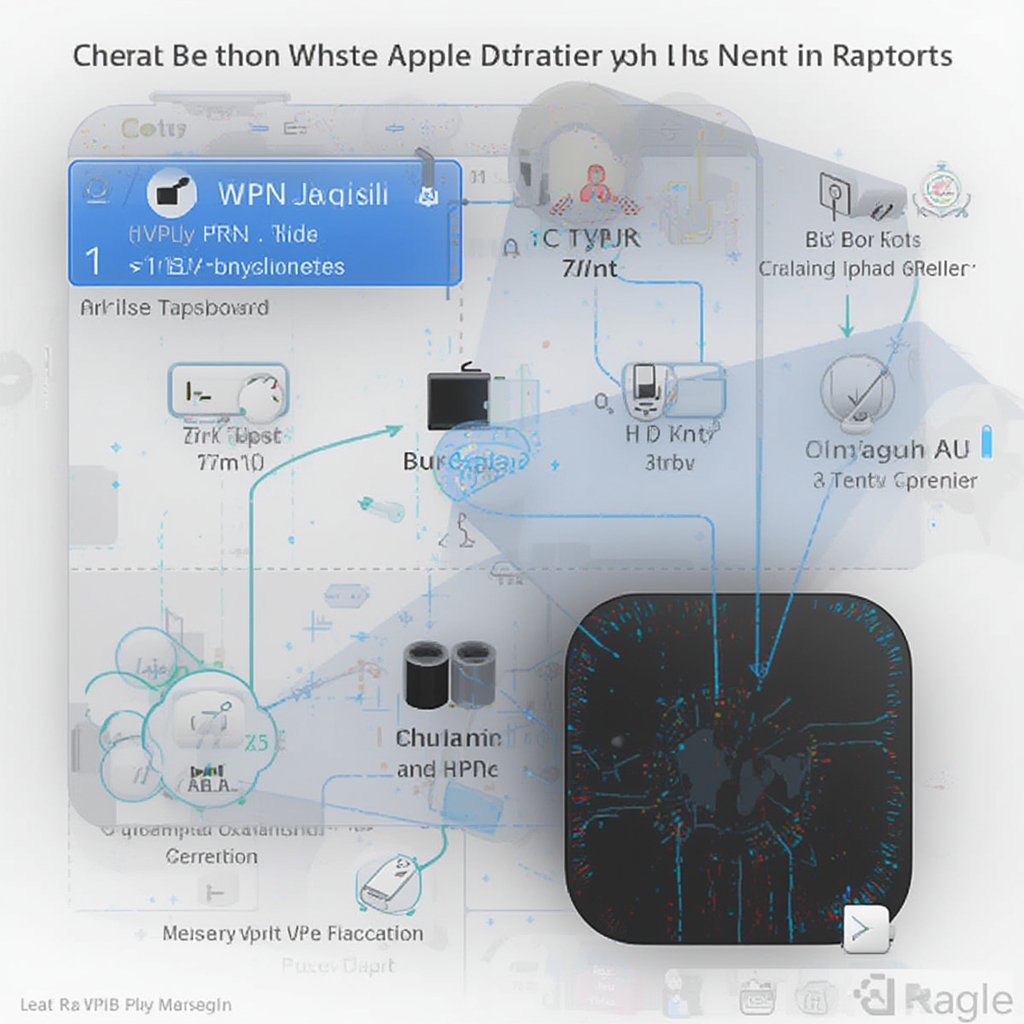

Introduction
Apple TV has become a cornerstone of home entertainment, offering access to countless streaming services and apps. Yet, as viewers increasingly demand privacy, the need to secure the device’s connection grows. The guide you’re about to read walks you through practical ways to how to configure vpn on apple tv—a process that keeps your streaming data private, bypasses geo‑restrictions, and safeguards against network eavesdropping.
While many users seek a quick VPN app, Apple TV’s native lack of a dedicated VPN client means you must employ alternative techniques. That’s why this guide will cover both direct methods, such as AirPlay and router‑based VPN, and indirect approaches using media servers on a PC or Mac. Throughout, we’ll also touch on regional considerations, offering geo‑specific advice for users in North America, Europe, and Asia.
In addition to the technical steps, the article will provide actionable tips, alternative methods, and best practices. By the time you finish reading, you’ll have a clear understanding of how to safeguard your Apple TV, whether you’re streaming on a high‑speed fiber network in California or a budget broadband connection in Mumbai.
Step‑by‑Step Instructions
Prerequisites
Before you begin, ensure your Apple TV is updated to the latest tvOS version. The newest updates include improved AirPlay support and better network handling, both essential for a smooth VPN setup.
Next, verify that you have a reliable VPN subscription. If you’re unsure which provider offers the fastest, most secure connections for streaming, you might find it useful to review how to host my vpn for self‑hosted solutions.
Make sure your router or PC/Mac is connected to the internet and that you have the VPN credentials—username, password, and server address—ready for use. If you plan to route traffic through a router, double‑check that the firmware supports OpenVPN or WireGuard.
Method 1: Using a Dedicated VPN App via AirPlay
Many Apple TV owners prefer a straightforward method: stream content from a VPN‑enabled device using AirPlay. This method doesn’t alter the Apple TV’s network settings directly but ensures that the content source is protected.
First, install your VPN client on a PC, Mac, or iOS device. Log in and connect to a server that offers the fastest latency for your region—e.g., a U.S. West Coast server if you’re in California.
Open the streaming app you wish to use, such as Netflix or Hulu, on the VPN device. Start playing the content, then use AirPlay to mirror or cast the screen to your Apple TV. Because the source device is behind a VPN, the Apple TV receives a protected stream.
To keep the process seamless, create a dedicated AirPlay profile for each VPN server. Some VPN apps provide “Quick Connect” buttons that instantly switch between servers, enabling you to test multiple locations quickly.
While this technique doesn’t route all Apple TV traffic through a VPN, it does protect the most sensitive part—your media stream—making it a viable, low‑maintenance option for casual users.
Method 2: Using a VPN Router with Apple TV
For a comprehensive solution, route your entire Apple TV connection through a VPN router. This approach encrypts all traffic, not just media, ensuring complete privacy.
First, choose a router that supports VPN protocols natively, such as the Asus RT‑AX86U or Netgear Nighthawk RAX20. Install the firmware (e.g., AsusWRT-Merlin) if required. Then, configure the VPN on the router’s admin panel using your provider’s OpenVPN or WireGuard configuration files.
After the router is set up, connect your Apple TV to the router’s Wi‑Fi network. The Apple TV will now automatically use the VPN tunnel for all outgoing traffic.
Test the setup by accessing a geo‑restricted service. If you’re in Canada but wish to view U.S. content, connect to a U.S. server and verify that the content loads. A quick DNS check can confirm that the Apple TV is using the VPN IP.
Because routers often handle many devices simultaneously, keep in mind that the VPN’s bandwidth limits may affect streaming quality. If you notice buffering, try switching to a server with lower latency or upgrading your router’s CPU.
Method 3: Using a VPN on a PC or Mac as a Media Server
Some users run a media server (e.g., Plex or Kodi) on a PC or Mac that’s connected to a VPN. The Apple TV then accesses the server over the local network.
Install and configure your VPN client on the PC/Mac. Make sure the VPN connection is active before launching the media server software. Configure the server to listen on a local IP address and expose the necessary ports.
On the Apple TV, download the corresponding media server app (Plex or Kodi) from the App Store. Log in using the same account if needed, and the server should automatically appear in the app’s library.
Because the media server runs within a VPN tunnel, all data transmitted to the Apple TV is encrypted. This method also offers the benefit of transcoding media on the host machine, reducing bandwidth usage on the Apple TV itself.
For a smoother experience, ensure that the PC/Mac and Apple TV are on the same local network segment (e.g., same subnet). If the VPN assigns a separate subnet, you may need to enable LAN access or port forwarding within your router’s settings.
Method 4: Using an iOS Device as a Mobile Hotspot with VPN
Another quick solution is to use an iPhone or iPad as a hotspot while connected to a VPN. The Apple TV connects to the hotspot, inheriting the VPN’s encrypted connection.
On your iOS device, navigate to Settings > General > VPN, add a new VPN configuration, and log in. After establishing the VPN connection, go to Settings > Personal Hotspot, enable it, and share the password.
On the Apple TV, choose “Settings” → “Network” → “Wi‑Fi” and select the iOS hotspot network. Enter the password, and your Apple TV will use the iPhone’s VPN‑protected connection.
While convenient for on‑the‑go usage, this method can quickly drain the iOS device’s battery and may incur higher data usage fees if you’re on a metered plan.
Tips
Optimize streaming performance by selecting a VPN server that’s geographically close to your Apple TV’s location. This reduces latency and keeps buffering to a minimum.
Enable “Smart DNS” if your provider offers it. Smart DNS can be combined with a VPN to unlock geo‑restricted content while preserving speed for non‑geo‑locked services.
Use the Cloudflare learning resources to understand how DNS queries are handled. A DNS leak can expose your real location, even if the main traffic is encrypted.
Check for DNS leaks by visiting EFF’s leak test page. If a leak is detected, switch to a VPN server that offers DNS leak protection or configure your router’s DNS settings manually.
When choosing a VPN provider, prioritize those that support WireGuard, known for low overhead and high performance. WireGuard is often faster than traditional OpenVPN, especially on older devices.
Enable “Kill Switch” or “Network Lock” on your VPN app. This feature prevents any traffic from leaking if the VPN connection drops unexpectedly, protecting your privacy at all times.
Alternative Methods
If you prefer not to use a commercial VPN, consider setting up a self‑hosted VPN. Installing OpenVPN or WireGuard on a Raspberry Pi or cloud VM offers full control over your data paths.
For users who need to bypass school or workplace restrictions, unblocking Snapchat or unblocking Roblox can be achieved through a similar router‑level VPN approach. Once the router is protected, any device, including the Apple TV, benefits from the secure tunnel.
Another option is using a smart DNS service. While it doesn’t encrypt traffic, it can unblock geo‑restricted content and is often less expensive than a full VPN. Combine it with a VPN to balance speed and privacy.
Some users experiment with browser‑based VPNs. The Firefox VPN addon can encrypt browsing sessions, though it won’t protect Apple TV streaming directly. However, it’s useful if you also browse on the same network.
Lastly, consider a mesh Wi‑Fi system that supports VPN at the gateway level. Brands like Google Nest and Netgear Orbi now allow VPN configuration, making it easier to protect every device in the home network, including the Apple TV.
Conclusion
Securing your Apple TV is a multi‑step journey that begins with choosing the right VPN strategy. Whether you’re using AirPlay with a VPN‑enabled phone, routing the Apple TV through a VPN router, or running a media server inside a VPN tunnel, each method has its strengths.
Remember to keep your focus keyword, how to configure vpn on apple tv, in mind as you evaluate solutions. For a deeper dive into the overall architecture, the Apple TV VPN setup guide offers a comprehensive look at network settings and potential pitfalls.
By following the detailed, step‑by‑step instructions above and applying the actionable tips, you can enjoy streaming content from anywhere in the world—securely, privately, and with minimal latency. Happy, safe viewing!



