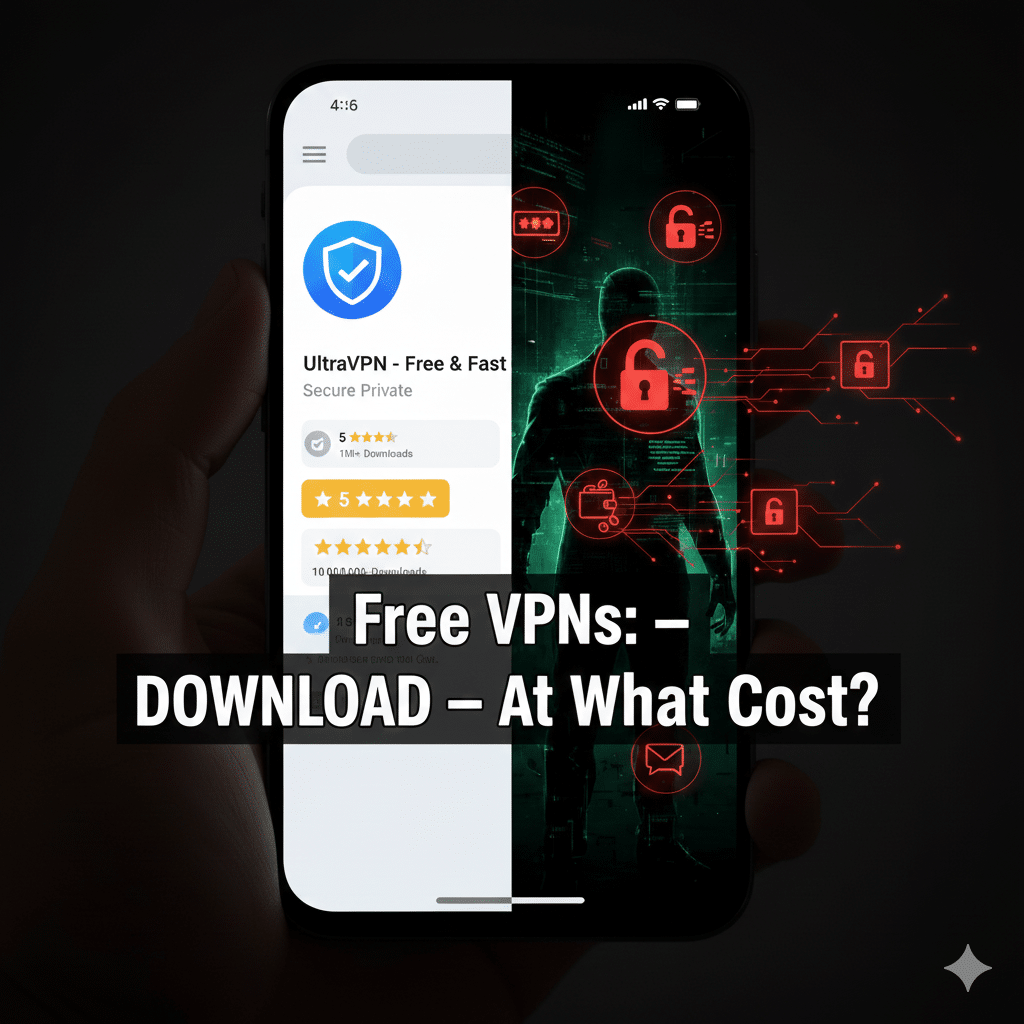

Free VPN apps promise privacy and unrestricted access — but multiple security studies in 2025 reveal a darker reality: hundreds of free VPNs either leak user data, include trackers, rely on weak encryption, or are outright surveillance tools. For users relying on “free” apps to protect sensitive browsing, banking, or work accounts, that promise can be dangerously misleading(Many free VPN apps). Recent analyses from Zimperium zLabs, industry reporting and long-running research projects show this is a systemic problem, not a handful of isolated cases.
What the research found (quick summary)
A broad analysis of nearly 800 free iOS and Android VPN apps found widespread privacy and security failures: leaked user data, excessive permissions, and outdated or weak cryptographic libraries.
Security press and trade outlets report that many free VPNs embed tracking, sell telemetry, or funnel user data to third parties — sometimes exposing millions of records in poorly secured databases.
Independent investigations show a high proportion of free VPN apps lack transparent ownership, have poor privacy policies, and are more likely to be tied to opaque companies — factors that increase the risk of data misuse.
These findings make a single point clear: “free” often equals hidden costs — your data.
Why free VPN apps leak data (technical and business reasons)
Monetization pressure. A free product needs revenue. Many providers monetize via ad networks, affiliate funnels, or selling telemetry to data brokers — practices that directly conflict with user privacy. Studies and industry surveys repeatedly flag data-monetization as common among free offerings.
Excessive permissions and APIs. Some apps request accessibility, SMS, or broad storage permissions unrelated to routing traffic. Those permissions enable harvesting of credentials, messages, and device state. Security researchers flagged many examples where permissions far exceeded legitimate needs.
Outdated or insecure crypto stacks. Several free VPNs ship with stale libraries or misconfigured encryption, making traffic interception and metadata leaks far more likely. Zimperium’s analysis highlights vulnerable cryptographic implementations in a nontrivial share of apps.
Opaque ownership & infrastructure. Without clear ownership, accountability evaporates. Academic studies show “families” of VPN apps with hidden common owners, complicating legal or remedial action when data is mishandled.
Real-world impact: leaks, tracking, and exposed databases
Investigations found exposed databases and telemetry stores tied to free VPNs, collectively affecting millions of users. In some cases, databases containing usage logs, IP addresses, and device identifiers were left unprotected and indexed by search engines — effectively publishing user behavior. Trade reporting and security magazines documented multiple such incidents and warned about the scale of exposed data.
Beyond database leaks, embedded trackers can reconstruct browsing profiles over time. For users who assumed they were hiding their activity, the combination of tracking and weak TLS/crypto can result in precise, monetizable profiles — the opposite of the advertised privacy benefit.
How free VPNs compare to paid / audited services
Paid VPNs tend to rely on subscriptions rather than data monetization. The most reputable services publish independent audits, use RAM-only servers, and offer clear, narrow privacy policies. That reduces incentives and technical ability to collect, retain, or sell sensitive data.
Free/freemium services vary widely: a few reputable freemium providers (with audited free tiers) can be acceptable for casual use, but the majority of no-cost apps carry elevated risk. Always check for audits, firm transparency, and a clear business model that isn’t based on selling data.
Practical advice: how to protect yourself
Avoid random free VPNs. Don’t install “Free VPN” apps with generic names and no website, reviews, or verifiable ownership.
Check permissions before install. If a VPN asks for SMS, contacts, or accessibility, decline — these are red flags.
Prefer audited providers. Look for recent third-party audits, RAM-only servers, and explicit “no-logs” policies backed by technical proof.
Use paid VPNs for sensitive tasks. Banking, work VPN access, or handling confidential data is not a place to risk “free” privacy. Paid providers reduce monetization pressure and often invest in secure infrastructure.
Monitor news & breach reports. If an app you use appears in a leak or academic study, uninstall and change passwords linked to the device.
Conclusion
2025’s wave of research and reporting makes a hard truth unavoidable: many free VPN apps leak data or act as surveillance tools. For users seeking real privacy, “free” is not a guarantee — and in many cases it’s the opposite. The safest route is to favor transparency: audited providers, explicit business models that don’t depend on data sales, and minimal permissions.