
In today’s ever-connected world, online safety isn’t just about encryption and hiding your IP — it’s about managing what content reaches your devices, especially for families. That’s why Surfshark’s new feature — the Web Content Blocker — represents an important shift in how VPN services approach content filtering. By combining category-based website blocking with a strong privacy-first stance, Surfshark is targeting households that want control without intrusive monitoring. According to Surfshark’s blog post, the tool is designed to “protect people without prying.”
What is the Web Content Blocker and how does it work?
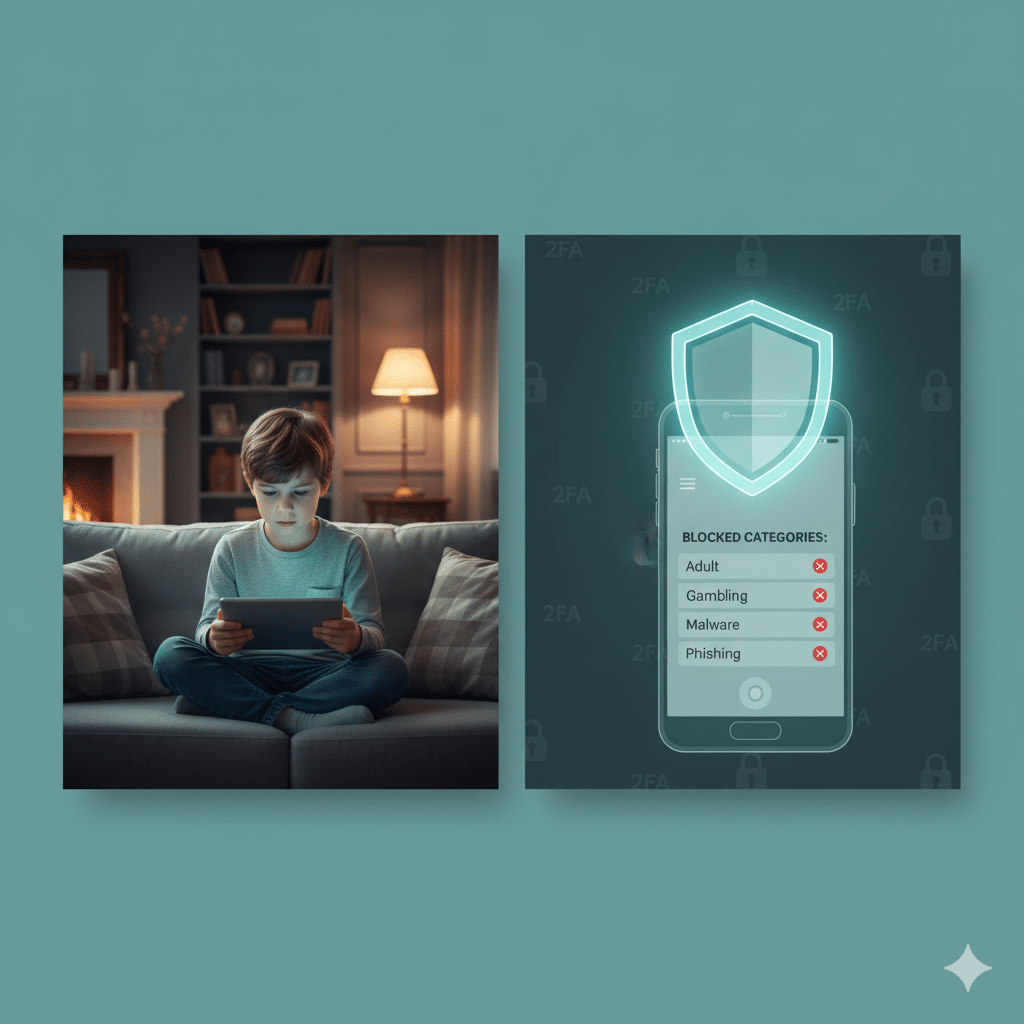
Surfshark’s Web Content Blocker lets users select categories of websites they’d like to block — for example adult content, gambling, phishing, malware, profanity — and apply those filters across all devices tied to the same Surfshark account. Importantly, the blocker can be locked with Two-Factor Authentication (2FA), so only the account owner can change the settings.
Unlike conventional parental control solutions that monitor user activity and track browsing history, Surfshark says the blocker works without logging what specific sites are visited. “We created a web content blocker so people can turn control into care without tracking involved,” said Justas Pukys, Senior Product Manager at Surfshark.
The feature is currently available on Android and iOS for users of Surfshark’s One and One+ plans, with support for additional platforms promised.
Why this matters — balancing safety and privacy
For many households, managing internet access means choosing between heavy-handed monitoring or no control at all. Surfshark’s approach seeks to find a middle path: filtering harmful or unwanted content while preserving user privacy. As noted by TechRadar, the blocker “lets you set up category-based content controls … without interfering with their privacy.”
This is particularly relevant because many families now blend children’s devices, smart-home gadgets, streaming consoles, and older relatives’ tablets — all on one home network. A unified tool that applies across devices, and uses 2FA to lock settings, simplifies management while reducing the risk of unauthorized changes (for example by curious kids).
From a VPN standpoint, this is also a strategic expansion: Surfshark is moving beyond traditional VPN use-cases (privacy, streaming, geo-unlocking) into household content control and safe browsing. It broadens the value proposition of a VPN service in 2025 and beyond.
Feature comparison — how does the Web Content Blocker stack up?
Traditional parental controls (e.g., screen-time limits, detailed activity logs): These often involve installing separate software, tracking every visited site or app, and can feel invasive.
Router-based filters or DNS blockers: Good for blocking categories, but typically limited in terms of user profiles, cross-device management, or ease-of-setup for non-technical households.
Surfshark Web Content Blocker: Combines category-based filtering with device-wide visibility (via one account), 2FA lock, and the privacy promise of no browsing logs. As BetaNews noted, although it doesn’t rival full parental-control suites, “it offers a simple and effective solution for families to block inappropriate content without invasive monitoring.”
Potential limitations and things to watch
While the Web Content Blocker brings strong benefits, there are a few caveats:
The feature is locked behind Surfshark’s One or One+ plan — users on the basic Starter plan will need to upgrade to gain access.
It doesn’t replace full parental-control software if screen-time limits, activity reports or detailed usage logs are required. Surfshark’s blocker honours privacy over detailed monitoring.
As with any category-based filter, some sites may slip through or be mis-categorized. Users should review blocked categories regularly and combine with safe-browsing habits.
Expert & industry perspective
The launch arrives at a time when VPN providers are increasingly diversifying services beyond raw tunnelling and streaming. Surfshark, which already offers a suite of products (antivirus, private search, identity removal) is reinforcing the idea that “cybersecurity for families” is a viable niche. As the official press release states, the blocker is part of Surfshark’s ongoing expansion of features beyond the traditional VPN.
From the privacy-advocate side, the decision to not monitor browsing history is significant. Many parents and households dislike the idea of “spying” on kids or other users; Surfshark’s phrasing (“turn control into care”) suggests it’s trying to strike a sensitive balance.
Conclusion
Surfshark’s Web Content Blocker is a smart, timely addition to the VPN landscape. It shifts the conversation: from solely “How do I hide my IP?” to “How do I manage safe, respectful internet access for everyone without sacrificing privacy?” For households juggling multiple users and devices, it offers practical filtering in a unified app environment, backed by a reputable VPN brand.