
When a new U.S. state law affects internet access, people notice — and they often act fast. In late September 2025 Arizona enacted an age-verification law requiring users to prove they are 18+ to access certain adult sites. The immediate, measurable reaction: a major spike in VPN interest and searches across the state, with several outlets reporting dramatic percentage increases in sign-ups and queries. This trend highlights how regulation aimed at protecting minors can quickly influence user behavior, pushing citizens to privacy tools such as VPNs to preserve access or anonymity.
What happened — the numbers and timing
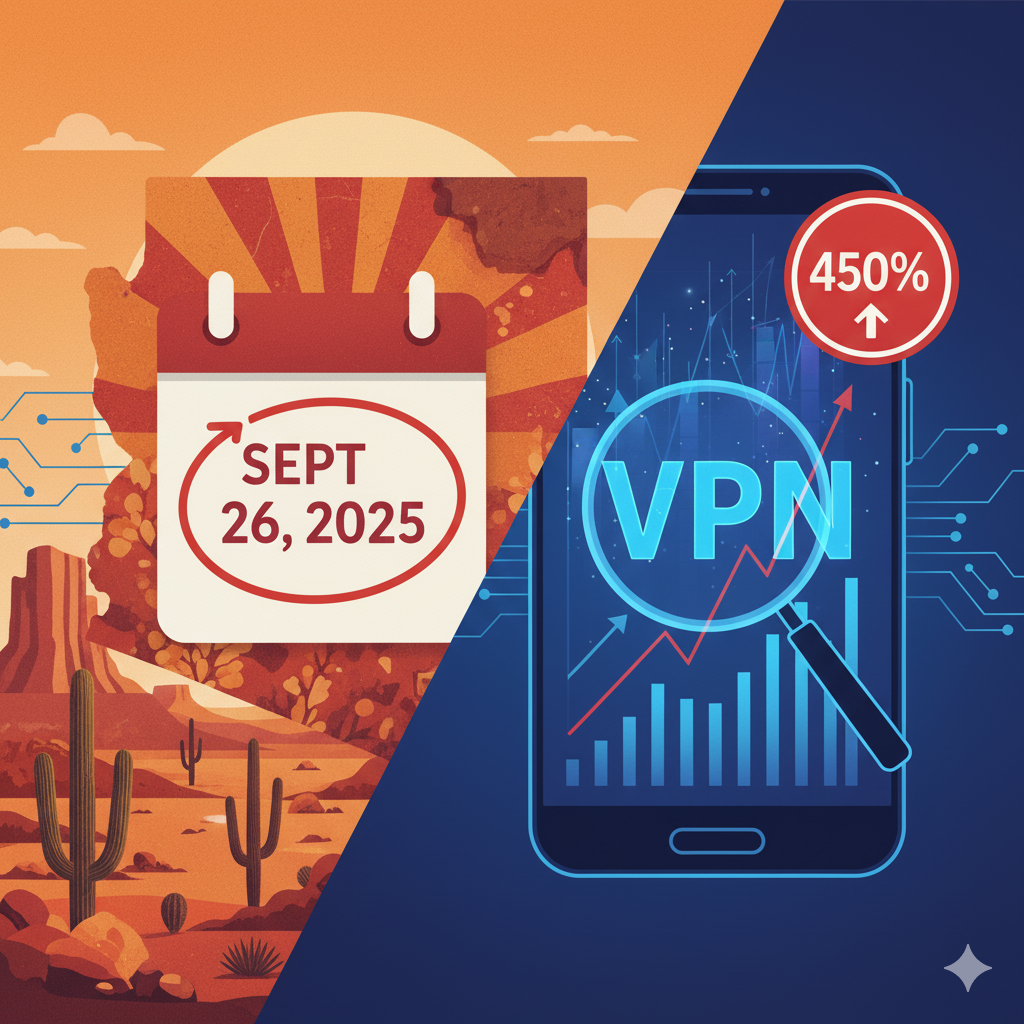
Arizona’s law (effective Sept. 26, 2025) mandates age checks for websites whose content is substantially adult, with non-compliance exposing sites to heavy fines. Within days of the law taking effect, Google Trends and vendor reports showed Arizona shooting to the top for VPN-related queries; local media and analysts described spikes in VPN searches and sign-ups — some reports citing increases in the hundreds of percent in the immediate aftermath. Tom’s Guide documented a sharp rise in searches in the 30 days leading to Oct. 3, 2025, peaking around Sept. 27.
Multiple local outlets and VPN vendors echoed similar patterns: city-level Google Trends data demonstrated VPN curiosity across communities, while provider blogs noted surges in demand and prepared for increased traffic. In Buckeye, Arizona, for example, local reporting showed VPN curiosity rising after enforcement began.
Why VPN interest surged — motives and mechanics
There are several reasons residents turned to VPNs after the law’s rollout:
Geo-workarounds and privacy — Some adult sites chose to block or geo-restrict access from Arizona rather than implement ID checks, which led users to seek ways to appear outside the state or mask their location. VPNs are the most common consumer tool for changing apparent geolocation.
Privacy concerns about ID checks — Many critics argued that forced ID checks could require sharing sensitive personal data with third parties or websites with varying security postures. For privacy-minded users, a VPN can feel like a less invasive option than submitting ID credentials.
Immediate accessibility — Installing a VPN or using a browser extension is a quick step compared to registering with an identity provider — making it an attractive short-term response when a law goes into effect suddenly.
The limits of VPNs as a response
While search interest and sign-ups can spike dramatically, VPNs aren’t a perfect or risk-free fix:
They don’t eliminate all traces. VPNs mask IP and can encrypt traffic, but other signals (cookies, logged account data, payment records) may still reveal identity.
Legality and terms of service. Circumventing geo-blocks can violate a website’s terms of service, and laws in some jurisdictions can target circumvention tools. Some jurisdictions have even discussed restricting VPN use.
Trust and security. Not all VPNs are equal — free or low-quality providers may log data or have weak protections, trading one privacy risk for another. Users rushing to sign up in a panic may pick suboptimal services.
Broader implications: policy, privacy, and market signals
Arizona’s case is a reminder that digital regulation creates ripple effects. Regulators aiming to protect minors must weigh privacy costs and the realistic behaviors of tech-savvy populations. For the VPN industry, sudden regional demand spikes test capacity and can shift marketing narratives — providers often highlight privacy protection while also being pressed to manage load and abuse. Some providers publicly stated they were ready for increased traffic and urged users to choose reputable services.
Historically, similar laws in other U.S. states produced comparable behavior: when Florida and other states enacted age-verification or content restrictions, VPN interest soared — sometimes by multiple hundreds or even thousands of percent — showing this pattern repeats when access is constrained.
Learn more than Study: Free VPN apps riddled with serious security flaws
Conclusion
Arizona’s age-verification law produced an immediate and measurable uptick in VPN interest, reflecting a common playbook: regulation that affects access or privacy often drives users toward tools that restore perceived control. While VPNs provide useful protections, they are not a panacea; users should choose reputable providers, understand legal and privacy implications, and consider safer long-term solutions. For policymakers, Arizona’s experience underscores the need to balance child protection goals with robust privacy safeguards and public education about online safety.