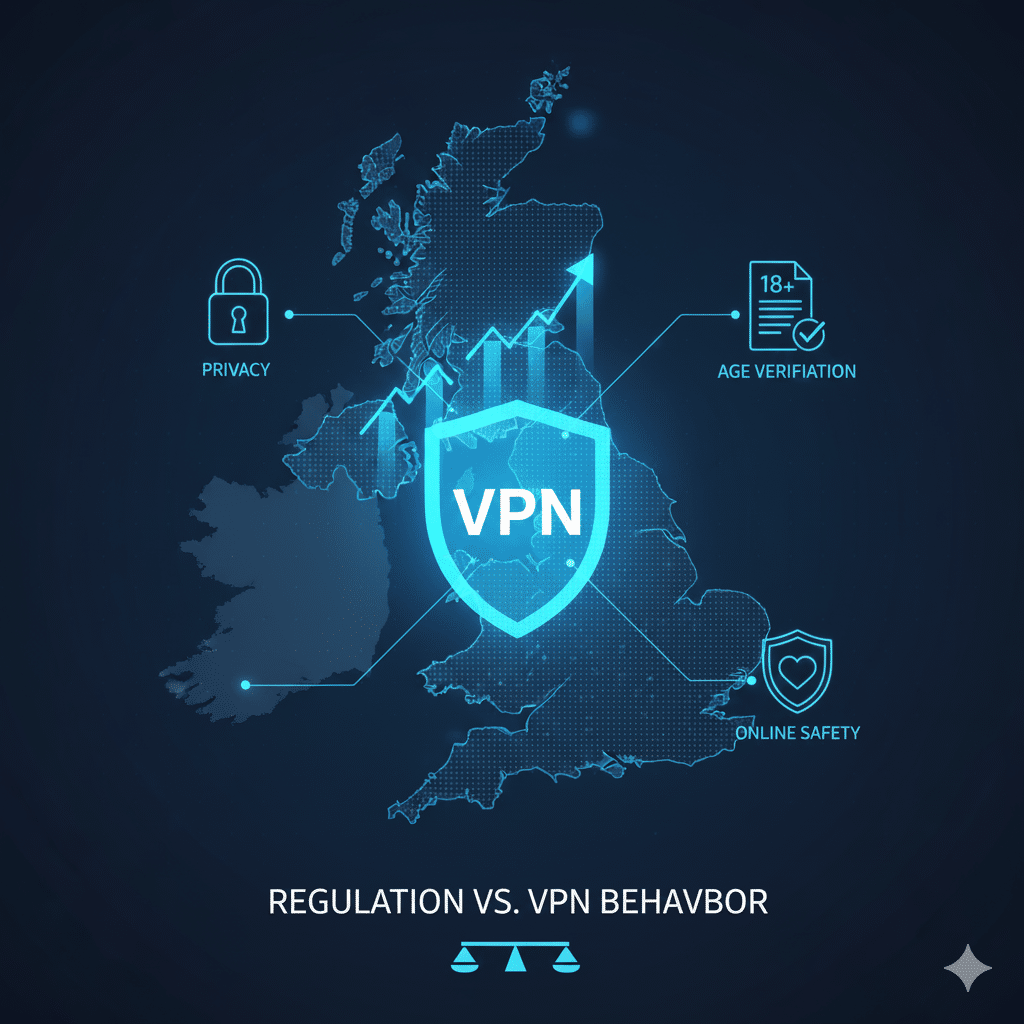

The implementation of the United Kingdom’s landmark Online Safety Act — designed to enforce stricter age verification for online content — has coincided with a significant rise in VPN usage across the country (UK VPN). While regulators expected the law to enhance child protection and reduce access to harmful material, recent reports suggest that VPN popularity has surged as users turn to these tools to preserve anonymity or sidestep age checks. This trend has sparked debate over the effectiveness of the law and the evolving role of virtual private networks in digital privacy and content access.
What the Online Safety Act Changed
Enforced from 25 July 2025, the Online Safety Act introduced mandatory age verification checks for websites hosting adult content and other potentially harmful material. Platforms serving UK users must now implement robust verification methods to ensure visitors are over 18 before granting access. While aimed at protecting minors, the rules have raised privacy concerns and created technical workarounds.
VPN Usage Spikes After Age Verification Rules
Following the law’s rollout, data from VPN providers and industry trackers show dramatic increases in VPN sign-ups and usage across the UK. According to analytics:
Proton VPN sign-ups from UK users surged by more than 1,400% immediately after the age verification requirement took effect.
Other reports indicate that UK VPN traffic spiked over 1,300% compared to average daily volumes during the same period.
Daily active VPN app users doubled to around 1.5 million in July, before settling at ~900,000 — still significantly above pre-law usage.
These numbers suggest that many internet users are choosing VPNs to maintain privacy or bypass geolocation-based content barriers introduced under the new law.
Why Users Turn to VPNs
Virtual private networks encrypt traffic and mask a user’s IP address and location, effectively making it harder for websites to enforce content restrictions based on region or age. This capability makes them attractive to users who wish to:
Protect privacy and security online
Access region-restricted content (e.g., streaming or restricted sites)
Avoid intrusive age-verification mechanisms
Digital rights advocates argue that while the Online Safety Act’s intentions are sound, its implementation may inadvertently push users toward privacy tools like VPNs that are also used for legitimate security purposes.
Official and Expert Perspectives
Ofcom, the UK’s communications regulator tasked with enforcing the Online Safety Act, has confirmed it is actively monitoring VPN usage trends to assess how the law is functioning in practice. However, the regulator clarifies that using a VPN remains legal and that there are no current plans to ban VPN use outright, recognizing their importance for privacy and secure internet access.
Privacy experts caution that this trend reflects broader tensions in digital policy: measures aimed at safeguarding children and content oversight must be balanced against fundamental rights to privacy and anonymity online.
learn more about TechRadar Ranks Best VPN Services for 2025 — Ultimate Guide to Top VPNs
Conclusion
The surge in VPN usage in the UK following the Online Safety Act’s implementation highlights a complex interplay between technology, regulation, and user behavior. As age verification rules change how content is accessed, many British internet users are turning to VPNs — not just to circumvent restrictions, but to preserve privacy in an increasingly monitored digital environment. Whether this trend leads to policy adjustments, improved online safety approaches, or deeper debate on digital rights, it underscores the enduring relevance of VPNs in today’s connected world.