
What is LWO — and why it matters
At a time when internet censorship and VPN blocking are on the rise worldwide, Mullvad VPN has introduced a new feature aimed at helping users bypass such restrictions: Lightweight WireGuard Obfuscation (LWO)(VPN adds ultra-light). The goal: make VPN traffic harder to detect — without sacrificing the speed, efficiency, or battery life that make WireGuard popular to begin with.
Traditionally, when VPN providers tried to hide traffic from deep-packet inspection (DPI) or protocol-fingerprinting firewalls, they used heavy methods: encapsulating VPN traffic inside additional tunnels, wrapping it with HTTPS, or using proxy layers. These methods typically work — but come at a cost: extra overhead, slower speeds, more latency, and often higher battery drain, especially on mobile devices.
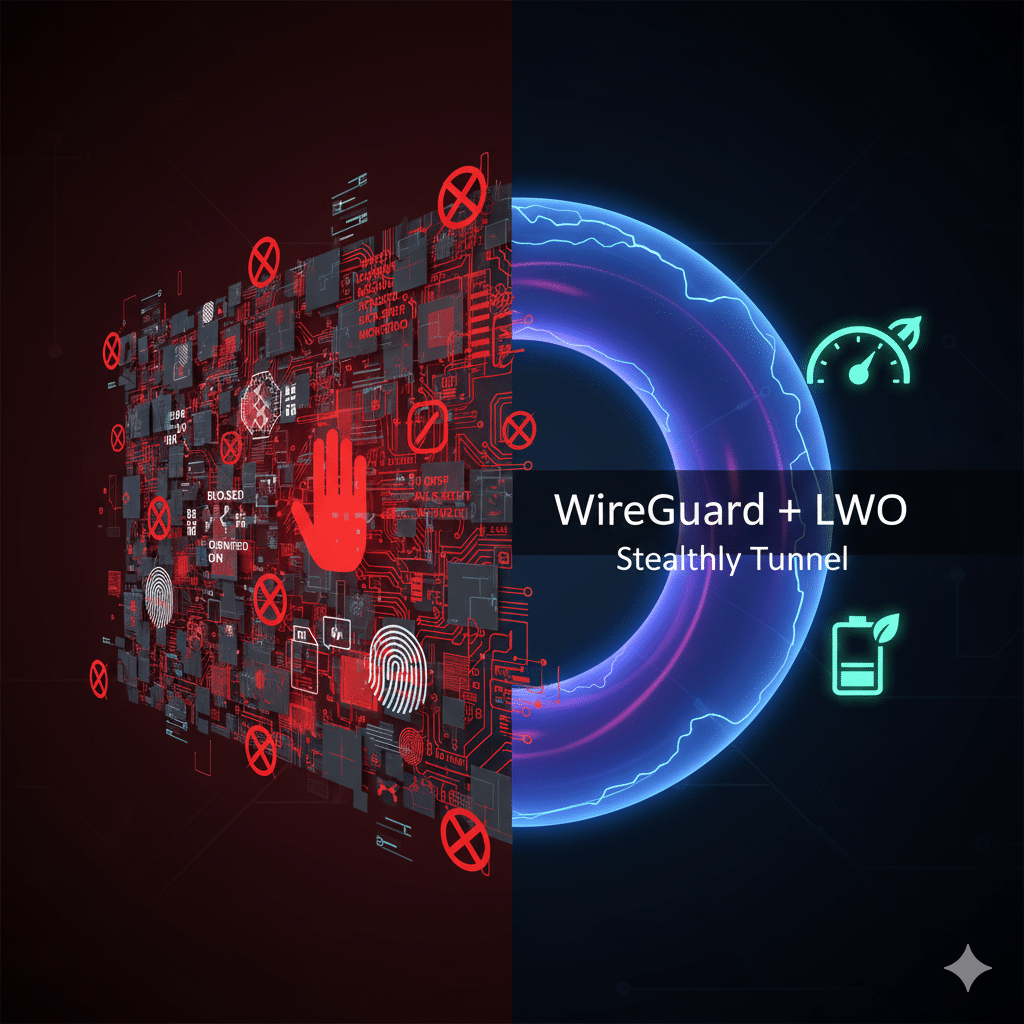
Mullvad’s LWO takes a different, more elegant approach: instead of adding layers, it scrambles or obfuscates the packet headers of WireGuard traffic itself, making it less recognizable to DPI systems — while leaving the core of the connection intact. The result: stealthier traffic and – crucially – near-native WireGuard performance.
How LWO works — obfuscation without overhead
Here’s how LWO distinguishes itself from heavier “stealth VPN” solutions:
Header-level obfuscation: Rather than wrapping the entire VPN traffic in a new tunnel, LWO modifies the visible parts (headers) of the WireGuard packet so that signature-based firewalls can’t easily recognize it.
Minimal processing overhead: Because there’s no extra tunneling or encapsulation, the computational and bandwidth overhead is very low. In practical terms, Mullvad says the overhead is “hardly measurable.”
Preserved speed and efficiency: Users should experience almost the same speed and responsiveness as a standard WireGuard connection — a major advantage for users on low-powered devices or those concerned about battery drain.
According to Mullvad’s official announcement, LWO is now available on all desktop platforms and Android; iOS support is promised soon.
LWO vs other obfuscation methods — where it fits
Mullvad now offers multiple obfuscation options. It’s useful to compare them:
Obfuscation MethodHow It WorksProsConsRaw WireGuardStandard WireGuard traffic without obfuscationMaximum speed, minimal overheadEasily identifiable by DPI/firewalls — likely blocked in censored networksLWO (Lightweight WireGuard Obfuscation)Obfuscates WireGuard packet headers to avoid detectionNear-native speed, low resource use, stealthier than raw WireGuardObfuscation is lighter — may be less robust than full-tunneling under advanced censorshipFull-stealth tunneling (e.g. QUIC, Shadowsocks, TLS encapsulation)Encapsulates VPN traffic inside another protocol (HTTPS, HTTP/3, proxy, etc.)Strong concealment; traffic looks like ordinary web trafficMore overhead, higher latency, more resource use, potential slower speed & battery drain
LWO sits neatly in the middle — offering a balanced tradeoff between speed and stealth. It’s particularly appealing for users who need privacy and bypass capabilities but also value performance and light resource use. This makes it a strong option for mobile users or those with older hardware.
By contrast, more resource-intensive methods like full tunneling (e.g., QUIC obfuscation) remain valuable in environments where traffic analysis is aggressive or where even obfuscated headers are blocked — but at a cost.
Real-world context: Why LWO arrives now
The release of LWO in November 2025 comes amid a growing wave of global internet censorship and VPN blocking — especially in countries with restrictive regimes or harsh firewalls. According to one recent overview of VPN-obfuscation techniques, many users find traditional VPN protocols (including WireGuard) insufficient in such contexts.
At the same time, many VPN users — especially on mobile or older hardware — resist heavy stealth tunneling because of the performance and battery hit. LWO aims at precisely this gap: offering enough camouflage to bypass many firewalls while retaining the speed and efficiency of WireGuard.
In effect, LWO underscores an important shift in the VPN industry: not just encrypting traffic, but making it look “normal.” As censorship tools and DPI systems become more sophisticated, header-level obfuscation gives VPN users an important middle-ground option.
Who benefits most from LWO — and who may still need heavier stealth
Great candidates for LWO:
Users in moderately censored regions where WireGuard is blocked but full stealth may not be necessary.
People using older laptops, phones, or low-power devices for whom performance and battery life matter.
Users who prefer a lightweight, quick, and easy-to-enable option rather than complex configuration.
When heavier stealth is still useful:
In environments with very aggressive or adaptive censorship (that may look for anomalous packet patterns beyond headers).
For users needing maximum anonymity or wanting to mimic regular HTTPS web traffic (for example, to evade advanced DPI, streaming-service blocks, or state-level network filtering).
For situations where firewalls block obfuscated headers too — then full tunneling (e.g., via QUIC, Shadowsocks, TLS) may still be necessary.
Conclusion – LWO: a clever balance of stealth and speed
With Lightweight WireGuard Obfuscation, Mullvad VPN adds a smart, efficient tool to its censorship-bypass arsenal. LWO represents a thoughtful balance — giving users the stealth they need to bypass blocks, while preserving the speed and low resource use that make WireGuard popular.
For many users, especially those on mobile or older devices, that balance may be the “sweet spot” between privacy and performance. For others — in heavily censored countries or high-stakes privacy situations — heavier obfuscation may still be necessary.
Overall, LWO exemplifies how VPN technology is evolving beyond simple encryption: toward adaptive stealth that fits real-world constraints and user needs.