
In July 2025 Russia’s parliament passed a law that tightens control over online access to so-called “extremist” materials — and explicitly signals that using a VPN to reach that content may count as an aggravating factor in enforcement. The measure introduces modest fines for individuals but broader penalties for advertising, operating, or enabling VPN access, fueling fresh concerns about digital privacy, censorship, and how intent will be proven in prosecutions.
What the law does (short version)
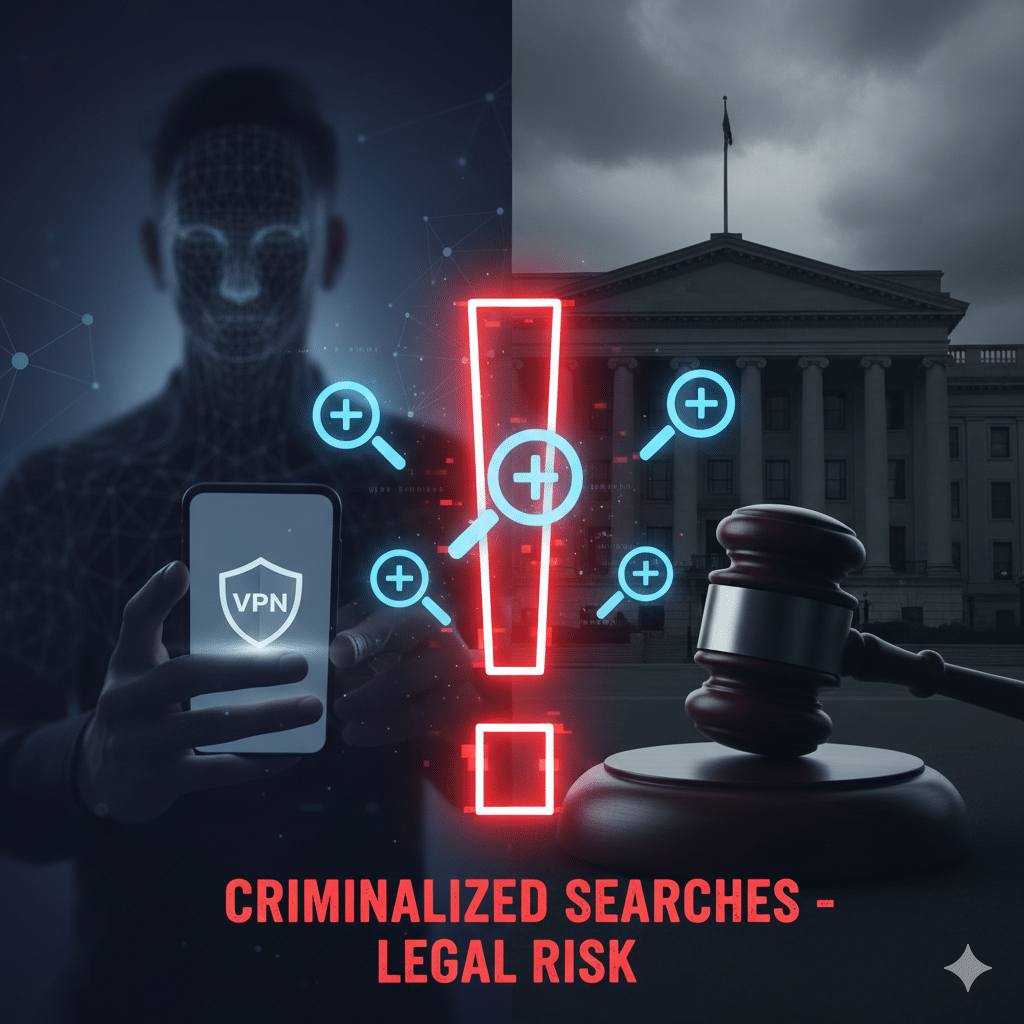
The new legislation makes it an administrative offense to intentionally search for or access materials designated as “extremist,” with fines for individuals in the range of roughly 3,000–5,000 roubles (about $30–$65). The draft also attaches additional penalties and regulatory requirements around VPNs: promoting or facilitating VPN use, operating unregistered VPN infrastructure, or using VPNs to reach banned content can trigger heavier fines and legal scrutiny. Officials say intent must be shown to levy fines, but critics say the law’s vague wording opens the door to abuse.
How VPNs are singled out
While the law does not (yet) ban VPNs outright, it treats VPN-assisted access to prohibited materials as an aggravating circumstance. That means if authorities allege someone used a VPN to bypass filters and reach content on the Justice Ministry’s “extremist” list, that VPN use could increase penalties or be used to justify investigations. The legislation also proposes fines for advertising VPN services and for providers that enable access to blocked resources — pushing the regulatory burden onto services as well as individual users.
Why experts and rights groups are alarmed
Digital-rights organisations and press-freedom advocates warn the law’s broad definitions and reliance on state lists of “extremist” materials can criminalise ordinary information-seeking, chill dissent, and expand surveillance. Human Rights Watch and other groups note Russia already blocks tens of thousands of resources and that the new rules could encourage ISPs and platforms to hand over metadata or block services pre-emptively. Critics also point to the difficulty of proving intent — did someone accidentally click a blocked link, or deliberately seek forbidden material? The uncertainty itself may cause self-censorship.
Practical impact: users, VPN providers, and platforms
Individual users: Small fines may seem modest, but investigators could use the law to open cases, gather device data, or escalate penalties. In practice, people may delete apps, avoid searching sensitive topics, or switch to more covert tools.
VPN services: Providers that advertise circumvention tools or don’t comply with local rules may face heavy fines. Some services may withdraw from the market or be forced to operate without storefront visibility (e.g., removal from app stores), reducing legal, audited options for users.
Platforms & advertisers: Advertising or promoting VPNs can draw penalties, tightening the on-ramp for ordinary users seeking privacy tools. This moves the leverage from individual suppression to limiting access channels.
Comparison with global practice
Countries vary in how they treat VPNs: many democracies allow or regulate VPNs but protect privacy through clear legal safeguards and judicial oversight. Russia’s approach — combining criminalised searches with penalties tied to circumvention tools — is closer to models that emphasise information control over individual privacy. The consequence is less about blocking tech and more about deterring behavior through legal risk.
What users can practically do (risk mitigation)
Assess threat model: If you’re researching politically sensitive topics inside Russia, expect legal risk; weigh whether accessing material locally is worth the exposure.
Prefer resilient, privacy-centric practices: Use end-to-end encrypted tools, keep minimal metadata, and consider operational security best practices — but note that no technical solution fully negates legal risk where intent is judged.
Follow official updates: Watch Roskomnadzor/PTA and domestic legal commentary for guidance — enforcement rules and judicial practice will determine how strictly the law is applied in real cases.
Learn more than Mullvad Adds QUIC Obfuscation on Mobile
Conclusion
Russia’s new law marks a tightening of online information control that explicitly entangles VPNs with the prosecution of “extremist” searches. Even if fines are relatively small, the law’s broader chilling effect — on users, VPN services, and platforms — could be large. For now, the most significant question remains practical: how will authorities prove intent, and how aggressively will they pursue cases? Until enforcement practices are clarified, the law will likely push users toward greater caution and could shrink lawful, privacy-protecting options inside Russia.