
In a major shift for internet governance in Pakistan, the Pakistan Telecommunication Authority (PTA) has officially released a list of licensed VPN providers under its reinstated CVAS‑Data (Class Value Added Services – Data) regime (VPN Provider List). This announcement marks a significant regulatory milestone, as users can now access VPN services from approved vendors without the bureaucratic hurdles that previously complicated VPN registration.
What’s the New Licensing Regime?
PTA’s recent announcement confirms that a number of companies have been granted Class Licenses to operate as legally authorized VPN service providers. These licenses are part of the CVAS-Data framework, which regulates non-voice data value‑added services — such as encrypted VPN tunnels — under PTA oversight.
Notably, users no longer need to register their IP addresses or mobile numbers separately with PTA to use these VPNs. This change is expected to streamline access and reduce friction, especially for individuals and businesses that rely on VPNs for legitimate, lawful purposes.
Who Made the List? Licensed VPN Providers Named by PTA
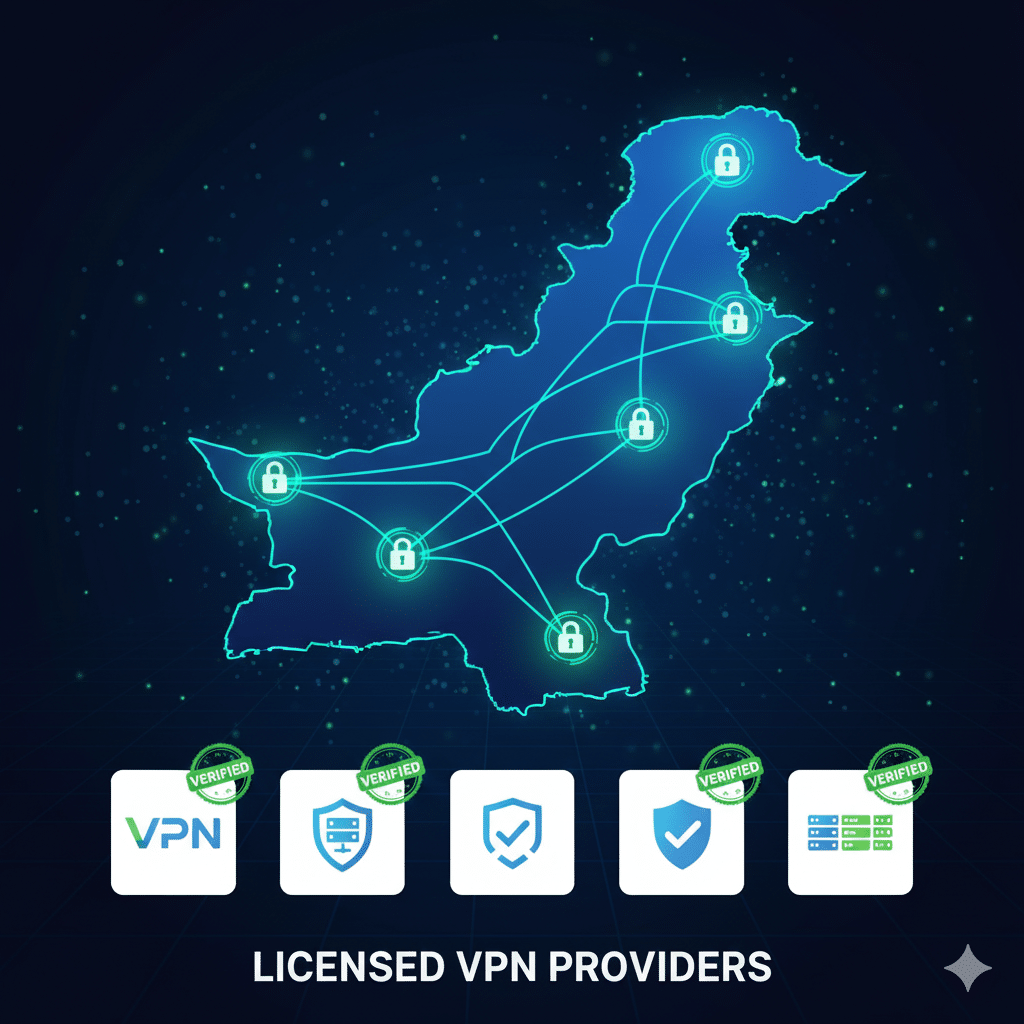
According to PTA’s published list, the following companies have received Class Licenses to provide VPN services:
CompanyLicensed VPN BrandAlpha 3 Cubic (Pvt.) Ltd.Steer Lucid Zettabyte (Pvt.) Ltd.Crest VPN Nexilium Tech (SMC‑Pvt.) Ltd.Kestrel VPN UKI Conic Solutions (SMC‑Pvt.) Ltd.QuiXure VPN Vision Tech 360 (Pvt.) Ltd.Kryptonyme VPN
Some reports suggest a total of eight VPN companies have been licensed, though not all are currently operational According to TechJuice, out of these eight, four are already operational, including PTCL, NTC, Steer Lucid, and Crest VPN.
Why PTA Did This — The Rationale Behind Licensing
PTA’s decision is being framed as a move to balance user convenience, regulatory control, and cybersecurity. By licensing VPN providers, the authority can bring these services into a formal, audited framework, reducing the risks associated with unregulated or illicit VPN usage.
From PTA’s perspective, this is not about banning VPNs — rather, it’s about legitimizing them. Licensed operators are allowed to serve both individuals and organizations, provided they offer VPN services for “legitimate and lawful” purposes.
At the same time, this policy could help mitigate cybersecurity threats by reducing the proliferation of shady or unverified VPNs, which might be used for malicious purposes.
What This Means for Users in Pakistan
Simplified Access
Users can now directly subscribe to a licensed VPN provider without separate PTA registration
More Trustworthy Services
The approved VPN providers are under regulatory oversight, which may mean stricter data protection and compliance standards compared to unlicensed services.
Legitimate Use Encouraged
With approved providers, businesses, IT professionals, and individuals seeking secure and lawful VPN connections can now operate more confidently, knowing they are aligned with PTA’s regulatory framework.
Potential Expansion
The licensing is expected to be dynamic: as PTA processes more applications, more VPN providers could be added to the list over time.
Risk & Debate: What Privacy‑Minded Users Are Saying
While the licensing move has been praised for its clarity and structure, some privacy advocates and tech watchers remain cautious:
Privacy Concerns: With licensing comes the risk that approved VPNs could be obligated to share data or cooperate with state authorities.
Limited Provider Choice: For now, only a handful of providers are licensed — users loyal to international brands may feel excluded.
Transparency Questions: Observers are calling for more transparency about how PTA will audit or enforce privacy and data-retention practices among licensed VPNs.
That said, many in Pakistan’s technology community also welcome the change as better than blanket bans or requiring individual registration for each VPN. The regulated model may offer a pragmatic compromise.
How This Compares to Other Countries
Globally, VPN regulation takes many forms: some nations ban unregistered VPNs, others impose data-retention laws, and a few encourage verified, regulated providers. Pakistan’s CVAS-Data licensing model is relatively unique in that it offers a class license for providers, rather than policing individual users — a structure more akin to telecom regulation than outright VPN prohibition.
learn more than AI‑Driven Threat Detection Reshapes VPN Security
Conclusion
PTA’s release of a licensed VPN provider list marks a significant turning point in Pakistan’s digital policy. By formalizing a regulatory pathway, the authority is acknowledging the value of VPNs for business, privacy, and cybersecurity — while also asserting control over how these services are delivered.
For users, this means safer, legally compliant options for VPN access without onerous registration. For providers, it opens a clear path to legitimacy under PTA’s oversight. As the digital landscape in Pakistan evolves, this licensing regime could lay the foundation for a more secure, transparent, and accessible internet.