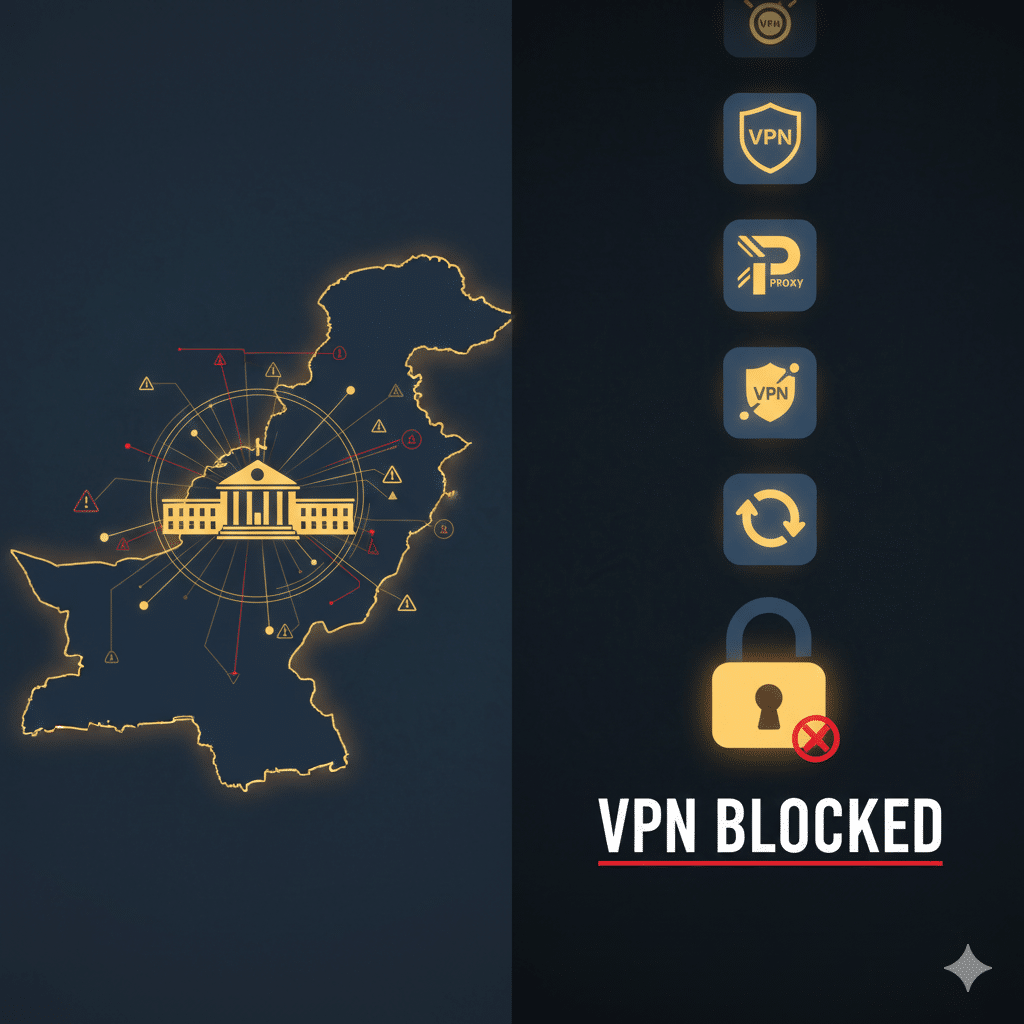

On 13 November 2025, the Pakistan Telecommunication Authority (PTA) announced it has commenced a formal licensing program for Virtual Private Network (VPN) providers under its reinstated CVAS-Data (Class Value Added Services — Data) framework. The move grants class licences to a first group of local companies and creates an official list of approved/ licensed VPN providers authorized to offer services to individuals and organisations.
What the licence does (and what it doesn’t)
According to PTA notices and coverage in national press, the licensing enables registered companies to provide VPN services “for legitimate and lawful purposes” without requiring each user to separately register with the regulator — a change designed to both normalise VPN usage and bring providers under regulatory oversight. The authority framed the step as an element of cybersecurity and data governance policy.
However, observers and privacy advocates warn that licensing can also create avenues for government oversight or technical constraints on unapproved (often international) VPN apps. Some outlets note the first batch of licences went to locally registered firms such as Alpha 3 Cubic (Steer Lucid), Zettabyte (Crest VPN), Nexilium Tech (Kestrel VPN), UKI Conic Solutions (QuiXure VPN) and Vision Tech 360 (Kryptonyme VPN).
Why Pakistan is moving now
Pakistan has repeatedly faced episodes of platform blocks and online content restrictions in recent years; VPNs have been widely used to reach blocked services. The PTA says licensing aims to balance user access and national security, reduce fraud from unregulated operators, and bring transparency to a market that has long run partly in the shadows. Critics argue the framework could be used to limit foreign VPNs or compel local logging/assistance from providers if formal requests are made.
How this affects users and businesses
For ordinary users: Licensed VPNs will be officially available without individual registration, but users may prefer to weigh privacy policies carefully. Local licensing may mean local legal obligations for providers.
For freelancers & businesses: Firms that rely on secure connections — e.g., remote workers, exporters, development teams — may gain clearer legal options for commercially supported VPN services.
For international VPN vendors: There’s a risk that unlicensed foreign services could be blocked or restricted in future enforcement sweeps, depending on PTA policy and implementation.
Comparisons & context
Several countries have adopted regulated VPN frameworks that try to balance cybersecurity needs with user privacy — but outcomes vary. Where regulation includes strict data-retention or interception powers, privacy is weakened; when rules focus on transparency and basic security standards (e.g., audited, no-log commitments), users can benefit. Pakistan’s CVAS-Data route places VPNs in a formal telecom/regulatory stream similar to how some jurisdictions treat encrypted comms services. (See PTA press releases and regional reporting.
Learn more than Encrypted Tunnel Fingerprinting (DecETT): New Research Raises Privacy Alerts
Expert perspective (paraphrased)
Independent analysts quoted in regional technology outlets caution that licensing can reduce scams and malicious apps sold as VPNs — but they emphasise safeguards are needed: clear limits on data requests, audit transparency, and technical guarantees (e.g., RAM-only servers, no-logs) to maintain trust.
Bottom line
Pakistan’s restart of VPN licensing formalises a previously informal market and signals the regulator’s intent to control how encrypted access is delivered inside the country. For privacy-minded users and businesses, the most important next steps are to read providers’ privacy policies, look for technical safeguards (no-logs, RAM servers, audited code), and watch whether the PTA’s rules evolve toward compulsory logging or restrictive blocking of non-licensed services.
Sources & verification
(Primary reporting and official notices used to verify facts above.)
Dawn — PTA commences licensing of VPN service providers. (Dawn)
Arab News — Pakistan starts licensing VPN providers. (Arab News)
ProPakistani — PTA issues list of licensed VPN providers. (ProPakistani)
TechNadu — Pakistan launches official VPN licensing for local providers. (TechNadu)
Business Recorder / Pakistan Today coverage of the CVAS-Data licensing move. (Business Recorder)