
As cyber threats become increasingly sophisticated, VPN security is undergoing a fundamental transformation. In 2025, leading VPN providers and cybersecurity analysts are pointing to a powerful new trend: the integration of artificial intelligence (AI) and machine learning (ML) into VPNs to provide real‑time threat detection and adaptive encryption. This isn’t just about hiding your IP anymore — modern VPNs are evolving into proactive security platforms that anticipate, analyze, and neutralize threats as they emerge.
Why AI Matters for VPN Security
Traditional VPNs have long been valued for their ability to encrypt your data and mask your location. But by themselves, they’re passive: data goes in one end, gets encrypted, and exits the other. They typically don’t inspect the content for anomalies or malicious behavior.
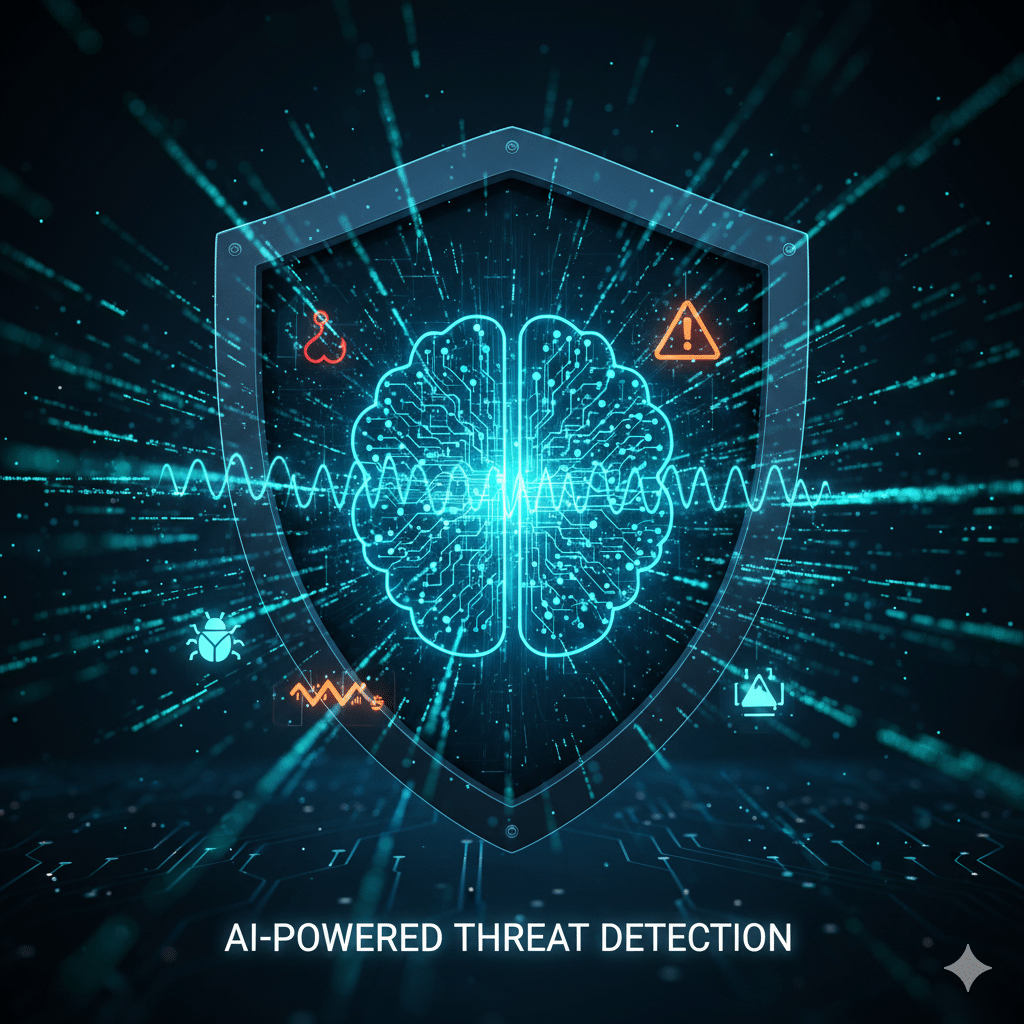
Now, with AI-powered threat detection, VPNs can shift from passive tunnels to active defenders. According to a 2025 deep dive by MarkTechPost, AI models embedded in VPN services can recognize unusual traffic patterns, flag zero-day attacks, and block phishing or malware in real time. At the same time, these models can adapt encryption dynamically, strengthening security when risk is high and scaling back when the connection is benign — optimizing both protection and performance.
Cybersecurity trend reports also emphasize that AI-driven threat detection is a key 2025 frontier: “VPNs are no longer just passive tunnels,” FlexiNet Security notes, “leading VPN services are integrating artificial intelligence … to detect anomalies in real time, such as unusual login behavior, traffic patterns, or malware signatures.” ()
How AI‑Powered VPNs Work
Real-Time Anomaly Detection
AI and ML models learn typical network behavior (baseline) for each user or device. When traffic deviates significantly — whether because of an unfamiliar login, an odd volume of data transfer, or a new connection endpoint — the VPN’s AI can flag or block the suspicious session.
Predictive Threat Blocking
Rather than waiting for known malware signatures, AI in VPNs can predict malicious behavior. If the pattern matches previously learned “dangerous” behavior (e.g., a phishing‑style redirect, or a sudden burst of command‑and‑control‑like chatter), the AI can quarantine or reroute traffic before damage occurs.
Adaptive Encryption & Routing
AI doesn’t just detect threats; it responds. In threat-rich situations — like public Wi-Fi, or when a user’s device is compromised — the VPN’s AI can automatically upgrade encryption or force a more secure routing path.
Smart Server Selection
Machine learning helps the VPN client choose the best server, not just for speed, but for security. AI analyses real‑time network congestion, historical load, and threat intelligence to pick servers that minimize risk without compromising performance.
User Behavior Profiling & Risk Scoring
AI-driven models can build behavioral profiles for users — factoring in how, when, and where people connect — allowing the VPN to more accurately detect abnormal activity and intervene more intelligently.
The Risk Landscape That Demands AI in VPNs
Cyber threat actors are also harnessing AI, meaning old-school defenses may no longer suffice. Malicious actors can use generative AI to craft highly convincing phishing emails, mimic trusted senders, automate malware deployment, or even evolve malware behavior on the fly.
Meanwhile, privacy-focused security companies are sounding the alarm: Kaspersky, for instance, predicts that AI and privacy concerns will dominate the consumer cybersecurity space in 2025, highlighting the dual role of AI as both weapon and shield.
Some VPNs are responding by building more than just encryption; they’re building smart defenses, leveraging AI to stay one step ahead.
Examples & Market Moves
While not all major VPN providers have fully disclosed their AI‑driven threat detection systems, the trend is gaining real traction. According to Aricius’s 2025 guide on how to choose an AI-powered VPN, some services now advertise features like deep learning threat detection, adaptive routing, and smart firewall integration.
Symlex VPN, for example, claims to leverage AI to detect phishing-style attacks, data mining, and sophisticated threat patterns — blocking them before they reach the user. ( On the other hand, analysts caution users to be wary of mere “AI marketing hype” — not all VPNs claiming “AI protection” actually train their systems on meaningful data or demonstrate real-time threat intelligence.
Benefits, Challenges & Trade‑offs
Benefits:
Proactive Security: AI-enabled VPNs do more than encrypt — they detect and respond to threats.
Performance Efficiency: Adaptive encryption and smart routing help minimize latency and optimize bandwidth.
Future‑Ready Defense: With AI learning and improving, VPN providers can more quickly adapt to new exploit techniques and zero-day threats.
User Simplicity: Rather than manually tuning security settings, users benefit from intelligent, automated protection.
Challenges:
Transparency & Trust: Not all AI-powered VPNs are equal: without third-party audits, it’s hard to know how well threat-detection models actually work.
False Positives: AI may overreact; normal behavior could be misclassified as suspicious, leading to unnecessary disruptions.
Resource Overhead: Running ML models may demand extra CPU or data usage, potentially affecting device performance.
Privacy Trade-Offs: For AI to detect anomalies, the VPN needs to “understand” traffic — which raises questions about data retention, model training, and user privacy.
learn more than PTA Releases Licensed VPN Provider List — What You Need to Know
Conclusion
AI‑driven threat detection is reshaping the very nature of VPN security. No longer are VPNs limited to encrypted tunnels; they’re becoming proactive, intelligent guardians that learn, adapt, and act.
In 2025, as cyber threats evolve rapidly — often powered by AI themselves — integrating AI/ML within VPN infrastructure is not just a trend, but a necessity. The best VPNs of tomorrow will combine smart threat detection, adaptive encryption, and user‑centric design to defend against emerging cyber risks without compromising performance.