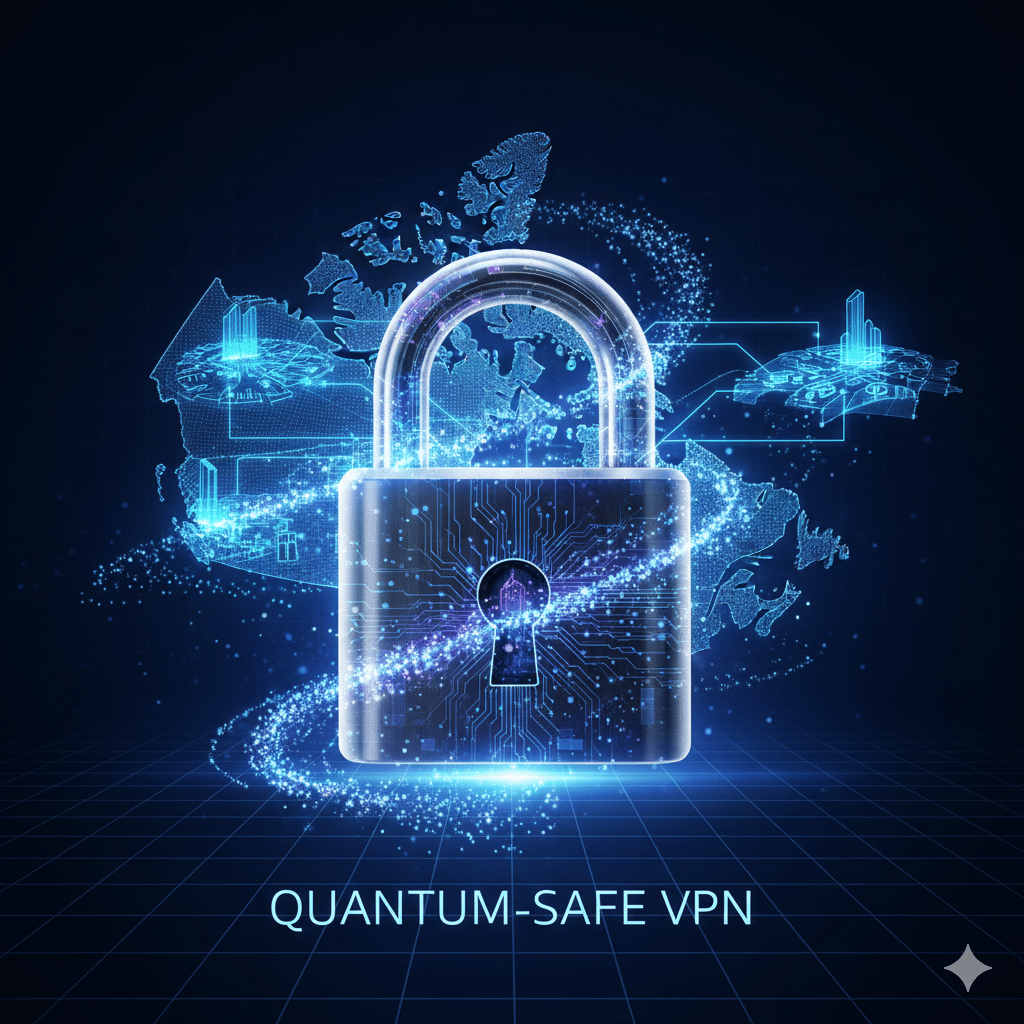

In a bold move to stay ahead of emerging cyber risks, TELUS has announced the launch of its Quantum‑Safe VPN service, aimed at protecting Canadian businesses today — and in a post‑quantum future. The service integrates post-quantum cryptography (PQC) to shield sensitive data from quantum-powered attacks that could render current encryption methods obsolete. With quantum computing on the horizon, TELUS is signaling that the time to act is now.
What TELUS Is Offering: Quantum‑Safe Encryption for Businesses
According to TELUS’s official press release, the Quantum‑Safe VPN is designed not just as a standard virtual private network — it’s a future-proof business security tool.
Key points of the new service:
Quantum-Resistant Encryption: Utilizes advanced PQC methods, based on technology from Palo Alto Networks, to secure data in a way that is resistant to attacks from future quantum computers.
Integration with Next-Gen Firewall: The VPN is integrated with TELUS’s Managed Next Generation Firewall, making it easier for organizations to deploy secure, encrypted communication across their networks.
Adaptable to Emerging Standards: TELUS says the service is flexible enough to evolve as PQC standards mature, helping customers stay compliant as regulatory frameworks strengthen.
Three Core Benefits:
Enhanced data protection against quantum-powered cyber threats.
Long-term business continuity by safeguarding intellectual property.
Simplified regulatory compliance, as organizations increasingly face cybersecurity standards tied to quantum-readiness.
Why This Matters: The Quantum Threat Is Real
Quantum computing is no longer just science fiction — it’s advancing rapidly, and with it comes a major threat to conventional cryptography. Current encryption algorithms (like RSA and ECC) rely on mathematical problems that quantum computers could potentially solve much faster than classical computers. This risk creates a “harvest now, decrypt later” scenario: attackers could intercept and store encrypted data today, planning to decrypt it when they have access to quantum computing power.
TELUS recognizes this risk and is addressing it proactively. As Carey Frey, Chief Security Officer at TELUS, says:
“By implementing quantum‑resistant security measures now, organizations can take steps to protect their sensitive data against today’s sophisticated attacks and tomorrow’s quantum‑powered threats.”
This aligns with a broader cybersecurity consensus: the shift to post-quantum security isn’t optional — it’s inevitable.
How TELUS’s Approach Compares with Other VPN Providers
TELUS isn’t the only company preparing for a quantum-safe future. Other VPN providers have also started introducing post-quantum encryption:
NordVPN: Rolled out post-quantum encryption (PQE) across all its applications in 2025, using its proprietary NordLynx (WireGuard-based) protocol.
ExpressVPN: Added post-quantum security to its WireGuard protocol, using NIST‑approved quantum-resistant algorithms.
What sets TELUS apart is its enterprise-first model: rather than targeting individual consumers, TELUS is focusing on business continuity, regulatory compliance, and large-scale security infrastructure by integrating directly with its firewall services. This is particularly valuable for organizations that handle sensitive data, such as government agencies or enterprises with IP-sensitive operations.
Challenges and Considerations
While the launch of a quantum-safe VPN is exciting, several challenges remain:
Performance Overhead: Post-quantum algorithms often require more computational power, which may impact latency and throughput. It’s unclear from TELUS’s announcement how significant this trade-off is for everyday VPN usage.
Standard Maturity: PQC standards are still evolving. Although TELUS claims adaptability, future changes in cryptographic standards could necessitate updates or even protocol migrations.
Adoption Barriers: For many small or mid-sized businesses, upgrading to a quantum-safe VPN may not feel urgent yet — especially if they lack quantum-sensitive data.
Cost: Enterprise-grade quantum-safe solutions tend to be more expensive. Businesses will need to weigh the cost of deployment against the risk of future quantum attacks.
learn more than AI‑Driven Threat Detection Reshapes VPN Security
Conclusion
TELUS’s Quantum‑Safe VPN launch marks a significant step in the cybersecurity arms race against quantum threats. By combining post-quantum cryptography, integration with next-gen firewall services, and a commitment to future-proof standards, TELUS is delivering a proactive solution for businesses to protect data today — and in the quantum-powered world of tomorrow.
In an era where “harvest now, decrypt later” attacks could become a reality, TELUS’s move offers not just security, but peace of mind. Organizations that adopt this service will be better positioned to safeguard their sensitive communications and intellectual property against the quantum threat, long before it materializes.