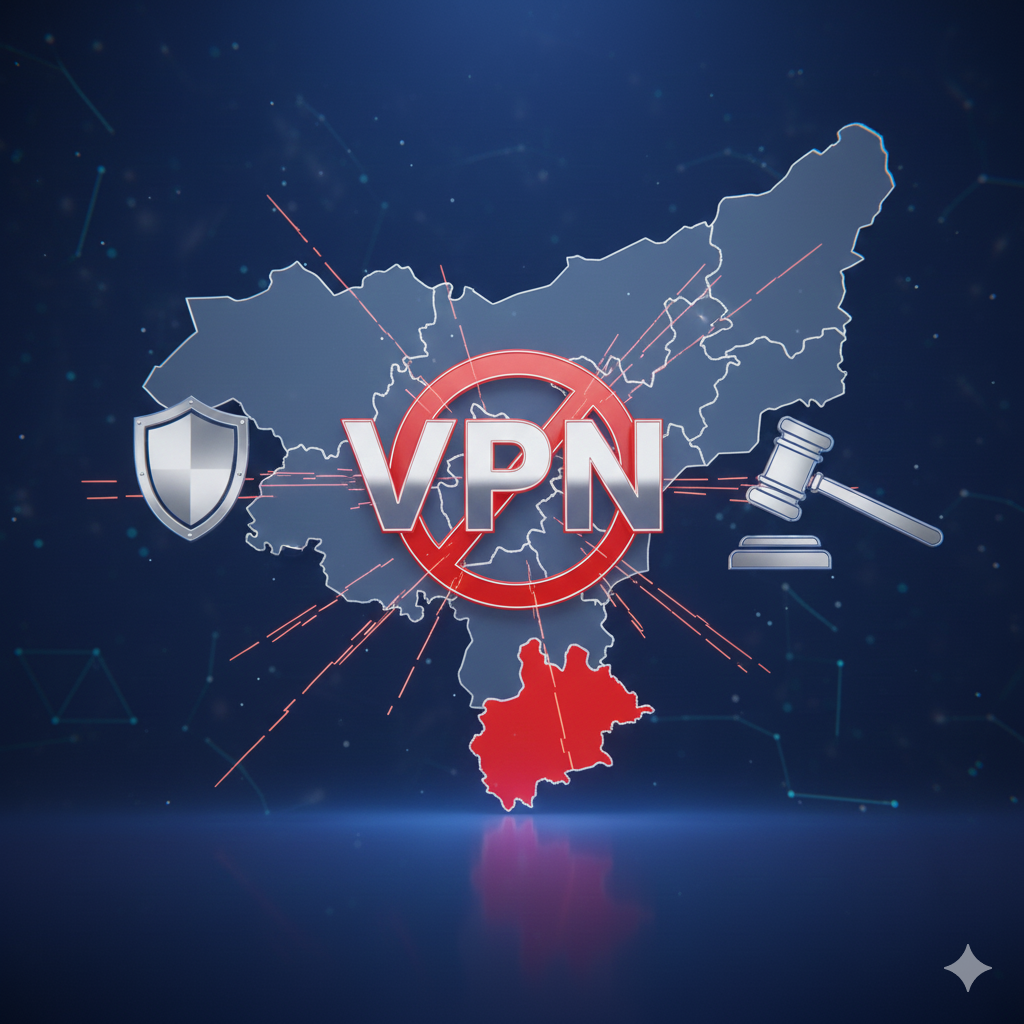

In a move that has sparked extensive debate over digital freedom and cybersecurity policy, the Kathua district administration in Jammu & Kashmir (J&K) has imposed a ban on the use of Virtual Private Network (VPN) services for two months — citing concerns over national security, public order, and the potential misuse of encrypted online communications.
The directive, issued under Section 163 of the Bharatiya Nagarik Suraksha Sanhita (BNSS), 2023, applies to all individuals, institutions, cyber cafés, and Internet Service Providers (ISPs) operating within the district unless exempted by government authorization.
This decision follows similar VPN restrictions recently seen in other districts of J&K, underscoring a growing regulatory focus on encrypted connectivity tools in sensitive border regions.
What the Ban Entails
According to official notices, the Kathua VPN suspension prohibits the use of all VPN services and applications — technology used to encrypt internet traffic and mask users’ IP addresses — based on fears that such tools could be exploited for spreading misinformation, bypassing cyber restrictions, or facilitating unlawful activities.
Although the order does not explicitly list specific incidents that triggered the ban, the District Magistrate Rajesh Sharma highlighted misuse concerns and the need to preempt threats to cybersecurity and public order.
Importantly, the ban includes:
Individuals using VPN apps on personal devices.
Cyber cafés providing VPN access.
ISPs facilitating VPN connections.
Those found violating the directive may face legal action under relevant provisions of law, although precise penalties have not been widely clarified. (Republic World)
Why Authorities Cited Security Risks
District authorities stated that VPNs can be misused to:
Bypass cyber restrictions and access prohibited digital content.
Spread misleading or provocative material online.
Conceal digital activities tied to anti-national or unlawful operations.
By masking IP addresses and encrypting data flows, VPNs — while essential for privacy and secure internet use — also pose challenges for law enforcement in tracking harmful or illegal behavior. Critics argue this complexity creates a tension between security enforcement and digital rights.
Security officials, particularly in sensitive border regions like Kathua — which lies near the India-Pakistan border — often emphasize the need for proactive measures to defend against cyber threats, misinformation campaigns, and potential external influence.
Comparisons With Other Regional Restrictions
The Kathua order is not isolated. Acts of restricting VPN services have appeared in districts like Rajouri and Poonch, where similar temporary suspensions were implemented earlier in December 2025 due to surge in VPN usage flagged by police authorities.
These regions also cited:
Public safety concerns
Potential cyber misuse
Encrypted digital traffic bypassing surveillance
Such developments suggest a broader clampdown on encrypted tools across multiple administrative zones, especially in border areas where authorities are on heightened alert for threats.
Debate Over Digital Rights and Security
The VPN suspension has triggered reactions from digital rights advocates who argue that:
VPNs are critical tools for safeguarding personal privacy and secure remote work.
Blanket bans could hamper legitimate use and undermine trust in digital infrastructure.
Regulatory orders like these raise concerns about internet freedom and information access.
Experts in cybersecurity highlight the dichotomy: while VPNs enhance privacy and are widely used by businesses and individuals for encryption and data protection, they can also hinder lawful investigations when misused.
“Encryption is a double-edged sword — it protects users’ privacy but challenges law enforcement visibility,” notes a cybersecurity analyst familiar with global digital security policies. This tension plays out across multiple jurisdictions worldwide, not just in J&K.
Impact on Residents and Businesses
For everyday users in Kathua, the VPN ban may:
Hinder access to certain online services or international platforms.
Affect remote workers relying on secure corporate connections.
Disrupt privacy practices of individuals using VPNs for legitimate reasons.
Local businesses, especially SMEs engaged in cross-border communication or cloud-based operations, may face challenges adapting to the suspension — even if it’s temporary.
learn more about Proton VPN Jumps to No. 3 in TechRadar Listings
Conclusion
The two-month suspension of VPN services in Jammu & Kashmir’s Kathua district underscores growing regulatory tensions between national security imperatives and digital privacy rights. By invoking national security and public order concerns, authorities are signaling a cautious approach to encrypted digital tools — especially in geopolitically sensitive regions.
As debates continue over the tradeoff between ensuring cybersecurity and preserving internet freedom, the Kathua case illustrates a situation where law, technology, and citizen rights intersect — with far-reaching implications for how digital privacy tools like VPNs are governed in the future.