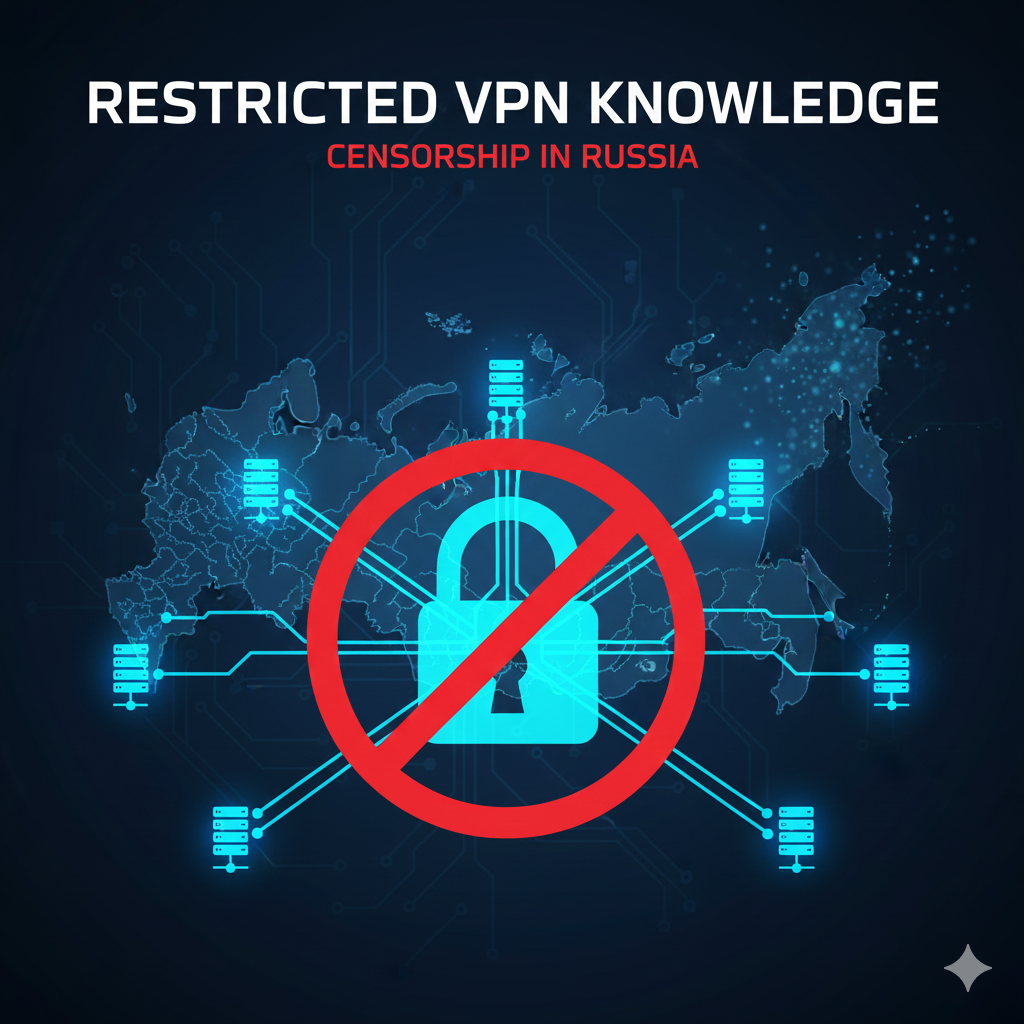

Russia is intensifying its digital censorship blitz with new measures aimed at banning scientific and technical information about VPNs (Virtual Private Networks) — covering topics from implementation guides to methods for bypassing state‑imposed internet restrictions. (VPN Technical)
This shift moves beyond traditional VPN service blocking toward curtailing knowledge and research about VPN technology itself — a significant step in restricting public access to tools and know‑how that can circumvent online censorship. The controversial measures build on years of increasing internet freedom restrictions in the country.
What the Expanded VPN Information Block Entails
According to an order published by Russia’s communications regulator, Roskomnadzor, the government will prohibit the dissemination of “scientific, technical, and statistical” information related to VPN technologies used to bypass internet censorship or access blocked websites.
Previously, Russia had already outlawed the promotion and advertising of VPN services (in effect since March 1, 2024), and this new agenda extends those restrictions to include how‑to content, research papers, and implementation guides. (
The legal framework — in force through at least September 1, 2029 — effectively makes it illegal to publish tutorials or scientific material that explain how VPNs work to circumvent restrictions.
Exceptions exist for VPNs used legitimately for encrypted remote access and secure business connectivity (e.g., enterprise VPN use), but the broader restrictions target public knowledge about circumvention technologies.
Why This Matters: Beyond Blocking VPN Services
Blocking technical information about VPNs — not just the services themselves — represents a deeper level of digital control. Standard censorship efforts typically aim to block access to specific sites or services that facilitate circumvention. Russia is now extending that logic to knowledge itself: if people can’t learn how to configure VPNs to avoid blocks, their options for bypassing state filtering become limited.
This mirrors trends already in motion in Russia’s digital policy landscape. Historically, the state has deployed:
Deep Packet Inspection (DPI) to filter encrypted traffic and identify VPN protocol patterns. (
Expansion of blocked VPN protocols like SOCKS5 and VLESS to disrupt conventional VPN use.
Systematic VPN service blocking, with hundreds of providers removed from access lists.
By curbing access to technical information, the state effectively raises the barrier to entry for people seeking to use or debug VPN tools. This is especially significant in a country where VPNs remain one of the few ways many citizens attempt to reach blocked foreign platforms and information services.
Impact on Internet Freedom and Research Communities
The expanded block on VPN technical information has broad implications:
Internet users may struggle to access tutorials, comparisons, or documentation explaining how to configure VPNs or set up encrypted connections.
Independent media and bloggers could face removal of online content that mentions VPN troubleshooting or guidance.
Academia and cybersecurity researchers might see their publications on encryption and secure communications restricted or removed.
Digital rights advocates warn that such measures lead not only to censorship of tools, but also to self‑censorship, where scientists and engineers avoid important research topics out of fear of legal consequences.
Comparisons With Broader Global Censorship Trends
While countries like China and Iran have implemented strict VPN restrictions, Russia’s approach is unique in that it doesn’t merely block services — it criminalizes knowledge and discourse about circumvention technologies. In many other environments, VPN bans are enforced by blocking protocols or penalizing service providers, but not by prohibiting public discussion of how VPNs work.
For example:
China’s Great Firewall blocks VPN use and many foreign internet services, but tech tutorials and academic research about network security remain widely published outside strict censorship zones.
Iran requires VPNs to be licensed and registered but doesn’t explicitly ban all technical guides on VPN implementation.
Russia’s approach — covering any content that could help users circumvent restrictions — blends technical filtering with legal penalties, narrowing both access and understanding.
Legal and Penalty Framework
Newer Russian laws also include stiffer penalties for:
Advertising VPN tools and circumvention guides.
Intentionally searching for prohibited content with a VPN, which could result in fines for users.
Dissemination of blocked technical information, punishable by fines or takedown orders imposed on platforms and content publishers.
Although using a VPN strictly for secure purposes (like corporate remote access) is not illegal, the line between legitimate and prohibited content is increasingly blurred due to broad definitions of “circumvention” in Russian legislation.
learn more than SOTI Rolls Out Built‑In VPN for Retail Mobile Security
Conclusion
Russia’s plan to expand bans on technical and scientific information about VPN technology marks a significant escalation in digital censorship. By criminalizing access to detailed VPN guides and implementation details, the state is not just blocking tools — it is constraining the flow of knowledge that empowers users to protect their privacy and evade censorship.