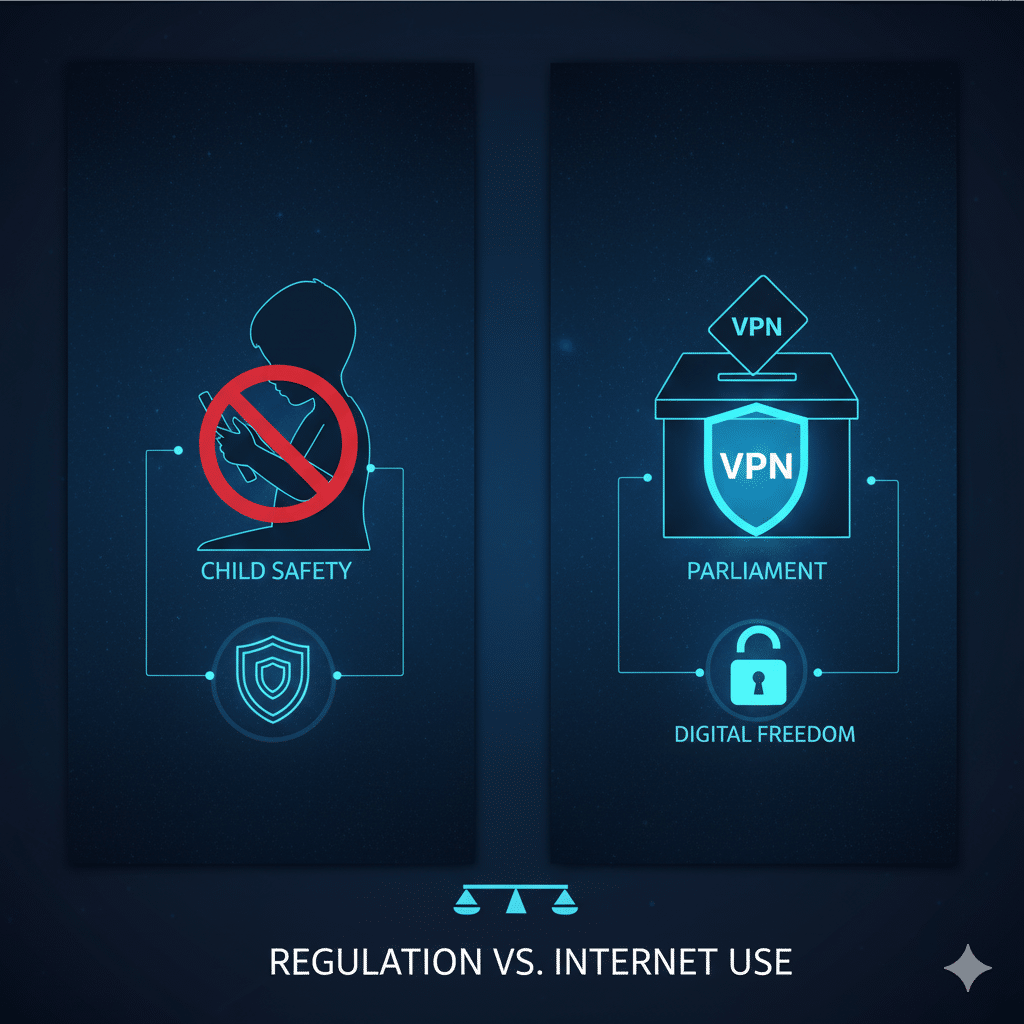

In a notable move in UK digital policy, a cross-party group of House of Lords peers has tabled a legislative amendment that would ban children under 18 from using Virtual Private Networks (VPNs)—a proposal aimed at stopping young users from circumventing online age-verification measures (VPN Use by Children) . The debate highlights the wider clash between efforts to protect children online and concerns about privacy, online freedoms, and technological feasibility.
What the Proposal Would Do
The Lords’ amendment, submitted as part of the Children’s Wellbeing and Schools Bill, would require the UK government to implement a ban on VPN usage by anyone under 18 within 12 months if adopted. Under the proposal:
VPN providers would have to apply “highly effective” age verification systems—potentially including government-issued ID checks or biometric scans—to make sure no under-18s can use their services.
Companies that fail to comply could face penalties and regulatory enforcement.
The rules would apply to any VPN marketed to UK consumers or widely used there.
Supporters say this would reduce the ability of minors to bypass age-gating for harmful content, including adult material and other online risks.
However, critics have raised serious privacy, effectiveness, and freedom-of-expression concerns.
Context: Online Safety Act and Age Verification
The proposal is rooted in the Online Safety Act 2023, a broad UK law designed to protect children from harmful content online. The Act requires platforms hosting adult or dangerous content to enforce strict age verification before allowing access.
After implementation of these rules, some users turned to VPNs to circumvent age gates by appearing to be outside the UK’s jurisdiction or masking their identity. This has fueled calls from some lawmakers and child-safety advocates to tighten restrictions on circumvention tools like VPNs. (ITVX)
Debate: Protection Versus Privacy
Support for the Proposal
Peers backing the amendment argue that VPNs undermine online safety protections by allowing children to access restricted content despite age checks. During parliamentary discussions, some speakers expressed alarm that children could exploit VPN tools to evade safeguards meant to keep them away from explicit material or harmful social features.
There have also been concerns raised about free VPN apps targeting kids that may monetize data or expose devices to security risks—arguments cited by some Lords as part of the online safety debate.
Opposition and Expert Criticism
Digital rights advocates and tech experts have strongly questioned the logic and feasibility of a blanket ban. Groups such as the Open Rights Group argue that attempts to restrict VPN use could be “Orwellian” and might adversely impact legitimate uses of VPNs, such as securing public Wi-Fi connections or protecting privacy on school and home networks.
Indeed, recent research suggests that children’s VPN use has not dramatically increased after age verification rules went into effect. A study by Internet Matters reported roughly 8% of children aged 9–17 having ever used a VPN, with usage patterns consistent with prior years; children most often cite privacy and entertainment needs, not content circumvention, as motivations.
Government representatives have also emphasized there are “no current plans” to ban VPNs outright, noting the limited evidence of under-18s using them extensively. This position acknowledges both the utility of VPNs for adults and the challenges in enforcing such restrictions without undermining digital rights.
Practical and Legal Hurdles
Implementing a ban on children’s VPN use would face significant technical and legal obstacles. VPNs are widely used for lawful reasons such as:
Protecting online privacy on public networks
Securing sensitive communications for remote work and education
Accessing geo-restricted educational content
Experts argue that effective age verification at the VPN level could require intrusive measures that themselves risk damaging privacy. Additionally, technological workarounds—such as personal VPN servers, encrypted proxy tunnels, or routing through trusted networks—would make strict enforcement difficult if not impossible.
learn more about VPNs Top 2025 Global Privacy Tools — But Choose Wisely
Conclusion
The UK Lords’ proposal to ban children from using VPNs is part of a broader effort to strengthen online safety protections for minors. Yet it has ignited a wider debate on how best to balance child protection with digital rights and privacy in the internet age. While proponents see it as a logical extension of age-verification laws, critics warn that it could set a troubling precedent, jeopardize legitimate privacy tools, and face stark implementation challenges.
As this legislative idea progresses through Parliament, its fate will likely hinge on further evidence of children’s VPN usage, technological feasibility, and how policymakers weigh the competing values of safety and freedom online.