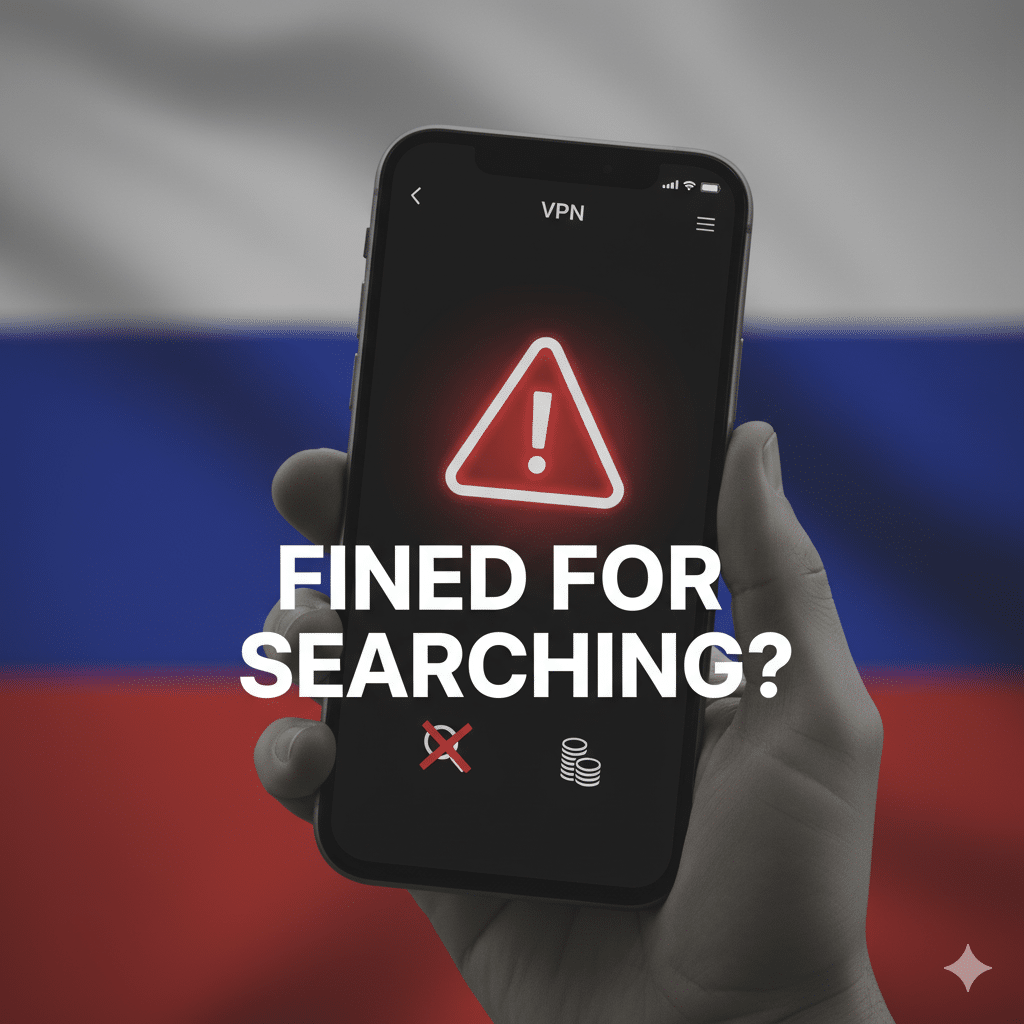

In mid-2025, Russia moved to tighten online controls by passing amendments that penalize people who deliberately search for or access material labeled “extremist” — including when they use tools such as VPNs to bypass restrictions(VPN Use to Access). The law, pushed through the State Duma in July and signed by the president, imposes modest fines on individuals for searches but much larger penalties on those who advertise or facilitate VPN access. The measure has prompted alarm from civil-liberties groups and tech companies that warn it broadens surveillance and could chill ordinary online research.
What the law actually does (short version)
The new rules add a provision to the administrative code making the deliberate search for “extremist” content a punishable administrative offence. Individuals face fines typically between 3,000 and 5,000 rubles (roughly US$30–$65). The legislation also introduces steeper penalties tied to VPNs: advertising VPN services or enabling access to blocked sites can draw fines of tens of thousands to hundreds of thousands of rubles for individuals and organizations, and much larger sums for companies. Officials say the measures target misuse; critics say the definitions are vague and enforcement powers are expansive.
Why VPNs are singled out
Russian authorities have long tried to limit citizens’ use of VPNs to reach blocked platforms. The new law frames VPNs as potential tools for accessing extremist material and therefore tightens liability for those who promote or provide such services. That approach effectively treats VPNs not only as circumvention tools but as commercial services that can be regulated or penalized if they are seen to facilitate prohibited access. Tech outlets and legal analysts warn this could disincentivize legitimate VPN providers from operating in or marketing to Russia.
What it means for users and providers
For individual users, the immediate risk is a small fine if authorities conclude someone “deliberately” searched for banned content. However, the law’s vagueness leaves open how authorities will detect intention and what monitoring mechanisms will be used — raising fears of expanded surveillance and automated flagging. For VPN providers, the stakes are higher: penalties for advertising or enabling access can reach hundreds of thousands of rubles or more, pushing some operators to suspend Russian-facing services or remove Russian app listings. Apple and other platforms have already removed multiple VPN apps from Russian storefronts under past pressure, and the new law adds legal teeth to those pressures.
Reactions from rights groups and observers
Human Rights Watch, digital-rights groups and independent media outlets called the law a serious escalation, noting it criminalizes the simple act of looking for information and could chill free expression and research. Legal experts say the law’s language is broad enough that ordinary users could be swept up, and civil society groups worry about selective enforcement against activists, journalists and minority groups. At least one prominent pro-government figure warned the measure risked complicating efforts to monitor extremism, showing even some official circles have reservations.
How enforcement might work — and why it’s unclear
Authorities have not published a detailed public plan for how they will identify violators. Implementation could rely on cooperation with telecom operators, tracking of search queries, or analysis of traffic patterns — all methods that raise privacy and due-process concerns. Critics note that without strong legal safeguards, the mechanisms for detection could be abused for broader censorship and surveillance.
Conclusion
Russia’s 2025 amendments mark a significant tightening of internet controls by attaching legal liability to searching for “extremist” content and by specifically targeting VPN promotion and facilitation. While fines for individuals are modest, the broader legal framework and heavier penalties for providers amplify risks to online privacy, access to information and the business environment for VPN vendors. For users inside Russia and companies doing business there, the practical takeaway is clear: the legal environment is now more hazardous, enforcement practices are opaque, and the line between lawful curiosity and penalized behaviour has grown perilously thin.