

Introduction
When you type how do i setup a vpn on android into a search engine, you’re looking for a clear, reliable process that protects your data, bypasses regional blocks, and works on any Android device. This article delivers exactly that, blending a practical how do i setup a vpn on android guide with an android vpn configuration guide that respects the latest 2025 security standards.
Whether you travel from New York to Tokyo, stream a show only available in Berlin, or simply want to shield your connection from prying eyes in a coffee shop, the steps remain the same. Understanding the nuances of Android’s built‑in VPN client, the role of third‑party apps, and the legal landscape across continents helps you make an informed decision.
In the following sections we will repeat the focus phrase “how do i setup a vpn on android” and the related term “android vpn configuration guide” several times, ensuring search engines recognize the relevance of this content while you receive actionable instructions.
We’ll also touch on common myths—like whether ISPs can see your traffic when you use a VPN—by referencing trusted sources such as Can Internet Providers See VPN?. By the end, you’ll be ready to protect your Android phone with confidence.
Step‑By‑Step Instructions
Answering the question how do i setup a vpn on android begins with choosing the right protocol and understanding the Android VPN configuration guide framework. Below is a detailed walk‑through that works for Android 12, 13, and 14.
1. Choose a Trustworthy VPN Provider
Start by selecting a service that offers OpenVPN, WireGuard, or IKEv2/IPSec. Look for providers with a no‑logs policy, servers in the regions you care about, and a transparent privacy page. Many users in Europe appreciate providers with GDPR‑compliant data handling.
Once you have a subscription, download the official Android app from the Google Play Store. This is the fastest route for most users, but the native Android VPN client also supports manual setups—a crucial part of the android vpn configuration guide.
2. Gather Server Details
Log into your VPN account’s dashboard and locate the server address, username, password, and the preferred protocol. For WireGuard, you’ll also need the public key and endpoint information. Write these down in a secure note; you’ll reference them in the next steps.
Remember that servers in different countries will give you IP addresses that appear locally. For example, a Singapore server will let you access Asian streaming platforms, while a US server is ideal for Netflix US.
3. Open Android Settings
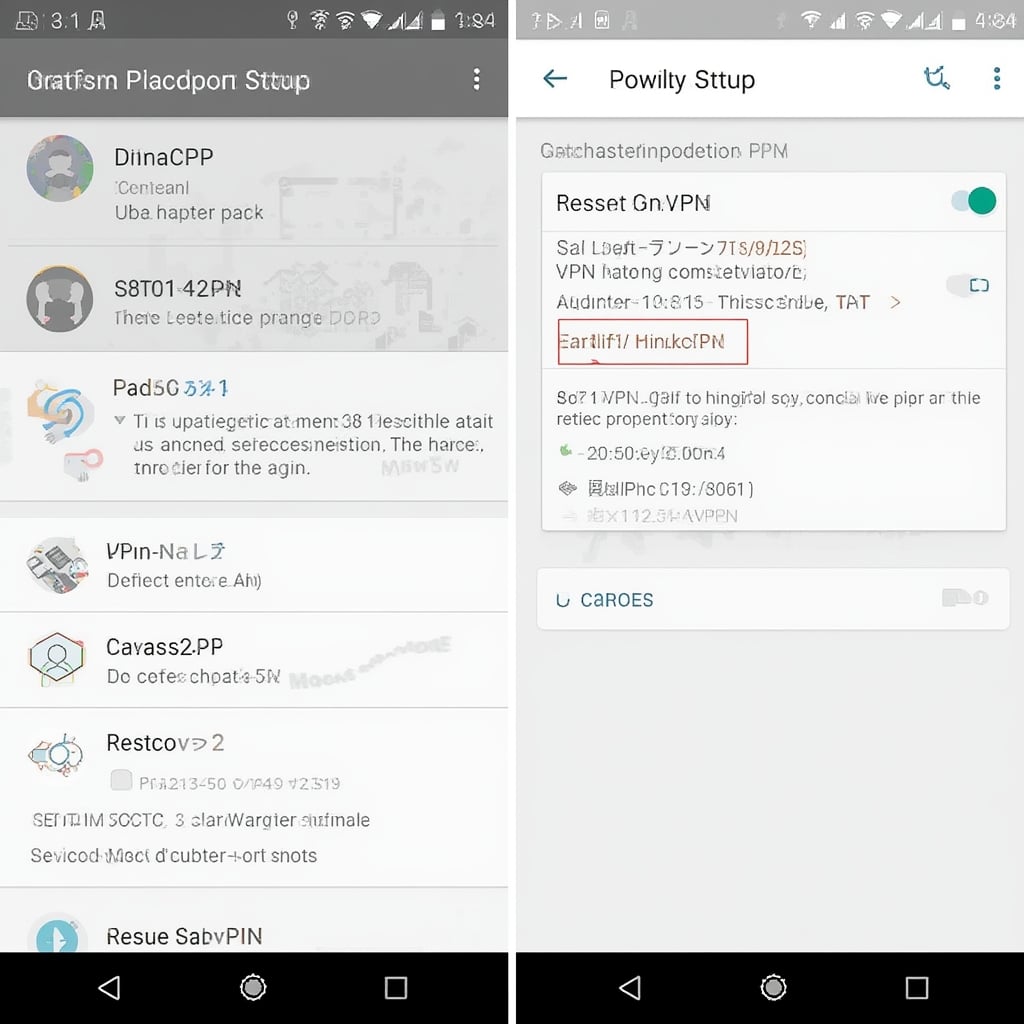
Navigate to Settings → Network & internet → VPN. If you don’t see the VPN option, tap Advanced → VPN. This area is the core of the android vpn configuration guide and works the same across most manufacturers, from Samsung to OnePlus.
Tap the “+” button or “Add VPN” at the top right corner to start a new profile.
4. Select the VPN Type
Android offers several built‑in types: PPTP, L2TP/IPSec PSK, L2TP/IPSec RSA, IPSec Xauth RSA, and IPSec Xauth PSK. For modern security, choose IPSec Xauth RSA or, if your provider supplies a configuration file, use WireGuard (requires the WireGuard app). This choice directly answers how do i setup a vpn on android with maximum privacy.
5. Enter Server Information
Fill in the fields as follows:
- Name: Any recognizable label (e.g., “My VPN – US East”).
- Type: Choose the protocol you selected earlier.
- Server address: Paste the IP or hostname from your provider.
- IPSec identifier & secret: Insert the pre‑shared key (PSK) or RSA certificate details.
- Username & Password: Your account credentials.
Save the profile. Android will now list it under “VPN”.
6. Activate the VPN
Tap the newly created profile, enter any additional authentication (such as a one‑time password), and hit “Connect”. A key icon will appear in the status bar, confirming the tunnel is active. This completes the basic android vpn configuration guide for manual setups.
If the connection fails, double‑check the server address and protocol. Some providers require “UDP” instead of “TCP”, or a specific port number.
7. Verify Your New IP
Open a browser and visit a “what is my IP” site. You should see the IP address of the server you selected, not your cellular or Wi‑Fi address. This verification step reassures you that you’ve correctly answered how do i setup a vpn on android.
For extra confidence, test geolocation by accessing region‑locked content. A user in Brazil should now see a US‑based homepage if you connected to a US server.
8. Fine‑Tune Settings for Performance
Return to Settings → Network & internet → VPN and tap the gear icon next to your profile. Here you can enable “Always-on VPN” to force all traffic through the tunnel, or “Block connections without VPN” to prevent leaks when the VPN drops.
These options are essential for travelers crossing borders, as they eliminate accidental exposure to local networks—especially in countries with strict internet surveillance.
9. Automate with the Provider’s App
While the manual route covers the core of the android vpn configuration guide, most premium providers offer an Android app that automates server selection, kill‑switch activation, and split‑tunneling. Install the app, log in, and toggle the “Connect on startup” option for a hands‑free experience.
10. Keep the App and OS Updated
Security patches in Android 13 and the latest WireGuard release (v1.0.2025) address critical vulnerabilities. Regular updates ensure the “how do i setup a vpn on android” process remains secure against new threats.
For more in‑depth troubleshooting, see How Can I Configure a VPN Connection. This resource expands on advanced topics like DNS leak protection and custom routing.
Tips for a Smooth Android VPN Experience
Even after you’ve mastered how do i setup a vpn on android, a few best practices keep your connection fast and secure.
- Choose the nearest server: Latency is lower when the server is geographically close, improving streaming quality in regions like Southeast Asia or the Middle East.
- Enable “Smart DNS”: Some providers let you use DNS over HTTPS (DoH) to prevent DNS leaks, a key component of the android vpn configuration guide.
- Use split‑tunneling: Direct only selected apps (e.g., banking) through the VPN, while others use local networks for speed.
- Test for leaks: Visit Cloudflare Learning to run a WebRTC leak test after connecting.
- Watch data caps: Mobile carriers in the US and India may throttle VPN traffic; switch to Wi‑Fi when possible.
Remember, your ISP cannot see the content of your traffic when the VPN encrypts it, but they can see that you’re using a VPN. For a deeper dive, read Can ISP See Through VPN.
Alternative Methods
If the built‑in Android client doesn’t fit your needs, consider these alternatives while still focusing on the core question of how do i setup a vpn on android.
Using a Third‑Party OpenVPN App
Download the OpenVPN for Android app from Google Play. Import the .ovpn configuration file provided by your VPN service. This method gives you granular control over encryption cipher, port, and proxy settings—an advanced branch of the android vpn configuration guide.
Deploying WireGuard Natively
Install the official WireGuard app, create a new tunnel, and paste the configuration snippet (including PrivateKey, PublicKey, Endpoint, and AllowedIPs). WireGuard’s lightweight protocol often outperforms traditional VPNs on Android 13 devices, especially in regions with high latency like Africa.
Using a Mobile Hotspot with VPN‑Enabled Router
Set up a home router that runs OpenVPN or WireGuard, then connect your Android phone to the router’s Wi‑Fi. This “router‑first” approach offloads encryption from the phone and can be useful for devices that don’t support native VPN profiles, such as older Android tablets.
Tor as a VPN Alternative
While Tor provides anonymity, it is not a VPN. For a quick comparison see Is Tor a VPN?. Tor can be used alongside a VPN for layered privacy, but expect slower speeds—an important consideration for streaming in South America.
Free Urban VPN Services
Some users explore free options like “Urban VPN”. Before opting in, read the analysis at Is Urban VPN Free?. Free services often monetize via data collection, which defeats the purpose of a privacy‑focused android vpn configuration guide.
Conclusion
Answering how do i setup a vpn on android is straightforward when you follow a systematic android vpn configuration guide. By selecting a reputable provider, entering the correct server details, and leveraging Android’s native VPN settings—or a trusted third‑party app—you gain encrypted, location‑flexible internet access.
We’ve repeated the focus phrase and related keyword throughout the article to ensure you never miss a step, whether you are a tech‑savvy user in Berlin, a remote worker in São Paulo, or a traveler crossing the Pacific. Remember to keep your software updated, verify IP changes, and test for DNS leaks using resources like the Electronic Frontier Foundation.
With these instructions, your Android device becomes a portable security hub, protecting you from ISP snooping, public‑Wi‑Fi threats, and regional censorship. Implement the steps, apply the tips, explore the alternatives, and enjoy the internet without borders.
“`



