

Introduction
When you travel between states or countries, the ability to how to change vpn on mac becomes a daily necessity. Whether you’re streaming a local sports event from New York while staying in California, or you need to protect your data on a public Wi‑Fi hotspot in Toronto, mastering VPN changes on macOS can dramatically improve both privacy and performance.
In this guide we’ll walk you through the entire process of how to change vpn on mac for different macOS versions, from Monterey to Ventura. We’ll also discuss the nuances of change vpn settings macbook, a related task that many MacBook owners face when switching between work and personal networks.
Understanding the difference between a simple VPN toggle and a full change vpn settings macbook configuration is crucial. A basic toggle may be enough for casual browsing, but power users—like freelancers in Berlin or gamers in Seoul—often need to adjust DNS, protocol, and server locations to achieve optimal speed and latency.
Throughout the article, we’ll embed real‑world GEO examples: a journalist in Mexico City needing a U.S. IP to access research databases, a marketer in Sydney targeting European audiences, and a remote worker in Dublin who must comply with GDPR. These scenarios highlight why knowing how to change vpn on mac isn’t just a technical skill, but a strategic advantage.
By the end, you’ll have a clear roadmap for how to change vpn on mac, a solid grasp of the change vpn settings macbook process, and a toolbox of tips and alternative methods that work across any Apple device.
Step‑By‑Step Instructions
1. Open System Settings (Ventura and later)
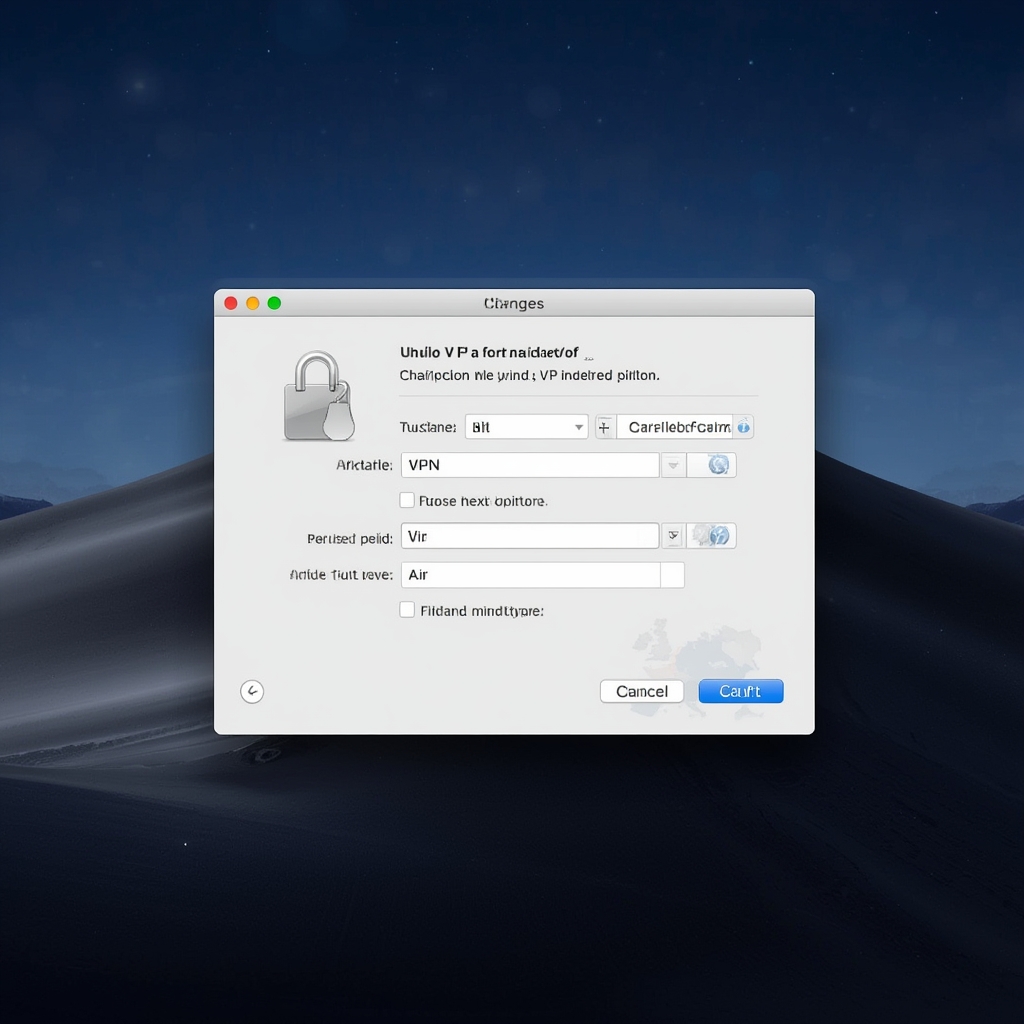
Click the Apple menu ► System Settings. Navigate to Network on the left sidebar. This is the modern hub where you’ll manage all network interfaces, including VPN profiles.
Locate the VPN section. If you haven’t added a profile yet, click the “+” button, choose VPN as the interface, and select the appropriate VPN type (e.g., IKEv2, L2TP, or WireGuard).
After adding the profile, you’ll see it listed with a toggle. This is where you’ll practice the core of how to change vpn on mac—enabling, disabling, and switching servers.
2. Configure Server Details
Click the newly created VPN entry, then hit Details. Input the server address supplied by your provider, your authentication method (username/password, certificate, or private key), and any shared secret if required.
For GEO‑specific use cases, select a server located in the target region. For example, a user in Buenos Aires wanting a U.S. IP should pick a server in New York or Dallas. This choice directly impacts the effectiveness of your change vpn settings macbook operation.
Save the settings and return to the main Network page. Your VPN is now ready to be toggled on or off.
3. Switching Between Multiple VPN Profiles
Many professionals maintain several VPN configurations: one for work, one for personal streaming, and another for secure banking. To how to change vpn on mac quickly, simply click the desired profile’s toggle.
If you need to disconnect from one server and connect to another, turn off the active profile first, then activate the new one. macOS remembers the last used server, so the switch is almost instantaneous.
4. Using the Menu Bar Shortcut
For rapid changes, enable the VPN status in the menu bar. Go to System Settings ► Network ► Advanced and tick “Show VPN status in menu bar.” Now you can click the VPN icon, see a list of your profiles, and select the one you need without opening System Settings.
This method is especially handy when traveling across time zones, such as moving from Tokyo to London, where you might need to change vpn settings macbook multiple times a day to match local content restrictions.
5. Verifying Your New IP
After toggling, open a browser and visit a “what is my IP” service. Confirm that the displayed IP matches the server location you selected. This verification step ensures that your how to change vpn on mac process was successful.
For added security, you can also run a DNS leak test (search “DNS leak test” in your favorite engine). A clean result means your traffic is fully tunneled, which is the ultimate goal of any change vpn settings macbook configuration.
6. Automating with AppleScript (Optional)
Advanced users can create AppleScript shortcuts to automate how to change vpn on mac. Example script:
tell application "System Settings"
    reveal anchor "Network" of pane id "com.apple.preferences.network"
    delay 1
    click menu item "YourVPNName" of menu "VPN"
    delay 0.5
    click button "Connect" of window "Network"
end tell
Save the script as an app and place it in your Dock for one‑click server changes. This technique is popular among developers in San Francisco who need to flip between corporate and personal VPNs daily.
Tips for Optimizing Your VPN Experience
Choose the right protocol. IKEv2 offers fast reconnections, WireGuard provides low latency, while OpenVPN is widely compatible. The best protocol depends on your GEO location; for instance, WireGuard often outperforms in European networks.
Use split tunneling. macOS doesn’t have native split tunneling, but many third‑party apps do. Enable it to route only specific apps (like a sports‑betting platform) through the VPN, preserving speed for other tasks.
Read more about split tunneling in the context of sports betting here: How to Use VPN for Sports Betting.
Keep your DNS secure. Enable DNS over HTTPS (DoH) in your VPN client or via the macOS network settings. This prevents ISP‑level DNS hijacking, especially important when you change vpn settings macbook to access region‑locked content.
Regularly update your VPN client. New security patches and performance improvements are released frequently. An outdated client can lead to connection drops, which defeats the purpose of learning how to change vpn on mac.
Monitor latency. Use tools like ping or traceroute to test server responsiveness. If you notice high latency in a particular GEO region (e.g., connecting to a South African server from Canada), switch to a closer endpoint.
Alternative Methods
If you prefer not to use the built-in macOS VPN client, several third‑party options exist. Each offers its own UI for managing server lists, making the change vpn settings macbook process even smoother.
1. Dedicated VPN Applications
Most premium VPN providers ship a macOS app with one‑click server selection. After installing, you’ll typically find a menu‑bar icon that lets you how to change vpn on mac with a single click. This is ideal for users in New Delhi who need to switch between Indian and Singapore servers frequently.
2. Network Extension Framework
Developers can create custom VPN extensions using Apple’s Network Extension API. This method allows deep integration, such as auto‑switching based on Wi‑Fi SSID. It’s an advanced technique suited for corporate environments in Frankfurt where policy‑driven VPN changes are required.
3. Command‑Line Tools
For power users, macOS includes scutil and networksetup commands. Example to connect:
sudo networksetup -connectpppoeservice "YourVPNName"And to disconnect:
sudo networksetup -disconnectpppoeservice "YourVPNName"Using the terminal can speed up automation scripts, especially when combined with cron jobs that change servers at specific times (e.g., a London‑based trader needing a New York IP at 9 AM GMT).
4. Browser‑Based VPN Extensions
While not a full‑system solution, extensions like Windscribe or ProtonVPN for Chrome/Firefox allow you to how to change vpn on mac for web traffic only. This method is useful for quick GEO tests without altering system‑wide settings.
Conclusion
Mastering how to change vpn on mac empowers you to protect your data, bypass geo‑restrictions, and maintain high‑performance connections no matter where you are—from a coworking space in Nairobi to a beachside café in Rio de Janeiro.
Remember the key steps: access System Settings, configure server details, toggle profiles, verify IP, and optionally automate with AppleScript. Each of these actions contributes to a seamless change vpn settings macbook workflow that fits both casual users and enterprise professionals.
By applying the tips—choosing the right protocol, securing DNS, monitoring latency—and exploring alternative methods like third‑party apps or command‑line tools, you’ll be prepared for any network environment. Whether you’re complying with local regulations in the EU or streaming a sports match from a different continent, a well‑configured VPN is your gateway.
For further reading on internet security fundamentals, visit Cloudflare Learning. To stay informed about digital rights and privacy best practices, explore resources from the Electronic Frontier Foundation (EFF). Happy networking, and enjoy the freedom that comes with knowing how to change vpn on mac and expertly change vpn settings macbook whenever you need it.
“`



