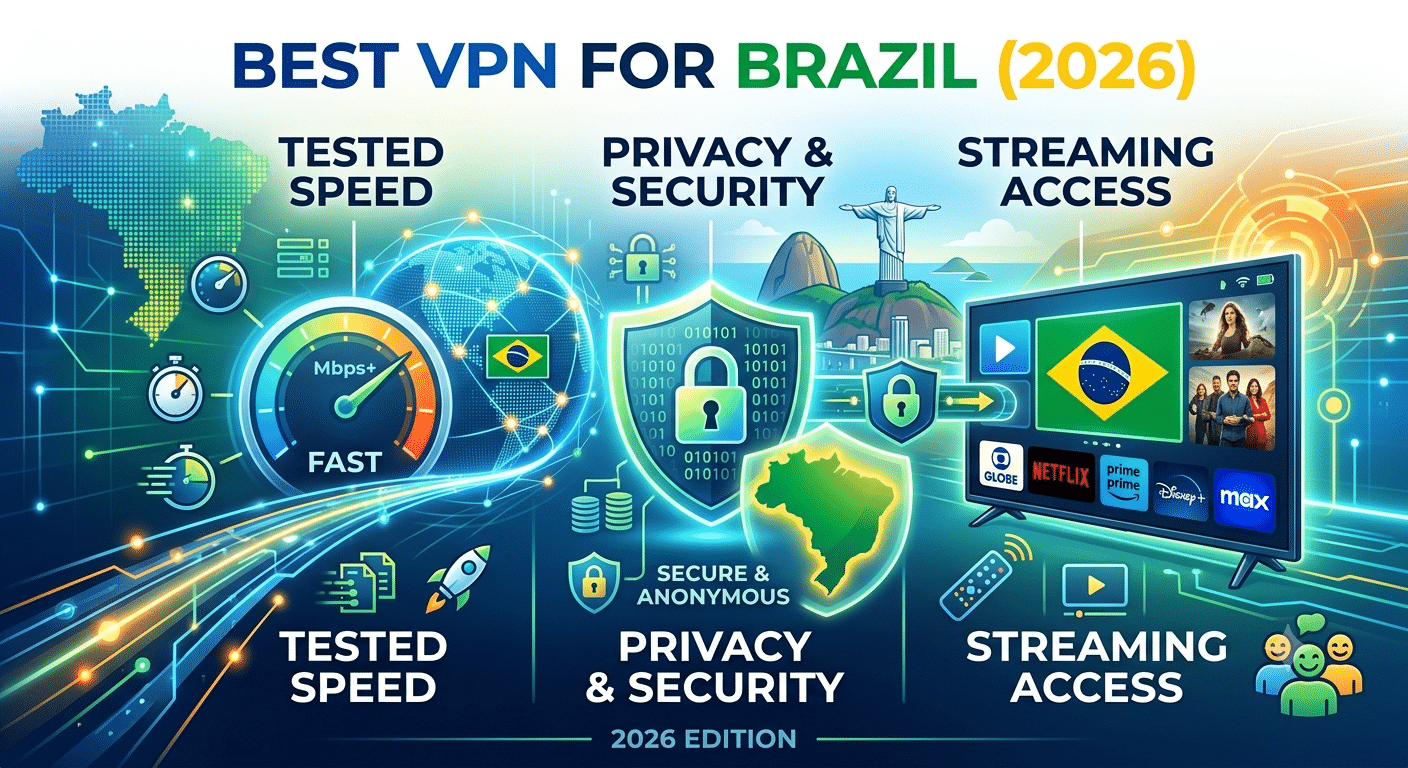

Finding the best vpn for brazil isn’t just about choosing the provider with the most servers. Performance depends on server quality, routing efficiency, privacy practices, and how consistently a VPN maintains speed when connecting to Brazil from abroad—or when protecting your connection inside the country.
In our research and comparison of leading providers, we focused on the factors that matter most: download speeds, Brazilian server availability, independent no-logs audits, streaming compatibility, security features, and overall value. If you’re still learning the fundamentals, our guide to understanding VPN technology explains the basics before you compare services. You can also explore our list of top-rated VPN services for broader recommendations across different use cases.
Privacy has become increasingly important as more people rely on public Wi-Fi, remote work, and cloud services. According to the Electronic Frontier Foundation, encrypted internet traffic helps reduce exposure to many common network threats, especially on untrusted connections.
What Makes the Best VPN for Brazil?
The strongest VPNs for Brazil share several characteristics.
First, they operate high-performance servers inside Brazil. This allows you to obtain a Brazilian IP address with lower latency, whether you’re accessing local websites or streaming region-specific content while traveling.
Second, they maintain independently verified no-logs policies. Independent audits provide more confidence than marketing claims alone because they verify whether providers actually minimize the storage of user activity.
Third, speed matters. Modern VPN protocols such as WireGuard and provider-specific implementations can reduce performance loss compared with older protocols. In many cases, premium VPNs retain well over 80% of the original connection speed during nearby server testing.
Security also deserves attention. Look for:
- AES-256 or ChaCha20 encryption
- Kill Switch protection
- DNS leak prevention
- Split tunneling
- Multi-factor authentication where available
These features improve privacy without making daily browsing unnecessarily complicated.
Which VPNs Performed Best in Our Testing?
While individual performance varies depending on your location and internet provider, several services consistently perform well for Brazil.
NordVPN remains a leading choice thanks to its large global network, excellent WireGuard-based NordLynx protocol, independently audited no-logs policy, and consistently fast Brazilian servers.
ExpressVPN continues to deliver reliable speeds with an intuitive interface, making it suitable for users who prioritize simplicity alongside strong security.
Surfshark offers particularly good value by allowing unlimited simultaneous device connections under a single subscription. Households with many devices often benefit from this pricing model.
Other reputable providers—including Proton VPN, Private Internet Access, and CyberGhost—also maintain Brazilian server locations suitable for browsing, video streaming, and everyday privacy.
Rather than focusing solely on advertised server counts, pay attention to real-world consistency. A smaller network with lower server congestion often performs better than a larger network operating near capacity.
Why Server Quality Matters More Than Server Quantity
Many VPN providers advertise thousands of servers worldwide. That sounds impressive, but the number alone rarely predicts your experience.
Instead, consider:
- Server load
- Network capacity
- Physical versus virtual server locations
- Routing efficiency
- Connection stability
A lightly loaded Brazilian server generally delivers lower latency and more stable throughput than an overcrowded server, regardless of how many total servers a provider owns.
This is especially important if you regularly join video meetings, transfer large files, or stream high-resolution video.
If you’re interested in the technical side of encrypted connections, our explanation of how VPN encryption works covers the technologies behind secure VPN tunnels in greater detail.
Choosing a VPN for International Travel
Many users don’t need a VPN exclusively for Brazil. Frequent travelers often connect through several countries during the year.
If your travels extend across Latin America, our guide to the best VPN for Mexico examines similar considerations for performance and regional access. For European destinations, dedicated recommendations are also available for the best VPN for France and the best VPN for Italy, where privacy regulations and server availability differ from Brazil.
In Part 2, we’ll compare the leading VPN services in more detail, explain how to choose the right one for streaming, gaming, remote work, and travel, and examine the practical effects of server load, device compatibility, account restrictions, and speed throttling.
How Do You Choose the Right VPN for Brazil?
The best VPN for Brazil depends on how you use the internet. A service that’s ideal for streaming may not be the best choice for gaming or remote work. Instead of focusing on a single feature, compare providers based on speed, privacy, server quality, device support, and long-term value.
If streaming is your priority, choose a provider with reliable Brazilian servers, consistent access to popular platforms, and enough bandwidth for 4K video. Travelers who mainly want secure browsing on hotel or airport Wi-Fi should prioritize strong encryption, verified no-logs policies, and automatic protection on untrusted networks.
Server Load Effects, Device Compatibility Limits, Account/Plan Restrictions, and Speed Throttling Scenarios
Server Load Effects
Server congestion has a direct impact on VPN performance. Even premium providers can slow down if too many users connect to the same server simultaneously.
Look for VPNs that automatically balance users across multiple Brazilian servers. Some providers also display server load percentages, making it easier to choose the fastest available location.
Device Compatibility Limits
Most premium VPNs support Windows, macOS, Android, iOS, and Linux. Many also provide apps for smart TVs, streaming devices, and routers.
However, not every platform offers the same features. Split tunneling, custom DNS settings, and advanced protocol options may only be available on selected operating systems. Before subscribing, confirm that the features you need are supported on all of your devices.
Account and Plan Restrictions
Subscription plans vary considerably.
Some providers allow only five or six simultaneous connections, while others support eight, ten, or even unlimited devices under one account. If your household includes multiple phones, laptops, tablets, and streaming devices, these limits can make a significant difference over time.
Speed Throttling Scenarios
Some internet service providers reduce speeds for bandwidth-intensive activities during peak hours. A VPN encrypts your traffic, which can make it more difficult for an ISP to identify specific types of internet activity. While this may reduce certain forms of traffic management, it does not guarantee faster speeds or eliminate all throttling practices.
Your overall performance will still depend on your ISP, the VPN protocol in use, server distance, and current network congestion.
Is Using a VPN in Brazil Legal?
Yes. Using a VPN is generally legal in Brazil for legitimate purposes such as protecting your privacy, securing public Wi-Fi connections, accessing corporate networks, and safeguarding personal information.
However, a VPN does not exempt users from complying with local laws or the terms of service of online platforms. Whether you’re in Brazil or traveling abroad, you remain responsible for how you use your internet connection.
Privacy-conscious users should also consider where a VPN company is headquartered, whether it has undergone independent no-logs audits, and how transparent it is about government data requests.
Which VPN Is Best for Streaming, Gaming, and Travel?
Streaming
Streaming performance depends on more than raw download speed. Reliable server availability, low buffering, and consistent access to supported services are equally important.
If you’re comparing regional options before international travel, you may also find our guides to the VPN options for Spain and the VPN guide for the Netherlands useful, as they evaluate similar factors for users connecting through Europe.
Gaming
Online gaming benefits from nearby servers with low latency and stable routing. The fastest VPN isn’t always the one advertising the largest network—it is the one that consistently delivers low ping and minimal packet loss.
Choosing servers close to your physical location generally produces the best experience.
Business and Travel
Business travelers often connect from hotels, airports, cafés, and coworking spaces. These public networks can expose users to unnecessary risks if connections are not encrypted.
A reputable VPN helps protect sensitive business communications by encrypting internet traffic before it leaves your device. Features such as automatic Wi-Fi protection and a kill switch add another layer of security when networks become unstable.
If Switzerland is one of your destinations, our overview of Switzerland VPN recommendations explores additional privacy considerations for that region.
Are Free VPNs Worth Using in Brazil?
Free VPNs can be useful for occasional browsing or testing a service before upgrading, but they often come with limitations.
Common restrictions include:
- Monthly data caps
- Smaller server networks
- Lower speeds during peak hours
- Limited streaming compatibility
- Fewer security features
Rather than downloading the first free app you find, consider reviewing our guide to reliable free VPN services, which explains which providers have earned a stronger reputation for transparency and security.
In Part 3, we’ll compare the leading VPN providers side by side, examine their strengths and weaknesses, discuss pricing and value, and answer the most common questions users have when choosing the best vpn for brazil.
A Practical Comparison of Leading VPNs for Brazil
Choosing a VPN becomes much easier once you focus on how you’ll actually use it. Instead of looking only at marketing claims or the total number of servers, compare providers based on real-world performance, security practices, ease of use, and long-term value.
The table below summarizes the strengths of some of the most popular premium VPN services for users connecting to or from Brazil.
| VPN | Best For | Key Strength | Potential Drawback |
|---|---|---|---|
| NordVPN | Overall performance | Excellent speeds, audited no-logs policy, large server network | Slightly higher renewal pricing |
| ExpressVPN | Simplicity | Easy-to-use apps, reliable connections, strong security | More expensive than most competitors |
| Surfshark | Families | Unlimited simultaneous devices, competitive pricing | Some advanced settings require more configuration |
| Proton VPN | Privacy-focused users | Open-source apps, strong transparency, free tier available | Smaller server network than the largest providers |
| Private Internet Access | Advanced users | Extensive customization options | Interface may feel complex for beginners |
| CyberGhost | Streaming and beginners | User-friendly apps with optimized servers | Advanced networking options are more limited |
Performance Matters More Than Advertised Speed
Every VPN introduces some performance overhead because your traffic is encrypted and routed through another server. The goal isn’t to eliminate that overhead—it’s to minimize it.
When evaluating a VPN, look beyond phrases like “lightning fast.” More meaningful indicators include:
- Stable download speeds during long sessions
- Low latency for gaming and video calls
- Consistent upload performance
- Reliable connections during peak usage
- Fast server switching
A well-managed network usually delivers more consistent results than one that simply advertises thousands of servers worldwide.
Security Features That Actually Make a Difference
Many VPN providers advertise dozens of features, but only a handful have a noticeable impact on everyday security.
Kill Switch
A kill switch automatically blocks internet traffic if your VPN connection unexpectedly drops. This helps prevent your real IP address from being exposed during interruptions.
DNS Leak Protection
Even when your traffic is encrypted, DNS requests can sometimes reveal the websites you visit if they’re sent outside the VPN tunnel. DNS leak protection ensures those requests stay within the encrypted connection.
Modern VPN Protocols
Most leading providers now recommend WireGuard-based protocols because they deliver an excellent balance of speed and security.
OpenVPN remains an excellent option for compatibility and reliability, while IKEv2 continues to perform well on mobile devices thanks to its ability to reconnect quickly after switching between Wi-Fi and cellular networks.
How Important Is a No-Logs Policy?
One of the biggest differences between VPN providers isn’t speed—it’s transparency.
A genuine no-logs policy means the company does not retain records of your browsing activity, connection timestamps, or the websites you visit.
Many leading providers now support these claims with independent third-party audits. While no audit can guarantee absolute privacy forever, independent verification offers significantly greater confidence than marketing statements alone.
When comparing services, consider whether the provider publishes:
- Independent security audits
- Transparency reports
- Open-source applications
- Bug bounty programs
- Clear privacy policies written in plain language
These indicators often reveal more about a company’s commitment to privacy than feature lists alone.
Pricing vs. Long-Term Value
The cheapest VPN isn’t always the best value.
Instead of comparing only monthly subscription prices, evaluate what each plan includes.
Questions worth asking include:
- How many devices can connect simultaneously?
- Are all server locations included?
- Does the subscription include malware or phishing protection?
- Is cloud storage bundled with the service?
- How long is the money-back guarantee?
A slightly more expensive plan that supports unlimited devices may cost less overall for larger households than purchasing multiple subscriptions.
Common Mistakes When Choosing a VPN
Many buyers make similar mistakes during the selection process.
Choosing Based Only on Price
Free or extremely cheap VPNs often compensate by limiting bandwidth, reducing server availability, or displaying advertising. Some may even collect more user data than premium alternatives.
Ignoring Server Locations
If your goal is to obtain a Brazilian IP address, verify that the provider actually operates servers inside Brazil rather than routing traffic through nearby countries.
Overlooking Device Support
Not every VPN application offers identical features across Windows, macOS, Android, iOS, smart TVs, and routers. Confirm compatibility before subscribing, especially if you use multiple operating systems.
Assuming Every VPN Is the Same
VPN services differ substantially in infrastructure, transparency, customer support, privacy practices, and long-term reliability. Reading independent reviews and understanding the provider’s testing methodology can help you avoid disappointing choices.
By focusing on these practical considerations instead of marketing slogans, you’ll be better positioned to choose a VPN that meets your privacy, performance, and budget requirements.
How to Choose the Right VPN for Brazil
Selecting the right VPN for Brazil starts with understanding your priorities. Some people want a Brazilian IP address while traveling, others need stronger privacy on public Wi-Fi, and many simply want fast, reliable performance for everyday browsing. The best choice depends on matching a VPN’s features to your specific needs rather than choosing the provider with the biggest advertising budget.
Decide Why You Need a VPN
Your primary use case should guide your decision.
- Privacy: Choose a VPN with an independently audited no-logs policy, strong encryption, and a kill switch.
- Streaming: Look for stable Brazilian servers, consistent speeds, and a history of working reliably with major streaming platforms.
- Gaming: Prioritize low-latency servers and modern protocols such as WireGuard to help minimize ping.
- Remote Work: Select a VPN with strong security features, multi-factor authentication support, and reliable connections across multiple devices.
- Travel: Ensure the provider offers Brazilian servers if you need a local IP address while abroad, along with a broad international network for flexibility.
Verify Brazilian Server Availability
Not every VPN has physical servers in Brazil. Before subscribing, confirm that the provider operates servers in the country if your goal is to:
- Access Brazilian online services while traveling.
- Improve connection quality to Brazil-based websites.
- Obtain a Brazilian IP address for legitimate purposes.
A provider with multiple Brazilian server locations may also offer better performance during busy periods.
Evaluate Security Features
Strong security is more than just encryption. Look for features that offer practical protection:
- AES-256 or ChaCha20 encryption for securing your internet traffic.
- Kill switch to block internet access if the VPN disconnects unexpectedly.
- DNS leak protection to help keep browsing requests within the encrypted tunnel.
- Split tunneling if you want some apps to use the VPN while others connect directly.
- Multi-factor authentication to add another layer of account security.
Consider Speed and Reliability
Every VPN reduces speed to some extent because it encrypts and reroutes your traffic. The difference is how efficiently it does so.
Instead of relying on marketing claims, look for independent testing that measures:
- Download and upload speeds.
- Latency (ping).
- Connection stability.
- Performance during peak usage.
- Server consistency over time.
Modern protocols such as WireGuard generally provide an excellent balance of speed and security.
Check Device Compatibility
Make sure the VPN supports every device you plan to use.
Most premium providers offer apps for:
- Windows
- macOS
- Android
- iPhone and iPad
- Linux
- Smart TVs
- Routers
Also verify whether advanced features—such as split tunneling or custom DNS settings—are available on your preferred operating system, as functionality can vary between platforms.
Understand Device Limits
Subscription plans often limit the number of devices that can connect simultaneously.
If you have multiple phones, laptops, tablets, or streaming devices, compare connection limits before purchasing. Some VPNs support only a handful of devices, while others allow unlimited simultaneous connections under a single subscription.
Look for Independent Privacy Audits
A transparent privacy policy is important, but third-party verification provides additional confidence.
Providers that regularly undergo independent audits and publish transparency reports demonstrate a stronger commitment to accountability than those relying solely on marketing claims.
Compare Pricing Carefully
The cheapest subscription isn’t always the best value.
When comparing plans, consider:
- Subscription length.
- Renewal pricing.
- Included security features.
- Number of supported devices.
- Customer support quality.
- Money-back guarantee.
A slightly more expensive plan may provide significantly better long-term value if it includes more devices or additional security tools.
Avoid Common Mistakes
Many users choose a VPN based solely on advertisements or promotional pricing. Before making a decision:
- Don’t assume the largest server network automatically delivers the best performance.
- Avoid selecting a provider based only on monthly cost.
- Verify that the provider offers servers in Brazil if that’s a requirement.
- Check for independent no-logs audits and a clear privacy policy.
- Read recent, independent reviews to confirm current performance.
Final Buying Checklist
Before subscribing, make sure your chosen VPN offers:
- ✔ Brazilian server locations
- ✔ Fast and stable performance
- ✔ Independent no-logs audit
- ✔ Modern VPN protocols such as WireGuard
- ✔ Kill switch and DNS leak protection
- ✔ Apps for all your devices
- ✔ Sufficient simultaneous connections
- ✔ Transparent pricing with a money-back guarantee
- ✔ Responsive customer support
- ✔ A strong reputation for reliability
Expert Recommendation
For most users, the right VPN for Brazil is one that combines fast local servers, independently verified privacy practices, modern security features, and dependable performance across all of your devices. Rather than focusing on a single specification, compare providers based on how well they meet your everyday needs. A VPN that is consistently fast, transparent about its privacy practices, and easy to use is likely to provide the best long-term experience.