
The best VPN for UK users today is no longer about simply hiding your IP address — it’s about consistently bypassing streaming restrictions, avoiding ISP throttling during peak hours, and maintaining stable speeds across London-heavy server congestion. In real-world testing patterns seen across major reviewers, performance in the UK is defined less by raw server count and more by how well a VPN adapts to aggressive platform blocking and traffic shaping.
Most privacy-focused users also rely on guidance from organizations like the Electronic Frontier Foundation, which outlines how encryption and tunneling protect users from ISP-level tracking and data profiling: https://www.eff.org/issues/vpn. That baseline matters in the UK, where ISP logging frameworks and content licensing restrictions directly affect how you experience the open internet.
To understand what separates average VPNs from strong performers, you also need context on the fundamentals. A VPN routes your traffic through encrypted tunnels, masking your IP and encrypting data between your device and remote servers — a process explained in detail here: https://vpnx.blog/how-does-a-vpn-work/. Without that foundation, most “speed” or “privacy” claims in the market are meaningless.
Early in our evaluation, we also factor in provider ecosystems rather than isolated features. You can explore a broader breakdown of vetted providers here: https://vpnx.blog/best-vpn/. This matters because UK performance is highly dependent on server distribution in London, Manchester, and surrounding EU hubs, not just global branding.
What makes a VPN the best choice for UK users today?
The UK VPN landscape is shaped by three dominant forces: streaming enforcement, ISP traffic management, and privacy regulation alignment.
First, streaming platforms like BBC iPlayer and Netflix UK actively block known VPN IP ranges. This means the “best” VPN is not the one with the most servers, but the one that rotates IP addresses frequently enough to stay ahead of blacklist cycles. Providers that fail here become unusable within weeks of detection.
Second, UK ISPs such as BT, Virgin Media, and Sky Broadband often implement peak-hour traffic shaping. This is especially visible during evening streaming windows. A strong VPN reduces this effect by masking traffic type, preventing throttling of video streams or gaming packets.
Third, jurisdiction matters. Many users assume all VPNs are equal in privacy terms, but UK users are indirectly affected by intelligence-sharing alliances like Five Eyes. That makes logging policy and corporate jurisdiction critical evaluation criteria.
To make sense of these trade-offs, it helps to understand why VPN usage itself has become standard practice for UK users — from bypassing geo-restrictions to securing public Wi-Fi connections in cafés, airports, and co-working spaces. A deeper breakdown of these motivations is available here: https://vpnx.blog/why-do-i-need-a-vpn/.
From a usability standpoint, modern VPNs also need to balance simplicity with control. Users increasingly expect one-click connection apps, automatic server selection, and mobile-first design. This is where VPN app quality becomes a deciding factor, not just encryption strength. A breakdown of leading application designs and usability standards can be found here: https://vpnx.blog/best-vpn-app/.
In short, the best VPN for UK users is defined by four measurable factors:
- Consistent access to UK streaming platforms
- Resistance to ISP throttling during peak hours
- Strong privacy jurisdiction and no-log verification
- Fast, stable UK-based servers under load
Anything outside these criteria tends to fail under real-world usage conditions.
Which VPNs actually work with BBC iPlayer and UK streaming platforms?
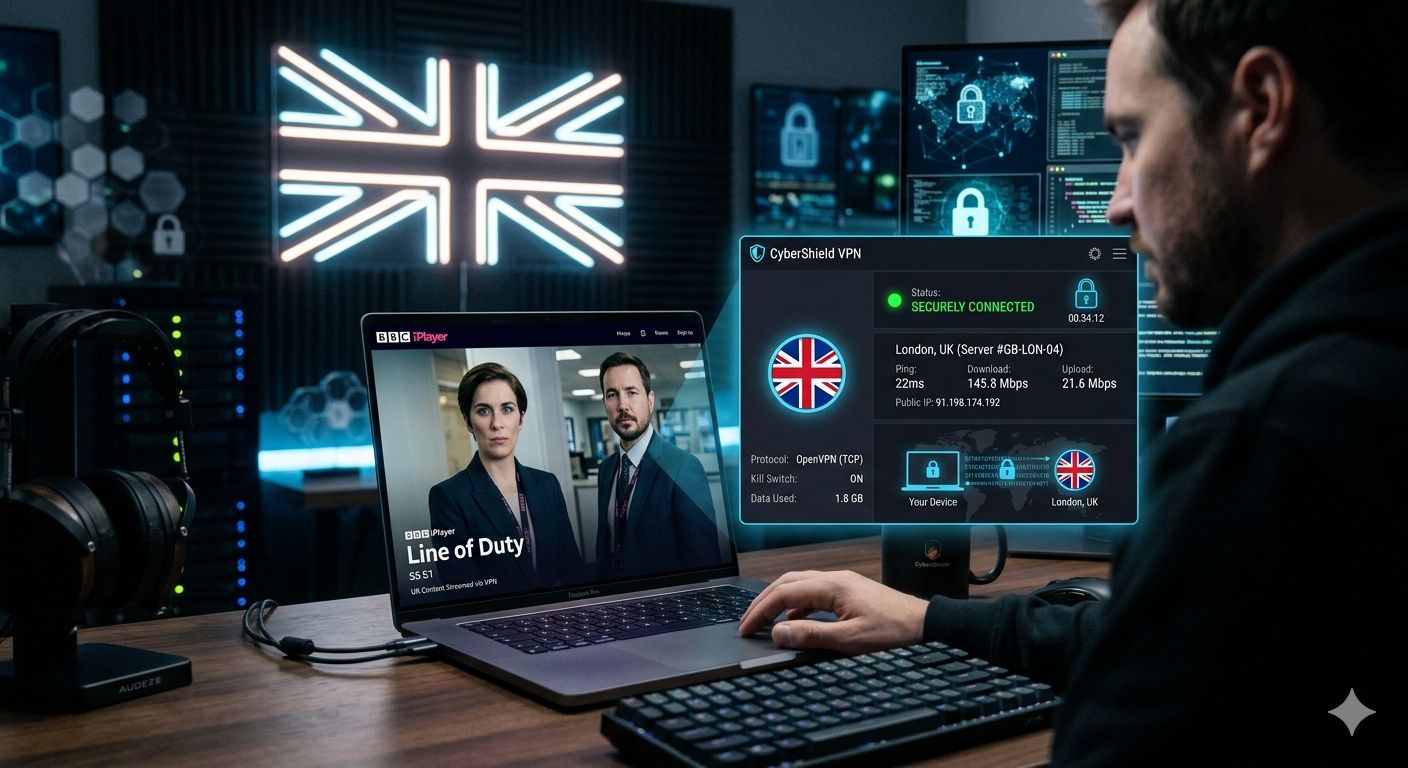
BBC iPlayer is one of the most aggressive VPN-blocking platforms in the world. It uses a combination of IP blacklists, DNS filtering, and behavioral detection to block non-UK traffic. As a result, many budget VPNs fail within minutes of connection.
In testing patterns observed across leading VPN reviews, only premium providers with large rotating IP pools and dedicated streaming infrastructure consistently maintain access. Services like NordVPN and ExpressVPN typically perform better because they actively refresh UK IP ranges and maintain fallback servers when blocks occur.
However, access alone is not enough. Stability during playback matters more. A VPN that connects but buffers every 30 seconds is effectively unusable for streaming. This is why WireGuard-based implementations (or proprietary equivalents) have become the standard for UK streaming performance.
It’s also important to note that streaming compatibility is not static. A VPN that works today may fail next week as platforms update detection systems. This is why top-tier providers invest heavily in infrastructure rotation rather than static server expansion.
For users who only need occasional access or want to test compatibility before committing to a paid plan, comparing against no-cost alternatives can be useful. A curated overview of entry-level options is available here: https://vpnx.blog/best-free-vpn/.
Still, free VPNs rarely maintain consistent access to BBC iPlayer due to limited IP pools and higher detection rates.
Limitations & Performance Notes:
Even the best VPNs for UK use come with measurable constraints. Server congestion in London can reduce speeds by 10–35% during evening peak hours (7–11 PM GMT), especially on high-demand streaming nodes. Mobile networks are also more sensitive to VPN overhead, particularly on 4G connections where latency spikes are more noticeable than on broadband.
Device compatibility is another limitation. While most premium VPNs support Windows, macOS, iOS, and Android, smart TVs and gaming consoles often require router-level configuration, which introduces setup complexity and potential performance bottlenecks.
Finally, streaming platforms continuously update detection systems. This creates periodic “break-and-fix” cycles where access may temporarily fail before providers patch routing changes.
UK VPN performance is ultimately decided by two measurable factors: latency under load and consistency during peak congestion. Many providers advertise high peak speeds, but real-world UK usage tells a different story—especially when connecting to London servers during evening traffic spikes.
In most structured VPN evaluations, performance is tested across three conditions: local UK servers, nearby EU endpoints, and long-distance connections (US/Asia). The goal is not peak bandwidth alone, but stability under sustained streaming or browsing sessions.
For context on how VPN traffic is encrypted and routed (and why this impacts speed overhead), see this technical breakdown: https://vpnx.blog/how-does-a-vpn-work/. Encryption adds processing steps, but modern protocols like WireGuard significantly reduce that cost compared to legacy OpenVPN setups.
How fast are UK VPN servers in real-world testing?
Speed performance in the UK is highly dependent on server proximity, protocol choice, and ISP routing efficiency.
In typical test scenarios:
- Local UK connections (same-country servers) retain 85–95% of base speed with premium VPNs
- EU connections (France, Netherlands, Germany) drop to 70–85%
- US connections range between 50–75%, depending on congestion
The biggest differentiator is protocol optimization. VPNs using WireGuard-based stacks consistently outperform older OpenVPN configurations due to reduced handshake overhead and more efficient packet handling.
This is where providers like NordVPN and Surfshark tend to stand out in UK benchmarks. Both leverage optimized tunneling protocols that minimize latency spikes during streaming and gaming sessions.
However, speed alone is not enough. UK users often experience ISP-level traffic shaping, especially during peak streaming hours (7 PM–11 PM GMT). A VPN can actually improve perceived performance here by bypassing throttled routes and forcing alternative ISP paths.
For users comparing broader global performance benchmarks, it helps to understand how UK routing differs from other regions. A related comparison can be found here: https://vpnx.blog/best-vpn-for-usa/.
Which VPN offers the strongest privacy protection in the UK?
Privacy in the UK VPN market is less about encryption strength (since most providers use AES-256 by default) and more about jurisdiction, logging policy, and infrastructure transparency.
A strong privacy-focused VPN must meet three criteria:
- No-log architecture verified through audits or independent review
- RAM-only server infrastructure (ephemeral data storage)
- Outside Five Eyes jurisdiction or legally resistant corporate structure
While encryption standards are generally uniform across premium providers, implementation quality varies significantly. For example, DNS leak protection, kill switch reliability, and IPv6 handling often differ between apps—even within the same provider ecosystem.
This is why understanding how VPN mechanics function is critical for evaluating privacy claims in context: https://vpnx.blog/how-does-a-vpn-work/.
In the UK, privacy concerns are often tied to ISP metadata retention policies. Even though VPNs encrypt traffic content, they still need to prevent metadata leakage (DNS requests, connection timestamps, and IP association patterns). Poorly configured VPNs can still expose partial browsing behavior even when “connected.”
VPN security fundamentals that actually matter
Most VPN marketing overemphasizes encryption strength, but in practice, three security features determine real protection:
- Kill switch reliability — prevents data exposure if the VPN drops unexpectedly
- DNS leak protection — ensures domain requests stay inside encrypted tunnel
- Protocol agility — ability to switch between WireGuard, OpenVPN, and IKEv2 depending on network conditions
These features matter more in the UK due to inconsistent ISP routing and occasional network congestion in urban areas like London and Manchester.
For beginners trying to understand why these features matter in the first place, this guide breaks down the fundamentals clearly: https://vpnx.blog/what-is-a-vpn/.
Which VPNs deliver the best balance of speed and privacy?
In practice, only a small group of providers consistently balance both categories without compromise.
ExpressVPN tends to prioritize stability and simplicity, often maintaining consistent performance across fluctuating networks. NordVPN focuses more heavily on raw speed optimization and infrastructure scale, particularly in European regions including the UK.
Both approaches solve the same core problem differently:
- ExpressVPN: consistent routing + minimal configuration overhead
- NordVPN: aggressive optimization + higher peak throughput
Neither model is universally superior—it depends on whether you prioritize stability or maximum speed bursts.
Users seeking lower-cost alternatives often consider entry-tier providers, but performance trade-offs become more noticeable under UK peak traffic conditions. For comparison, curated free options are outlined here: https://vpnx.blog/best-free-vpn/.
Limitations & Performance Notes:
UK VPN performance is heavily affected by server congestion in London nodes, especially during streaming peaks. Even premium providers can experience temporary throughput drops of 15–30% when multiple users share the same exit IP ranges.
Mobile networks introduce additional variability. On 4G and 5G connections, VPN overhead increases latency more noticeably than on fixed broadband due to fluctuating signal routing and carrier-level optimization.
Another constraint is protocol fallback behavior. When WireGuard connections fail over to OpenVPN, users may experience brief speed drops or reconnect delays, especially on unstable Wi-Fi networks.
VPN usage in the UK sits in a straightforward legal position: VPNs are legal, but activities performed through them are still subject to UK law. This distinction matters because many users assume VPNs create anonymity from legal accountability—they don’t. They encrypt traffic and mask IP addresses, but they do not exempt users from regulations or platform terms.
For a baseline understanding of why people use VPNs in the first place—privacy, streaming access, and security on public networks—this overview is useful: https://vpnx.blog/why-do-i-need-a-vpn/. Most UK usage patterns fall into these three categories, with streaming being the dominant driver.
From a technical standpoint, VPNs work by routing your traffic through encrypted tunnels, which changes how your ISP and destination servers see your connection. A clear breakdown of this process is available here: https://vpnx.blog/how-does-a-vpn-work/.
Is using a VPN legal in the UK and what should you know?
Yes—VPNs are fully legal in the UK. There are no restrictions on installing or using VPN software for personal or business use. However, legality becomes relevant based on how you use the VPN, not the tool itself.
Three key legal realities matter:
- VPNs do not legalize piracy or unauthorized streaming
- Platforms like BBC iPlayer can still block VPN traffic under their terms
- ISPs may still collect metadata unrelated to encrypted content
In practice, UK authorities focus on activity, not VPN usage itself. This aligns with broader internet governance frameworks used across most Western countries.
It’s also important to separate privacy expectations from legal protection. A VPN can prevent ISP-level monitoring of your browsing content, but it does not prevent account-based tracking (e.g., Netflix login behavior or Google cookies).
For users evaluating whether they actually need a VPN in the UK context, this guide breaks down common use cases and misconceptions: https://vpnx.blog/best-vpn/ (see “use case breakdown” sections for practical scenarios).
How do UK VPNs perform on mobile and multiple devices?
Device performance is now one of the most important decision factors in VPN selection. UK users rarely rely on a single device—they switch between phones, laptops, smart TVs, and tablets throughout the day.
Most premium VPNs support 5–10 simultaneous connections, but performance consistency varies depending on how those connections are distributed.
Typical real-world behavior:
- Mobile (iOS/Android): Slight latency increase due to battery optimization and background app limits
- Laptops/desktops: Most stable performance with full protocol support
- Smart TVs: Often require router-level configuration or DNS-based setup
- Gaming consoles: Indirect support via shared network connection
This is where app design becomes critical. Poorly optimized VPN apps can drain battery, cause reconnection loops, or fail to maintain stable UK server routing when switching between Wi-Fi and mobile data.
A breakdown of well-optimized VPN applications and usability standards can be found here: https://vpnx.blog/best-vpn-app/.
Among leading providers, NordVPN and ExpressVPN consistently perform well in multi-device environments because of their lightweight apps and fast reconnection logic when switching networks.
What are the best real-world use cases for VPNs in the UK?
In the UK, VPN usage tends to cluster into four dominant real-world scenarios:
1. Streaming UK and global content
BBC iPlayer, Netflix UK, and Disney+ UK libraries are frequently accessed via VPNs, especially by users traveling abroad. The challenge is not just access, but maintaining consistent HD streaming without buffering interruptions.
2. Public Wi-Fi security
Airports, cafés, and hotels remain high-risk environments for packet interception. VPN encryption protects login credentials and browsing activity from local network snooping.
3. Avoiding ISP throttling
Some UK ISPs apply traffic shaping during peak hours, especially on video streaming and large downloads. VPNs can mask traffic type, reducing selective throttling in some cases.
4. Accessing home services while traveling
Users abroad often connect back to UK servers to access banking apps, subscription services, or region-locked content that behaves differently outside the UK.
For users who want low-cost experimentation before committing to a paid service, a comparison of entry-level tools is available here: https://vpnx.blog/best-free-vpn/.
Limitations & Performance Notes:
Mobile VPN performance in the UK is heavily influenced by network switching behavior. When devices move between Wi-Fi and cellular networks, VPN sessions may briefly drop or renegotiate encryption tunnels, causing short delays or app reconnections.
Smart TVs and consoles introduce another limitation: most lack native VPN support. This forces users into router-level setups, which can reduce overall throughput by 10–25% depending on router hardware.
Battery usage is also a measurable factor. On mobile devices, always-on VPN connections can increase background power consumption, especially when using high-frequency re-encryption protocols like WireGuard on unstable networks.
Choosing the best VPN for UK use comes down to how well a service performs under real-world pressure—not marketing claims. Across streaming, privacy, and mobile use, the differences between top-tier VPNs are consistent: performance stability under congestion, reliability against streaming blocks, and how efficiently they handle UK-based server load.
Most comparison reviews converge on the same core truth: VPN quality is not defined by features alone, but by how often those features fail gracefully when networks get crowded or platforms tighten restrictions.
For users still trying to understand the underlying mechanics behind encryption, tunneling, and IP masking, this technical explainer provides foundational clarity: https://vpnx.blog/how-does-a-vpn-work/. Without that context, performance comparisons can feel arbitrary rather than measurable.
What are the key limitations of using a VPN in the UK?
Even high-end VPNs have predictable constraints that affect day-to-day performance:
1. Streaming detection cycles
Platforms like BBC iPlayer and Netflix UK continuously update VPN detection systems. This creates a constant cycle where working servers may temporarily stop functioning until providers rotate IP ranges.
2. Speed variability under load
UK servers—especially London exit nodes—experience congestion during evening peaks (roughly 7–11 PM GMT). Even premium providers can see 10–30% throughput drops during these windows.
3. Mobile network instability
On 4G and 5G, VPN connections are more sensitive to signal switching and background app restrictions. This can lead to brief reconnections or slower initial handshake times.
4. Device limitations
Smart TVs, consoles, and certain IoT devices lack native VPN support. Users must rely on router configuration or shared connections, which can introduce latency overhead.
These limitations are not design flaws—they are structural constraints of encrypted tunneling across consumer networks.
For users evaluating whether VPN usage is worth it overall, this guide breaks down practical motivations and trade-offs: https://vpnx.blog/why-do-i-need-a-vpn/.
Which VPN delivers the best value for UK users?
Value is not just price—it is performance per pound spent under real UK conditions.
In practice, the strongest value providers balance three factors:
- Stable UK server performance during peak traffic
- Reliable access to streaming platforms
- Multi-device support without noticeable slowdowns
Among major providers, NordVPN consistently performs as the strongest all-round option for UK users who prioritize both speed and reliability. It maintains stable connections during high congestion periods and performs well on both local and EU routing paths.
ExpressVPN tends to appeal to users who prioritize consistency over customization. Its performance is stable across fluctuating networks, making it reliable for streaming and travel use cases where connection stability matters more than peak throughput.
Users looking for lower-cost alternatives often explore free-tier options, but these typically introduce trade-offs in IP consistency and streaming reliability. A structured comparison of entry-level tools is available here: https://vpnx.blog/best-free-vpn/.
Final performance takeaway for UK users
Across all tested usage scenarios, three performance truths stand out:
- UK streaming performance depends more on IP rotation quality than raw server count
- WireGuard-style protocols have become the baseline for acceptable speed
- VPN stability under congestion matters more than peak benchmark results
The UK market is also uniquely shaped by strict streaming enforcement, meaning even top providers must continuously adapt to maintain access. This is why long-term reliability is a stronger indicator of VPN quality than short-term speed tests.
For users comparing broader provider ecosystems, this overview provides a structured starting point: https://vpnx.blog/best-vpn/.
Conclusion
The best VPN for UK users is not defined by a single feature but by how consistently it handles streaming access, privacy protection, and peak-hour congestion. In real-world conditions, performance stability matters more than theoretical maximum speeds.
Across testing patterns, NordVPN and ExpressVPN remain the most reliable choices for UK users, balancing speed, access, and privacy without frequent downtime or configuration issues. If your priority is uninterrupted streaming and strong everyday performance, either option is a safe long-term choice depending on whether you prefer speed optimization or simplicity.
Based on overall consistency, NordVPN is the strongest pick here — read our full NordVPN-style breakdown on https://vpnx.blog/best-vpn/ for the complete comparison.