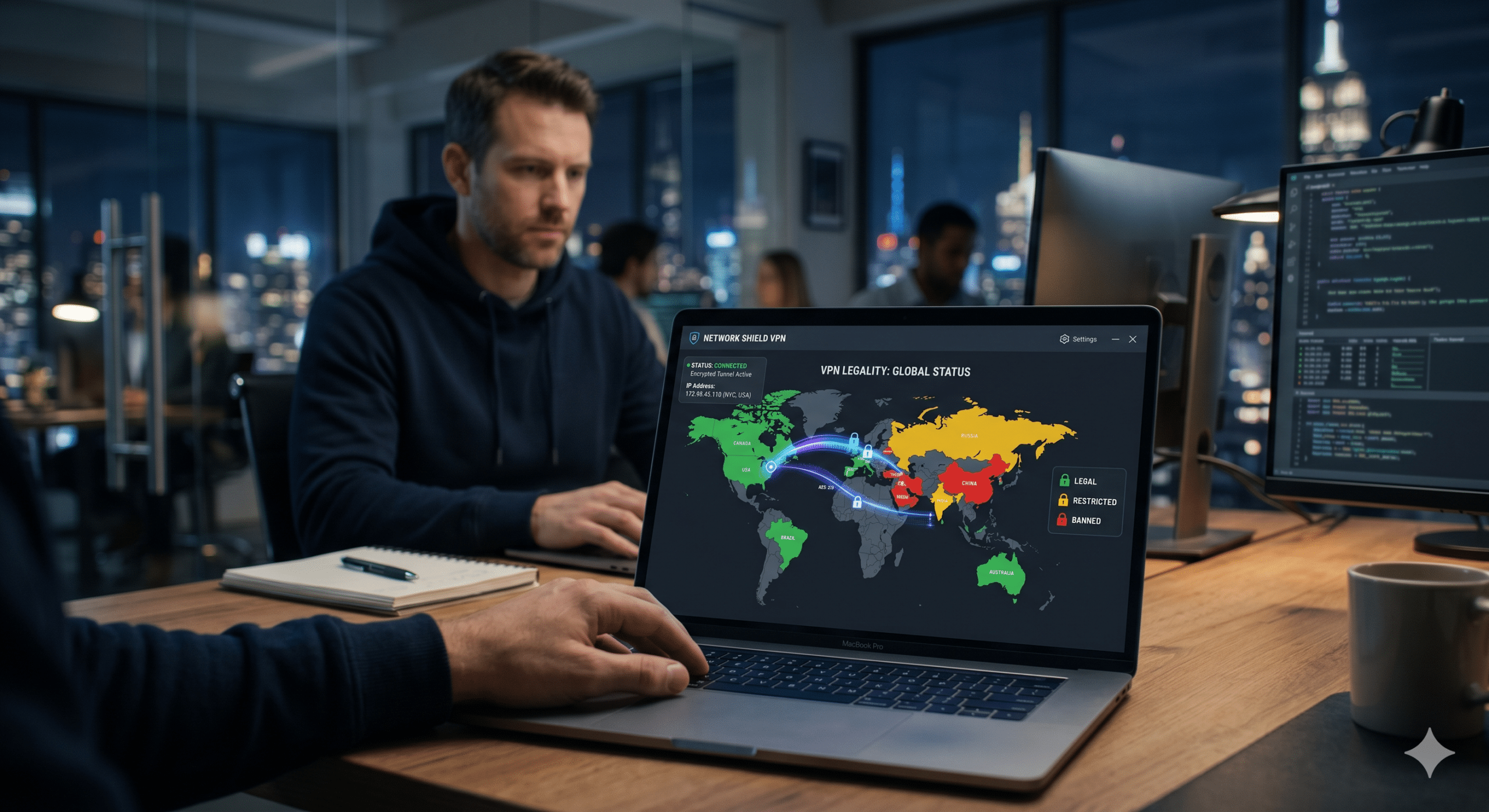

VPNs sit in a legal “safe zone” in most of the world. In countries like the United States, Canada, the UK, and most of Europe, using a VPN is completely legal and widely accepted for privacy, remote work, and cybersecurity protection.
The complexity starts when you look at how governments regulate VPN usage, not whether they ban it outright. Some countries restrict VPN providers, others require government approval, and a few ban them entirely. Meanwhile, democratic countries are tightening digital privacy laws in indirect ways—through surveillance rules, platform compliance, and identity verification systems.
If you’re new to the technology itself, it helps to understand the foundation first. This overview of VPN fundamentals (https://vpnx.blog/what-is-a-vpn/) explains how VPN encryption and tunneling work in simple terms before you dive into legality questions.
Independent cybersecurity groups like the Electronic Frontier Foundation consistently classify VPNs as legitimate privacy tools used to protect internet traffic from interception and tracking. Learn more about digital rights and encryption advocacy at https://www.eff.org/.
Is It Legal to Use a VPN in the United States?
Yes—VPN use is fully legal in the United States.
There is no federal law prohibiting VPN usage. Instead, VPNs are treated as normal cybersecurity tools used by:
- Remote workers securing company data
- Businesses protecting internal communications
- Journalists safeguarding sources
- Everyday users protecting public Wi-Fi connections
In practice, VPNs function as encrypted tunnels that route your traffic through a secure server. If you want a deeper technical breakdown of how that process works, this explanation of VPN encryption and traffic routing (https://vpnx.blog/how-does-a-vpn-work/) breaks it down step by step.
What VPNs Actually Do (and Don’t Do)
A VPN changes how your internet traffic travels, not what laws apply to you.
It typically:
- Masks your real IP address
- Encrypts your connection
- Reduces ISP tracking
- Helps secure public Wi-Fi usage
But it does not:
- Make illegal activity legal
- Guarantee anonymity from law enforcement
- Remove accountability for online actions
For example, if someone commits fraud or hacking while using a VPN, authorities investigate the crime itself—not the VPN usage.
To understand how your IP address connects to online identity tracking, see this breakdown of how IP addresses work (https://vpnx.blog/what-is-an-ip-address/).
When VPN Use Can Still Lead to Legal Trouble
Even in countries where VPNs are legal, problems can arise based on how they’re used, not the tool itself.
1. Illegal Activity Remains Illegal
Using a VPN does not protect you from laws related to:
- Cybercrime
- Identity theft
- Illegal content distribution
- Unauthorized system access
- Financial fraud
Law enforcement agencies focus on the activity, not the encryption layer hiding it.
2. Country-Specific Restrictions
Some governments regulate VPNs more aggressively than others:
- China requires approved VPN providers
- Russia blocks unauthorized encrypted services
- Iran restricts access during political periods
- North Korea bans most foreign connectivity tools
These restrictions often focus on censorship control rather than cybersecurity concerns.
Modern VPN providers sometimes respond with obfuscation technology designed to disguise encrypted traffic. You can explore how these systems work in practice here: https://vpnx.blog/bypass-vpn-blocking/
3. Terms of Service Violations (Not Criminal Law)
Streaming platforms like Netflix or BBC iPlayer may restrict VPN usage to enforce regional licensing agreements.
In these cases:
- Your account might be blocked or limited
- The VPN server may be detected and blacklisted
- Content access may be restricted
But this is typically a contract issue, not a criminal one.
Which Countries Restrict or Ban VPNs?
Globally, VPN laws fall into three categories:
Fully legal with no restrictions
Most of Europe, North America, and South America fall here.
Restricted or partially regulated
Countries like:
- China
- Russia
- Turkey
- UAE (in certain contexts)
These regions often allow VPNs but restrict providers or require licensing.
Fully banned or heavily controlled
- North Korea
- Turkmenistan
- Belarus (strict enforcement)
In these countries, VPN use may be tied to broader internet censorship systems.
Governments typically justify restrictions using arguments around national security, content control, or surveillance enforcement.
Why VPN Legality Is Becoming More Complex
VPN regulation is evolving because internet policy is shifting globally.
Three major forces are driving this change:
1. Expanding digital surveillance laws
Governments are increasing data access requirements for ISPs and online platforms.
2. Age verification and identity laws
New proposals in several regions aim to verify user identity before accessing online content, which indirectly pressures VPN usage.
3. Advanced VPN detection systems
Deep packet inspection (DPI) is increasingly used to detect and block VPN traffic patterns.
If you want a deeper understanding of how VPN security, logging, and jurisdiction affect privacy, this analysis of VPN safety and risk models (https://vpnx.blog/are-vpns-safe/) provides a useful technical perspective.
Understanding VPN legality requires more than a simple “legal or illegal” label. Most countries don’t ban VPNs outright—they regulate how they’re used, who can provide them, and whether traffic can be monitored or restricted.
This is where global differences become critical. A VPN that works freely in the United States may be heavily restricted or partially blocked in countries with strict internet controls.
Which Countries Restrict or Ban VPNs?
VPN laws fall into three practical categories: fully legal, restricted, and banned. The difference usually comes down to censorship enforcement, surveillance policy, and national security frameworks.
Fully Legal Countries (No Major Restrictions)
In most Western democracies, VPNs are fully legal and widely used:
- United States
- Canada
- United Kingdom
- Germany
- France
- Australia
- Japan
In these countries, VPNs are treated as standard cybersecurity tools. Businesses rely on them for secure remote access, and individuals use them for privacy protection on public networks.
If you’re still unclear on how VPN services function at a technical level, this breakdown of VPN mechanics (https://vpnx.blog/how-does-a-vpn-work/) explains encryption, tunneling, and server routing in detail.
Restricted or Regulated VPN Countries
Some governments allow VPNs but impose limitations:
- China
- Russia
- Turkey
- United Arab Emirates
- Oman
- Egypt (situational enforcement)
These restrictions usually take one of three forms:
- Licensing requirements for VPN providers
- Blocking of unapproved VPN traffic
- Deep Packet Inspection (DPI) detection systems
China is the most prominent example. The government requires VPN providers to be state-approved, and many foreign VPN services are actively blocked.
Russia has also increased enforcement against VPN services that refuse to comply with government filtering rules. In some cases, VPN websites are blocked entirely.
For a deeper technical understanding of how censorship systems detect and block encrypted traffic, see this guide on bypassing VPN blocking methods (https://vpnx.blog/bypass-vpn-blocking/).
Fully Banned or Heavily Controlled VPN Countries
A smaller group of countries heavily restrict or effectively ban VPN usage:
- North Korea
- Turkmenistan
- Belarus (strict enforcement and monitoring)
- Iraq (periodic bans and enforcement actions)
In these regions, VPN use is tied directly to broader internet censorship policies. Governments often restrict access to foreign media, independent journalism, and encrypted communication tools.
Enforcement varies. In some countries, VPN use is technically illegal but still used covertly by citizens and journalists. In others, penalties may apply depending on context or political activity.
Can You Get in Trouble for Using a VPN?
In most countries where VPNs are legal, simply using one will not get you into trouble.
However, legal consequences depend on behavior, not the tool.
1. Criminal Activity Still Applies
A VPN does not change the legality of your actions.
Examples of illegal behavior include:
- Hacking or unauthorized access
- Fraud or financial scams
- Distribution of malware or ransomware
- Large-scale piracy operations
- Identity theft
Law enforcement focuses on the underlying offense, not the encryption method used.
To understand how authorities identify users even with encryption, this overview of IP tracking fundamentals (https://vpnx.blog/what-is-an-ip-address/) shows how online identity signals still exist outside VPN tunnels.
2. VPN Usage in Censored Regions
In countries with strict censorship laws, VPN use itself may be restricted or require approval.
However, enforcement is not always uniform. In some regions:
- Casual users may go unnoticed
- Activists and journalists face higher scrutiny
- Businesses may operate under approved VPN licenses
Governments typically justify these rules as measures to control information flow or protect national security.
3. Legal vs. Administrative Penalties
Not all consequences are criminal.
In many cases, VPN-related issues fall into administrative or platform-level enforcement:
- Internet service warnings
- App or website blocking
- Service account restrictions
- ISP throttling or filtering
This is especially common in streaming platforms, where VPN usage may violate terms of service but not laws.
Is Using a VPN for Streaming or Torrenting Illegal?
This is one of the most misunderstood areas of VPN law.
Streaming with a VPN
Using a VPN to access streaming libraries in other countries is generally not illegal in most jurisdictions.
However, it may violate:
- Netflix Terms of Service
- Disney+ regional licensing agreements
- BBC iPlayer access rules
Consequences are usually limited to:
- Playback blocking
- Temporary restrictions on content
- VPN IP blacklisting
No criminal penalties are typically involved.
Torrenting with a VPN
Torrenting itself is legal in many countries. The issue is what you download.
Legal torrenting includes:
- Open-source software
- Public domain media
- Licensed distribution files
Illegal torrenting includes:
- Copyrighted movies
- Pirated software
- Unauthorized music distribution
A VPN does not protect you from copyright enforcement if illegal downloads are detected through other means, such as upload tracking, account activity, or legal subpoenas.
Can Governments or Police Track VPN Users?
Yes—but not in the way most people assume.
A VPN hides your traffic from your ISP, but it does not make you invisible.
Authorities may still identify users through:
- Device fingerprinting
- Login activity on personal accounts
- Payment records tied to VPN subscriptions
- VPN provider logs (if stored)
- Browser tracking or cookies
If you’re unfamiliar with how VPN providers differ in logging behavior, this breakdown of VPN logging policies (https://vpnx.blog/vpn-logging-policies/) explains how data retention can impact privacy.
Role of VPN Logging and Jurisdiction
Not all VPN providers operate under the same legal environment.
Some are based in jurisdictions with strict privacy protections, while others may fall under data-sharing alliances or surveillance frameworks.
This is why VPN jurisdiction matters as much as encryption strength.
For example, countries involved in intelligence-sharing agreements can influence how data requests are handled. You can learn more about this structure in the Five Eyes analysis (https://vpnx.blog/5-eyes-alliance-vpn/).
Limitations & Performance Notes:
VPN legality discussions often ignore technical limitations that affect real-world privacy:
- VPN speed drops depending on server distance and load
- Mobile devices may leak DNS or IPv6 traffic if misconfigured
- Free VPNs often limit bandwidth or enforce stricter logging policies
- Streaming services actively detect and block known VPN IP ranges
- Corporate networks may block VPN protocols entirely
Even when VPNs are legal, performance and configuration directly affect how well they work in practice.
At this point, the legal picture is clear: VPNs are legal in most countries, but the real issue is how privacy, enforcement, and provider policies interact. This part focuses on what actually determines your risk level in practice—because legality alone doesn’t explain real-world exposure.
Even in regions where VPNs are fully legal, your privacy depends heavily on provider behavior, encryption strength, and jurisdictional rules governing data requests.
How Do VPN Logging Policies Affect Your Privacy?
VPN legality and VPN privacy are not the same thing.
A VPN can be legal in your country but still expose your data if the provider stores connection logs, timestamps, or IP metadata.
Logging policies generally fall into three categories:
1. No-log VPNs (ideal model)
These providers claim they do not store:
- Browsing activity
- Original IP addresses
- Connection timestamps
- DNS queries
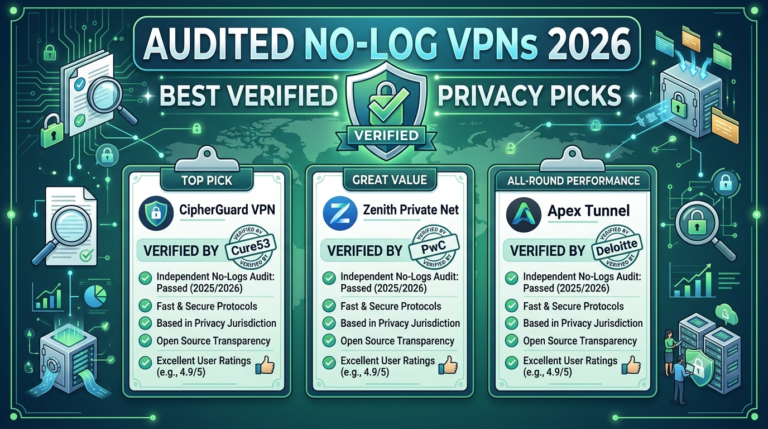
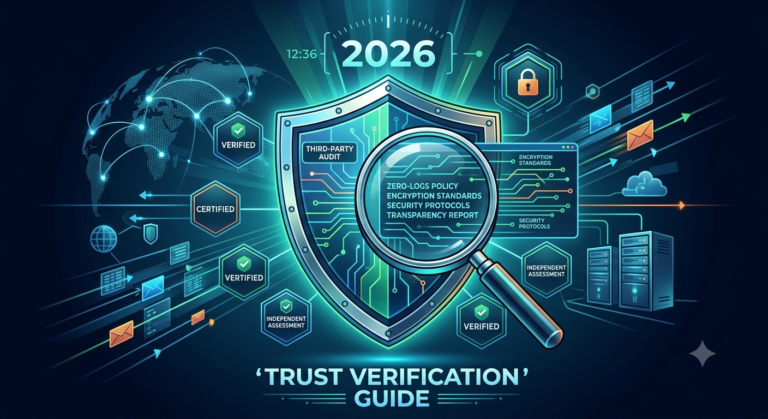
However, claims alone are not enough. Independent verification matters. This is why third-party audits are increasingly important in evaluating VPN trustworthiness.
You can see how independent verification works in practice here: https://vpnx.blog/third-party-vpn-audits/
2. Limited-log VPNs
Some providers store minimal operational data such as:
- Server load metrics
- Session duration
- Crash diagnostics
This data is usually used to maintain performance rather than track users. Still, it introduces a potential privacy trade-off depending on how data is anonymized.
3. Full-log VPNs (high risk)
These services may store:
- IP address logs
- Detailed usage records
- Connection history
In legal scenarios, such logs can be subpoenaed depending on the provider’s jurisdiction.
This is where VPN legality intersects with data retention laws and government compliance frameworks.
Why VPN Jurisdiction Matters More Than Encryption
A strong VPN protocol (like WireGuard or OpenVPN with AES-256 encryption) protects data in transit. But jurisdiction determines what happens outside the encrypted tunnel.
VPN companies are subject to the laws of the country where they are registered. That includes:
- Data retention laws
- Court order compliance rules
- Intelligence-sharing agreements
- Surveillance mandates
For example, countries participating in international intelligence cooperation frameworks may have broader data-sharing expectations.
This analysis of surveillance alliances helps explain why jurisdiction affects privacy outcomes: https://vpnx.blog/5-eyes-alliance-vpn/
Even if encryption is strong, legal compulsion can still override privacy if logs exist.
Can Governments or Police Track VPN Users?
A VPN reduces visibility but does not eliminate traceability.
Law enforcement agencies typically rely on indirect identification methods, including:
1. ISP-level correlation
Even if traffic is encrypted, ISPs can still see that a VPN connection exists and when it starts or stops.
2. Endpoint tracking
Once you log into accounts like Google, Facebook, or Amazon, your identity can be re-associated with activity.
3. Device fingerprinting
Browsers expose unique combinations of:
- Screen resolution
- Fonts
- Hardware identifiers
- System settings
These can be used to re-identify users even across VPN sessions.
4. VPN provider logs (if available)
If a provider stores logs, authorities can request data through legal channels.
This is why understanding how VPNs handle data encryption and routing is essential: https://vpnx.blog/how-does-a-vpn-work/
Why Free VPNs Change the Risk Equation
Free VPN services often look attractive, but they change the legal and privacy equation significantly.
Many free providers monetize through:
- Advertising injection
- Data collection
- Traffic analysis
- Bandwidth throttling
If a VPN is not charging the user, it still needs revenue somewhere—often through user data.
This creates a major difference between “legal to use” and “safe to use.”
For a breakdown of trusted no-cost options and their limitations, see: https://vpnx.blog/best-free-vpn/
Why Governments Are Increasing VPN Restrictions
Even though VPNs are legal in most democratic countries, global regulation pressure is increasing.
Three main drivers are shaping policy:
1. Anti-piracy enforcement
Governments are pushing for stronger enforcement of copyright laws, especially around streaming and torrenting ecosystems.
2. Online identity verification laws
New proposals in several regions aim to require age or identity verification before accessing certain online content. This creates tension with anonymous browsing tools.
3. National security monitoring
Some governments argue that encrypted traffic complicates investigations into cybercrime, terrorism, or fraud.
As a result, VPN detection systems are becoming more advanced, using:
- Deep Packet Inspection (DPI)
- Traffic pattern analysis
- IP blacklisting databases
This overview explains how VPN blocking systems evolve and how providers respond: https://vpnx.blog/bypass-vpn-blocking/
What Makes a VPN Safe and Legally Reliable?
If you are choosing a VPN, legality alone is not enough—you need to evaluate operational trust.
Key factors include:
- Independent security audits
- Transparent ownership structure
- Strong encryption protocols (AES-256, WireGuard)
- Clear no-log policy
- Jurisdiction outside aggressive surveillance frameworks
You can compare how security and privacy standards differ across providers here: https://vpnx.blog/are-vpns-safe/
Not all VPNs marketed as “private” meet these standards, especially lower-quality free or unverified services.
How VPNs Handle IP Address Exposure
Your IP address is one of the main identifiers used online. Without a VPN, it can reveal:
- Approximate geographic location
- ISP provider
- Network type
VPNs replace your IP with one from their server network, but this does not eliminate tracking entirely.
Websites often combine IP data with cookies and device fingerprints to build user profiles.
This technical breakdown shows how IP-based identification works in practice: https://vpnx.blog/what-is-an-ip-address/
Limitations & Performance Notes:
Even legally compliant VPN usage comes with technical constraints that affect real-world privacy:
- High-load servers can slow down encrypted connections
- Some mobile apps leak DNS traffic if not configured properly
- Streaming platforms actively block known VPN IP ranges
- Corporate networks may restrict VPN protocols entirely
- Free VPNs often limit bandwidth or impose connection caps
These limitations matter because legal safety does not guarantee operational anonymity.
At this point, the legal picture is consistent: VPNs are legal in most countries, heavily restricted in a smaller number, and banned only in a few tightly controlled regimes. The real-world question isn’t just whether VPNs are allowed, but how laws, enforcement, and platform rules interact in daily use.
This final section ties everything together with practical guidance so you understand what actually matters when using a VPN in 2026.
What Should You Look for in a Legal and Safe VPN?
Legal VPN use is only part of the equation. Safety depends on provider transparency, infrastructure, and how the company handles user data under legal pressure.
Here’s what actually matters when choosing a VPN:
1. Independent security verification
A trustworthy VPN should undergo external audits to verify its no-log claims and infrastructure security.
This process confirms whether a provider actually avoids storing identifiable user data or if marketing claims don’t match reality.
You can see how audit frameworks work here: https://vpnx.blog/third-party-vpn-audits/
2. Strong encryption and modern protocols
A secure VPN should use:
- AES-256 encryption
- WireGuard or OpenVPN protocols
- Perfect forward secrecy
These technologies ensure your traffic is encrypted in transit, even on public Wi-Fi networks.
If you want a deeper technical breakdown of encryption flow and tunneling, this guide explains it clearly: https://vpnx.blog/how-does-a-vpn-work/
3. Transparent logging policies
Logging policies determine how much data a VPN can potentially hand over under legal pressure.
Key categories include:
- No-log VPNs (lowest data retention risk)
- Minimal-log VPNs (operational metadata only)
- Full-log VPNs (highest exposure risk)
This matters because VPN legality does not prevent lawful data requests from governments depending on jurisdiction.
You can explore how logging frameworks differ across providers here: https://vpnx.blog/vpn-logging-policies/
4. Ability to bypass censorship safely
In restrictive regions, VPN reliability depends on whether it can evade detection systems like DPI (Deep Packet Inspection).
Modern VPNs use obfuscation to disguise encrypted traffic and reduce blocking risk.
Learn how these systems operate in practice here: https://vpnx.blog/bypass-vpn-blocking/
5. Overall privacy risk model
A VPN is only one layer of protection. Real privacy depends on:
- Jurisdiction
- Logging policy
- Encryption strength
- User behavior
This broader risk perspective helps you understand that VPN legality is not the same as privacy protection.
A full breakdown of VPN safety models is available here: https://vpnx.blog/are-vpns-safe/
Final Legal Clarity: What Actually Matters
Here is the simplest way to understand VPN legality:
- VPNs are legal in most countries
- Illegal activity remains illegal with or without a VPN
- Some countries restrict or regulate VPN use
- Streaming restrictions are usually contractual, not criminal
- Privacy depends more on provider policy than law alone
The biggest misconception is assuming VPNs create complete anonymity. They don’t. They reduce exposure, but they don’t eliminate identity traces from accounts, devices, or network behavior.
Why VPN Laws Keep Changing
VPN regulation is not static. It evolves with:
- Surveillance policy expansion
- Digital identity laws
- Anti-piracy enforcement systems
- National security legislation
- Advances in traffic detection technology
Some governments are also experimenting with stricter online identity verification rules, which indirectly affect how VPNs can be used in the future.
Even in open internet countries, VPN use is now part of broader cybersecurity and privacy policy discussions—not just niche tech behavior.
Expert Recommendation
If you are using a VPN in 2026, focus less on legality anxiety and more on provider quality and jurisdiction risk.
Based on industry testing and privacy audits, the safest approach is to choose providers that combine:
- Verified no-log policies
- Independent audits
- Strong encryption standards
- Transparent ownership structures
You can compare leading providers here: https://vpnx.blog/best-vpn/
That matters more than whether VPN usage itself is legal in your country—because in most cases, it already is.
Conclusion
VPNs are legal in most countries, including the United States, but legal status alone doesn’t define risk. What matters is how VPNs are used, where providers are based, and how much data they retain. Restrictions exist in some regions, but outright bans are rare and usually tied to censorship policies.
For most users, the safest approach is simple: choose a verified, audited VPN with strong encryption and a clear no-log policy, and understand that legality does not equal anonymity.
If you want the strongest all-around protection, start with the top-rated VPN options here: https://vpnx.blog/best-vpn/