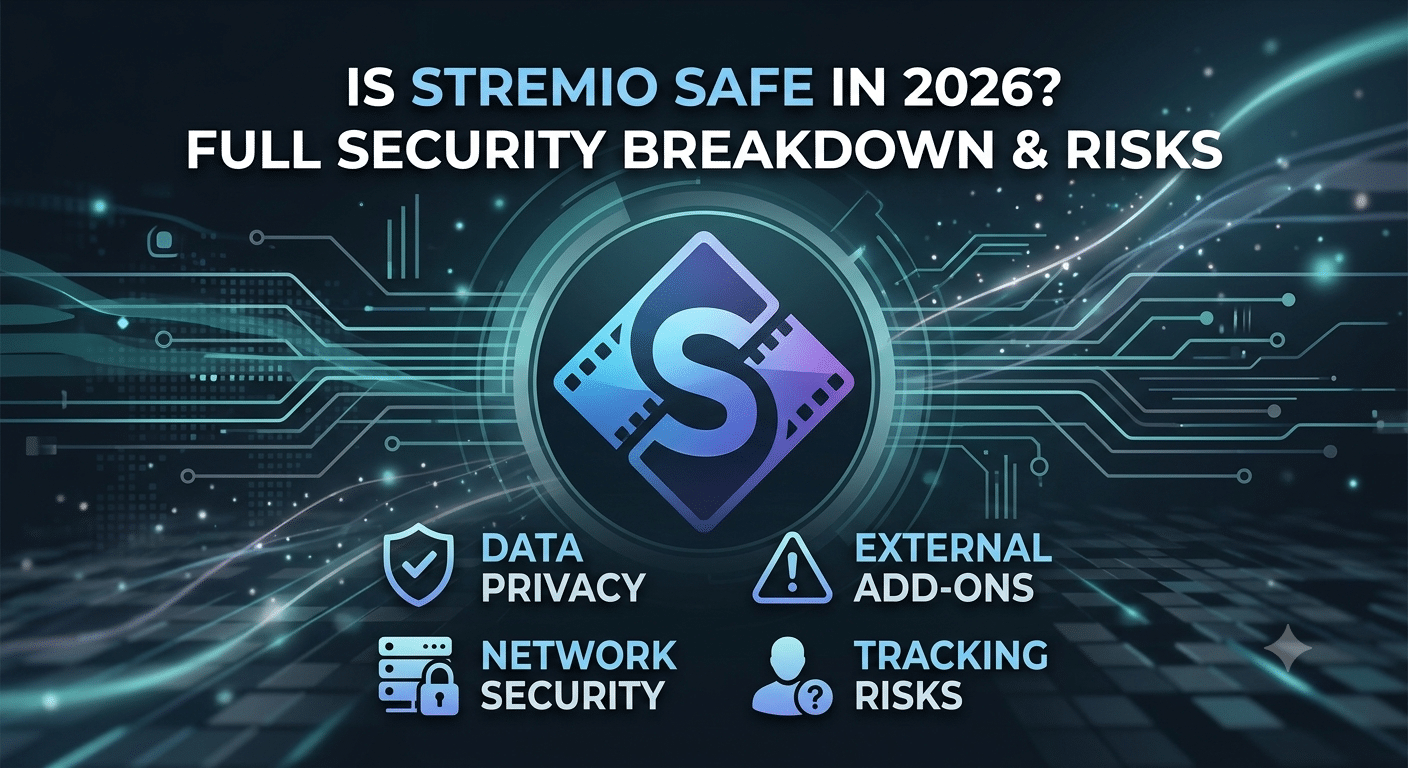

The question is stremio safe doesn’t have a simple yes-or-no answer because the app itself is only part of the equation. The real risk depends on how you use it, which add-ons you install, and whether your traffic is exposed while streaming.
At its core, Stremio is a media aggregation platform that organizes streaming sources through add-ons rather than hosting content directly. That design is why safety debates keep resurfacing in 2026. For context on how the platform is structured, see this breakdown of the app’s architecture in the official overview of Stremio’s core features and ecosystem.
Independent digital rights groups like the Electronic Frontier Foundation have repeatedly highlighted a broader issue in streaming ecosystems: users often misunderstand how data exposure works when content is delivered through third-party sources. You can read more about these privacy principles directly from the EFF at eff.org.
The key point is this: Stremio is not inherently malicious software. But it is also not a fully controlled environment like Netflix or Disney+. That distinction changes the risk model completely.
Is Stremio safe to install and use in 2026?
From a technical standpoint, installing Stremio from its official source is generally considered low risk. The application itself does not behave like malware, and it is widely used across Windows, macOS, Linux, Android, and TV devices.
Where things become less straightforward is what happens after installation.
Stremio’s functionality depends heavily on add-ons, which connect the app to external streaming sources. These add-ons are not uniformly audited, and that creates variability in safety. Some are official and stable, while others are community-built and can route users toward unverified streams.
This is the main reason why the answer to is stremio safe depends more on behavior than installation.
Where risk actually comes from
Most security concerns fall into three categories:
- Third-party add-ons – These can link to unknown or unstable streaming sources.
- P2P-style streaming behavior – Some streams can expose your IP address to other peers.
- Device-level exposure – Especially on sideloaded devices or TV boxes with weak security controls.
To understand why IP exposure matters, you need a basic understanding of how traffic masking works. A VPN (Virtual Private Network) creates an encrypted tunnel between your device and a remote server, hiding your real IP address from external observers. If you need a deeper technical breakdown, this guide explains VPN basics and how virtual private networks operate.
In simple terms: without protection, your connection is visible. With a VPN, it is routed and encrypted through an intermediary server.
Can Stremio expose your IP address?
Yes—under certain streaming conditions.
If you are using add-ons that rely on peer-to-peer delivery, your IP address may be visible to other participants in the stream. This doesn’t automatically mean you are being tracked in a traditional sense, but it does introduce exposure at the network level.
This is where privacy tools become relevant. A VPN changes your visible IP address and encrypts outgoing traffic, making it significantly harder for third parties to correlate activity with your device.
For users trying to understand this mechanism more deeply, the process is based on encryption and tunneling techniques explained in how VPN encryption works in modern networks.
However, it’s important to be precise: a VPN does not change how Stremio functions. It only changes how your network traffic appears externally.
Why the “safe vs unsafe” debate is misleading
Most online discussions frame Stremio as either safe or unsafe, but that framing ignores how modular the platform is.
A better model looks like this:
- The app layer is stable and widely used
- The add-on layer determines content sources
- The network layer determines exposure risk
When people report issues, they are usually reacting to the second or third layer—not the base application itself.
That distinction is critical for answering is stremio safe in a meaningful way. The platform behaves more like a container than a closed streaming service.
Early risk takeaway
At this stage, the safest interpretation is straightforward:
Stremio is not inherently dangerous software, but it operates in an ecosystem where safety depends heavily on external add-ons and network configuration.
Without additional privacy protection, your exposure level depends entirely on what you stream and how those streams are delivered.
What security risks come from Stremio add-ons?
Most confusion around is Stremio safe starts and ends with add-ons. The base app is stable, but add-ons determine what content sources you connect to—and that’s where the security model changes.
Stremio add-ons function like external data connectors. They pull streaming links from third-party catalogs, APIs, or peer-based sources. If those sources are not properly vetted, you are effectively trusting unknown infrastructure with your streaming requests.
This is not unique to Stremio. The U.S. Federal Trade Commission has repeatedly warned users that third-party digital tools often introduce privacy and data exposure risks when they rely on unverified external services. You can review similar consumer safety guidance directly from the FTC at ftc.gov.
In Stremio’s case, the risk is not traditional “virus infection” in most scenarios. Instead, it is about:
- Unverified streaming endpoints
- Potential tracking via embedded scripts or redirects
- Exposure to unstable or discontinued sources
- Data routing through unknown networks
A useful way to understand this is to compare add-ons to browser extensions. The browser itself may be safe, but a poorly built extension can still monitor traffic or inject unwanted behavior.
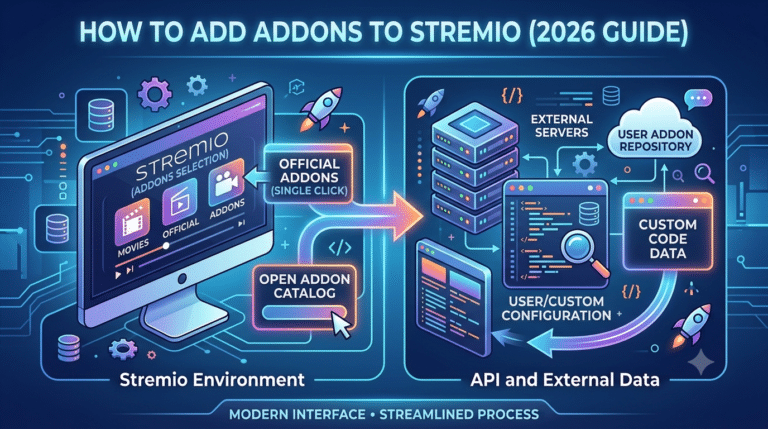
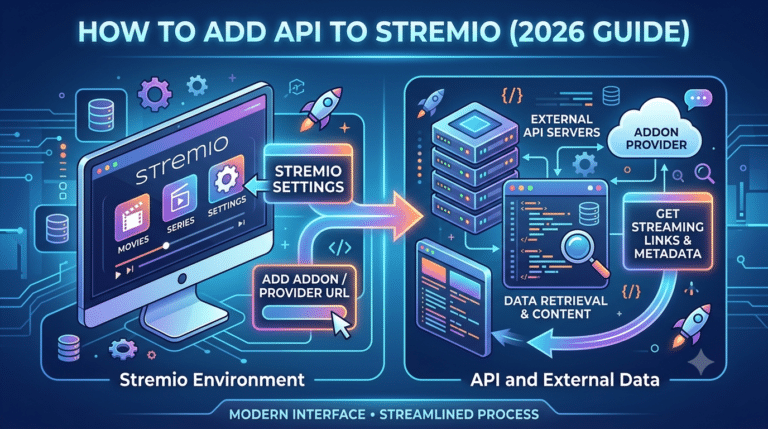
For technical users who want to see how add-on integration works at a structural level, Stremio’s API-based system is explained in detail in this breakdown of Stremio API integration and how external add-ons connect.
Can Stremio expose your IP address while streaming?
Yes—this is one of the most important technical realities behind is Stremio safe discussions.
Certain streaming methods used through third-party add-ons can expose your IP address. This happens when content is delivered through peer-based or distributed sources rather than centralized servers.
When you connect to a peer-based stream, your device may temporarily share or receive data directly from other users. In that scenario, your IP address is part of the connection handshake.
This is not automatically dangerous, but it is visible network metadata. In practical terms, it means:
- Your ISP can see that a connection is active
- Peers may see your IP in certain stream configurations
- Traffic correlation is possible without encryption layers
This is where privacy tools like VPNs come into play. A VPN reroutes your traffic through encrypted tunnels, masking your original IP address and replacing it with a shared server endpoint.
To understand how this protection layer works in detail, it helps to revisit how tunneling and encryption function in modern networks through this technical explanation of VPN mechanics and encrypted data routing.
server load effects, device compatibility limits, account/plan restrictions, speed throttling scenarios, etc,
Stremio’s performance and exposure risk are not only about add-ons—they are also shaped by system-level constraints that often get ignored in safety discussions.
On lower-end devices like Firestick or budget Android TV boxes, limited processing power can increase buffering delays and reduce the app’s ability to handle multiple stream sources efficiently. This is especially noticeable when switching between add-ons that rely on different backend servers.
Device compatibility also matters. Some sideloaded builds do not receive the same optimization or security patching as official desktop versions. This creates inconsistencies in stability and increases the likelihood of failed streams or fallback to less reliable sources.
Account and plan restrictions are less relevant in Stremio compared to subscription-based platforms, but external services connected through add-ons may impose their own limits. These can include capped bandwidth, regional restrictions, or throttled access during peak hours.
Speed throttling is another indirect factor. If your ISP detects high-bandwidth streaming activity, it may apply traffic shaping. This doesn’t break Stremio, but it can degrade playback quality and force lower-resolution streams from alternative sources.
This is also where sideloaded environments introduce additional variability. On devices installed through unofficial methods, system updates and security patches may lag behind, increasing exposure to outdated libraries or unsupported dependencies. A practical breakdown of these installation risks is covered in this guide on how to sideload Stremio on Firestick and what to watch out for.
Why add-ons define the safety boundary
If you strip everything down, Stremio itself is a framework. Add-ons are the execution layer. That means the safety boundary is not fixed—it moves depending on what you install and how those services behave.
Some add-ons only index publicly available content metadata. Others aggregate streaming links from decentralized sources. The second category introduces the majority of privacy and legality uncertainty.
A more accurate way to evaluate is Stremio safe is to ask:
- Do you trust the sources your add-ons are pulling from?
- Are those sources centralized or peer-based?
- Is your network traffic encrypted or exposed?
These questions matter more than the app itself.
Early risk consolidation
At this point in the analysis, the pattern is clear:
Stremio’s core software is not inherently unsafe, but its modular add-on system introduces unpredictable exposure depending on configuration and streaming behavior.
Most real-world risk originates from network-level visibility and third-party integration—not from the application itself.
Do you need a VPN for safe Stremio usage?
If you’re evaluating is Stremio safe, the VPN question is where most users end up—because it directly affects privacy exposure during streaming.
A VPN is not required for Stremio to function, but it changes how your network traffic is visible to your ISP and third-party observers. Without it, your connection metadata (such as IP address and traffic patterns) can be seen by your internet provider and, in some cases, peers involved in streaming sessions.
Privacy regulators in the U.S. have repeatedly emphasized that consumers often underestimate how much can be inferred from unencrypted traffic patterns alone. The Federal Trade Commission highlights this risk in its broader consumer privacy guidance available at https://www.ftc.gov.
In practical terms, a VPN adds one critical layer: encryption between your device and a remote server. That prevents local network observers from directly interpreting your activity.
For users considering reliable tools, this breakdown of leading VPN providers for privacy-focused streaming is often referenced when evaluating performance, jurisdiction, and logging policies.
What a VPN actually changes in Stremio usage
A VPN does not change Stremio’s internal behavior. It does not modify add-ons, improve stream quality, or block unsafe sources.
What it does change is:
- Your visible IP address
- Your exposure on peer-based connections
- Your ISP’s ability to categorize traffic
- Risk correlation between activity and identity
This distinction matters because many users assume a VPN “makes Stremio safe.” That is inaccurate. It only reduces visibility at the network layer.
To understand the mechanics behind this, you need to look at how encrypted tunnels route traffic between endpoints. This is explained in detail in this technical breakdown of how VPN encryption and tunneling systems operate.
Is Stremio legal or does it operate in a gray area?
Legality is one of the most misunderstood parts of the is Stremio safe debate.
Stremio itself is legal software. It is a media aggregation platform that organizes streaming sources, similar in concept to a smart media browser.
The legal complexity comes entirely from how add-ons source content.
If an add-on links to officially licensed streams, there is no legal issue. If it pulls from unauthorized or pirated sources, then the legality shifts depending on jurisdiction and usage.
In the United States, streaming copyrighted content without authorization can fall into a legal gray area for end users, even if enforcement typically targets distributors rather than viewers. That does not eliminate risk—it just changes where enforcement pressure is applied.
This is why most safety discussions separate “application legality” from “content legality.” Stremio sits firmly in the first category as legal software, but the second category depends on configuration.
What are Stremio debrid services and why they matter
One of the most misunderstood components in modern streaming setups is the role of debrid services.
A debrid service acts as a middle layer between streaming add-ons and content sources. Instead of directly connecting to peer-based or third-party links, it caches and reroutes content through high-speed servers.
This changes two important things:
- It reduces reliance on unstable peer connections
- It centralizes streaming through a paid infrastructure layer
However, it does not automatically make usage legal or safe. It simply alters how content is delivered.
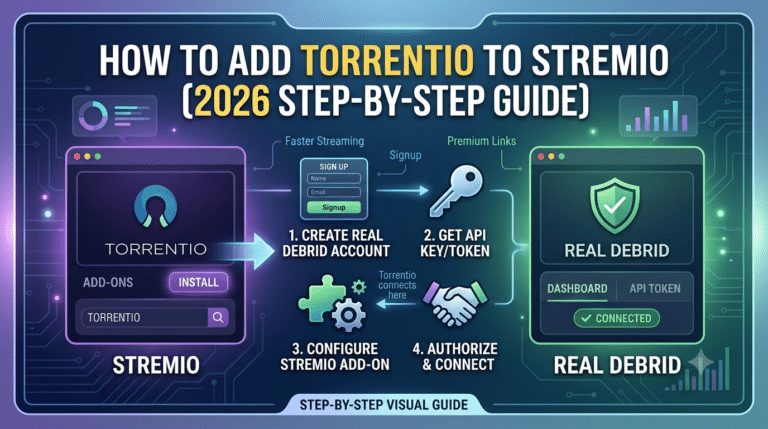
For a technical breakdown of how these services function inside the ecosystem, see this guide on what Stremio debrid services are and how they integrate with streaming add-ons.
From a risk perspective, debrid services generally reduce IP exposure compared to direct peer streaming, but they introduce dependency on third-party infrastructure that may still operate outside traditional licensing models.
Free VPNs vs paid VPNs in a Stremio setup
Many users turn to free VPNs when trying to improve privacy while using Stremio, but this introduces a different trade-off.
Free VPNs typically come with limitations such as:
- Restricted bandwidth
- Fewer server locations
- Slower speeds under load
- Unclear logging policies in some cases
That matters because streaming traffic is highly sensitive to latency and throughput changes.
Paid VPN services generally offer more stable performance and clearer privacy policies, which is why they are more commonly recommended in streaming contexts.
For users exploring entry-level options, this overview of best free VPN solutions and their limitations outlines what you gain—and what you give up—when choosing a no-cost provider.
How all of this ties back to safety
At this stage, the safety picture becomes more structured:
- Stremio itself remains a neutral application layer
- Add-ons determine content legality and source trust
- VPNs determine visibility and exposure
- Debrid services alter routing and caching behavior
So when users ask is Stremio safe, they are usually asking four different questions at once without realizing it.
The most accurate answer is that safety depends on configuration, not installation.
Is Stremio safe for everyday users in 2026?
The final answer to is Stremio safe depends less on the app itself and more on how controlled your setup is. By 2026, Stremio remains widely used as a media aggregation tool, and its core application continues to behave like legitimate, non-malicious software when installed from official sources.
What changes the risk profile is everything around it—add-ons, streaming sources, and network exposure. That’s where most of the real-world security questions originate.
Privacy organizations like the Electronic Frontier Foundation consistently stress that modern streaming ecosystems are less about “malware vs no malware” and more about “data visibility vs data protection.” Their guidance on digital privacy shows how even non-malicious apps can still expose meaningful metadata depending on network configuration. You can explore their broader privacy framework at https://www.eff.org.
In Stremio’s case, that metadata exposure usually comes from streaming behavior, not installation.
What most users get wrong about Stremio safety
A common misunderstanding is assuming that installing a streaming app automatically creates risk. That is not how Stremio works.
Instead, risk emerges from three layers:
- The application layer (Stremio itself)
- The integration layer (add-ons and APIs)
- The network layer (how traffic is routed and whether it is encrypted)
For example, users who install add-ons that pull from unverified sources are effectively extending trust to external systems that are not controlled by Stremio.
Some advanced integrations also rely on metadata services that enhance browsing and discovery. These tools are not inherently unsafe, but they expand the number of external connections your app makes. A technical breakdown of how these systems work is available in this guide on using AI metadata tools inside Stremio ecosystems.
The more external dependencies you add, the more your safety model shifts from local software trust to network trust.
Can Stremio performance settings affect safety?
Performance settings do not directly impact security, but they can influence how stable your streams are and how often your device reconnects to external sources.
For example, buffering behavior determines how much data is preloaded before playback begins. Lower buffering settings may increase the frequency of network requests, while higher settings may reduce interruptions but increase temporary data caching.
These behaviors are not security risks on their own, but they affect how often your device interacts with external endpoints.
Users sometimes overlook this layer entirely, even though it plays a role in overall streaming stability. A practical explanation of how playback tuning works is covered in this guide on adjusting buffer window size in Stremio for performance control.
From a safety standpoint, these settings are secondary—but they still shape your streaming footprint.
What actually determines Stremio risk in real use
After reviewing installation behavior, add-ons, VPN usage, and streaming infrastructure, the risk model becomes straightforward:
- Stremio does not behave like malware or spyware
- Add-ons determine what content sources you access
- Network configuration determines your visibility
- Device type determines your security baseline
If you remove all assumptions, the system is essentially a modular streaming framework. That flexibility is what creates both its strength and its ambiguity.
This is also why simplified “safe or unsafe” labels are misleading. The real evaluation depends on configuration discipline, not the software itself.
Final verdict: should you worry about Stremio?
Stremio is not inherently unsafe software, but it is not a fully controlled streaming environment either. That distinction is the entire answer to is Stremio safe.
If used with official add-ons and proper privacy protection, risk remains relatively low for most users. If combined with unverified sources and unprotected connections, exposure increases significantly at the network level.
In practical terms:
- The app itself is safe
- The ecosystem determines exposure
- Your configuration determines privacy
Final takeaway
Stremio sits in a category that blends legitimate media aggregation with third-party streaming flexibility. That design is what makes it powerful—but also what requires users to understand how add-ons and network routing affect privacy.
If you approach it like a controlled media tool rather than an isolated streaming platform, you significantly reduce uncertainty and improve your overall safety posture.