
The question “is there a bleack kai edition on stremio” has gained traction among users trying to understand whether Stremio offers modified builds or hidden “special editions” of its app. The short answer, based on how the platform is actually built, is that Stremio does not distribute unofficial or themed “Kai” or “Black Kai” versions through its official ecosystem.
What creates confusion here is how Stremio’s open add-on system and third-party community builds are often mistaken for official releases. To understand this properly, you need to separate the core Stremio application from external modifications, streaming add-ons, and unofficial forks.
Before breaking that down, it helps to understand how the base platform operates. Stremio itself is a media aggregator, not a content host. Its structure is explained in detail in this breakdown of how Stremio works, which shows how the app pulls content through add-ons rather than hosting media internally.
This architecture is also why misinformation spreads easily: when users see modified interfaces or unofficial builds, they assume they are official “editions” of the app rather than third-party modifications layered on top of the original system.
For users concerned about privacy or safety while exploring streaming platforms, understanding tools like what is a VPN becomes relevant, since network traffic and exposure risks can vary depending on the add-ons or external sources being used.
Is there an official Black Kai edition on Stremio?
There is no official “Black Kai edition” of Stremio released or maintained by the Stremio development team. The core application is distributed as a single unified client across Windows, macOS, Linux, Android, and TV platforms.
The “Kai” label appears in community discussions and unofficial builds, but it is not part of the official Stremio release pipeline. In other words, it does not exist as a verified product branch, nor is it documented in any official release notes or developer communications.
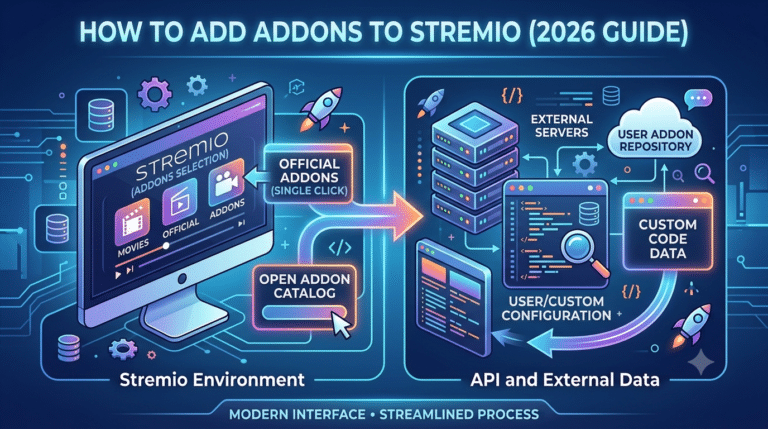
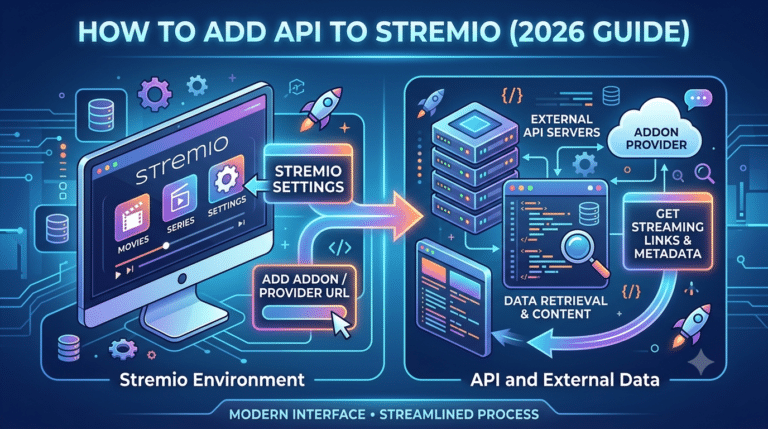
The official Stremio ecosystem is centralized around its standard client and add-on framework. You can see how add-ons are structured and installed through guides like how to add an add-on into Stremio, which explains how functionality is extended without modifying the core application itself.
From a cybersecurity standpoint, this distinction matters. Unofficial builds can introduce unknown code execution paths, modified streaming behavior, or unstable dependencies. In contrast, the official Stremio client is designed to operate within a controlled extension system.
For users trying to evaluate safety risks, it’s also useful to understand how does a VPN work, especially when streaming traffic is routed through third-party sources that may not always be transparent.
What is Stremio Kai and where did it come from?
“Stremio Kai” is not an official release. It is a label that has circulated in online communities to describe modified or experimental versions of the Stremio interface or bundled add-on configurations.
These types of builds typically originate from independent developers who adjust the UI, pre-configure add-ons, or bundle external plugins into a single installation package. While this can make setup easier for some users, it also removes the transparency and security assurances provided by the official client.
In cybersecurity terms, this is where risk increases. Once you move away from verified software sources, you lose guarantees around update integrity, code signing, and dependency control. Even if a modified build looks identical to the official app, its internal behavior may differ significantly.
This is why most security-focused guidance recommends sticking to official distributions and reviewing installation sources carefully before running any modified media software.
How Stremio handles unofficial builds and add-ons
Stremio itself does not officially support or distribute modified builds like “Kai.” Its development model is based on a controlled core application combined with an open add-on ecosystem.
Add-ons are the only officially supported method of extending functionality. These are installed through the platform rather than injected into the application binary itself. This reduces risk compared to full application forks.
For example, users can learn the proper setup process through guides such as how to use Stremio, which explains how the platform is intended to be configured safely.
From a structural standpoint, Stremio separates:
- Core application (official client)
- Add-ons (modular extensions)
- External sources (community streams or catalogs)
Unofficial builds bypass this separation, which is where most compatibility and stability issues originate.
server load effects, device compatibility limits, account/plan restrictions, speed throttling scenarios, etc,
Unofficial or modified streaming apps can also amplify performance inconsistencies. Because they often rely on unstable add-on sources, device performance can vary significantly depending on server load, codec handling, and background resource consumption. Lower-end devices may experience playback drops, interface lag, or black screen errors when handling improperly optimized streams.
In contrast, the official Stremio app is optimized for predictable device compatibility across Android TV, desktop systems, and mobile platforms. Still, even official builds can face limitations when hardware acceleration is disabled or when streaming sources exceed device decoding capabilities.
What is Stremio Kai and where did it come from?
The term “Kai” in relation to Stremio is not part of any official roadmap or verified release history. Instead, it surfaces in community spaces where users experiment with modified interfaces or bundled configurations of the app.
In practical terms, these versions usually fall into one of three categories:
- UI-reskinned builds (visual-only changes)
- Pre-configured add-on bundles
- Fully unofficial forks with modified core behavior
None of these are endorsed by the Stremio development team. The official platform remains a single application that relies on add-ons for customization rather than forks of the core software.
To understand the baseline system, it’s important to see how the platform is structured. The official architecture is explained in how Stremio works, where the app is shown as a content aggregator rather than a content provider.
That distinction matters because it explains why “edition” labels like “Kai” are misleading. Stremio doesn’t branch into themed versions the way some open-source apps do. Instead, functionality is extended externally through add-ons.
How does Stremio handle unofficial builds and add-ons?
Stremio’s official design avoids deep system-level modification. Instead, it uses a controlled add-on framework that loads external catalogs, metadata, and streaming sources.
Users install add-ons through the platform itself, as described in how to add an add-on into Stremio. This keeps the core application intact while allowing flexibility.
Unofficial builds like “Kai” bypass this structure. That creates three key issues:
- Integrity risk – modified binaries may include unverified code
- Update inconsistency – forks may lag behind official security patches
- Source transparency loss – users cannot easily verify what is running in the app
From a cybersecurity perspective, this is where most risk enters. Once the official update chain is broken, you lose guarantees around patch cycles and dependency validation.
Is Stremio Kai real or safe to use?
There is no verified evidence that “Stremio Kai” is an official or security-audited release. That alone is enough to treat it as untrusted software unless independently verified by source code inspection and reproducible builds.
Safety concerns typically include:
- Unknown add-on injection behavior
- Modified streaming pipelines
- Disabled security checks
- Lack of signature verification
For comparison, the official Stremio client maintains a consistent release pipeline and documented update process.
If you are evaluating safety more broadly, understanding what is a VPN helps contextualize how your traffic is exposed when using third-party streaming sources. A VPN does not validate content integrity, but it can reduce network-level visibility from ISPs or external observers.
Can modified Stremio versions affect playback performance?
Yes. In fact, performance instability is one of the most common side effects of unofficial builds.
Modified versions can impact:
- Codec handling (H.264 / HEVC decoding mismatches)
- Hardware acceleration behavior
- Add-on response latency
- Streaming source reliability
Unlike the official app, forks may not optimize playback pipelines for a wide range of devices. That leads to inconsistent performance across Android TV, Firestick, and desktop environments.
For example, when streaming from external sources, buffering delays can increase significantly if the build is not optimized for network throughput handling. This is especially noticeable on lower-end hardware where GPU decoding is limited.
Why does Stremio show black screen or playback errors?
Even without unofficial builds, users sometimes encounter black screen issues. These are usually unrelated to “Kai” or modified versions and are instead caused by technical constraints in the playback pipeline.
Common causes include:
- Missing or incompatible codecs
- Disabled hardware acceleration
- Faulty add-ons or broken streams
- Device-level decoding limitations
In official usage scenarios, these problems are typically resolved through configuration adjustments or switching streaming sources rather than changing the application itself.
To understand how streaming content is processed at a deeper level, it helps to review how does a VPN work, especially since encrypted traffic and routing paths can sometimes influence perceived streaming stability.
Are Stremio forks safe to install and use?
From a security standpoint, forks always carry higher risk than official builds. The main issue is not necessarily malicious intent, but lack of auditability.
When you install a fork:
- You are trusting an unknown developer
- You may be bypassing security validation
- You lose predictable update cycles
Even if a fork functions normally, it may still introduce hidden vulnerabilities or unstable dependencies over time.
The official Stremio ecosystem avoids this by keeping the core app locked down and extending functionality only through add-ons.
server load effects, device compatibility limits, account/plan restrictions, speed throttling scenarios, etc,
Forked builds can also worsen performance variability under high server load conditions. Because they may rely on unofficial add-on endpoints, response times can fluctuate more heavily during peak usage periods. Device compatibility becomes less predictable as well, especially on older hardware where optimized decoding paths are not guaranteed.
Official builds, while still dependent on external sources, maintain more consistent behavior across devices due to standardized playback logic and tested update cycles.
How does Stremio handle unofficial builds and add-ons?
The core issue behind the “Kai” confusion becomes clearer when you look at how Stremio structures its ecosystem. The platform is intentionally built to avoid deep system modifications, relying instead on a modular add-on model rather than altered application forks.
This design choice is also why security researchers generally recommend sticking to official software distribution channels. Organizations like the Electronic Frontier Foundation have long emphasized that unverified software builds increase the attack surface for users, especially when media apps rely on external content sources and third-party extensions (see: https://www.eff.org/deeplinks).
Stremio’s official system works differently. Instead of modifying the app itself, users extend functionality through add-ons, which are controlled plugins that integrate within the app’s sandboxed environment.
You can see how this works in practice through guides like how Stremio works, which breaks down how the app aggregates content rather than hosting it directly.
This is also why unofficial builds like “Stremio Kai edition” are structurally unnecessary. Everything those builds attempt to do—UI changes, preloaded catalogs, or streaming shortcuts—can already be achieved through add-ons without modifying the core application.
Are Stremio forks safe to install and use?
From a cybersecurity standpoint, forks always introduce additional risk layers compared to official builds. Even when they appear visually identical, the underlying execution environment can be altered in ways that are difficult to audit.
Key risks include:
- Modified network routing for streaming requests
- Embedded third-party scripts or add-ons
- Disabled verification of update packages
- Lack of transparency in source code changes
These risks are not theoretical. Any time you move outside verified app stores or official distribution channels, you lose guarantees about integrity checks and patch management.
If you’re evaluating privacy more broadly, tools like a VPN can help reduce exposure at the network level. For example, understanding what is a VPN is useful when streaming traffic is routed through external servers that may not be fully transparent.
For users considering security layers, it’s also worth reviewing best VPN options to understand how encrypted tunneling can protect metadata from ISP-level monitoring, even though it does not validate the safety of the application itself.
Can modified Stremio versions affect playback performance?
Yes—performance degradation is one of the most common issues with unofficial or modified Stremio builds.
Unlike the official client, which is optimized for consistent playback across platforms, forks often introduce instability in:
- Codec negotiation (H.264 / HEVC mismatches)
- Hardware acceleration handling
- Buffer management under load
- Add-on response timing
These issues become more noticeable on devices with limited decoding capabilities, such as older Android TV boxes or low-end Firestick models.
In contrast, official builds maintain standardized playback pipelines. Even when issues occur, they tend to be related to external add-ons rather than the application core.
For users experimenting with different devices, setup variations matter. For example, streaming on mobile devices connected through desktop bridging can introduce additional latency, as explained in how to use Stremio on iPhone with PC.
Why does Stremio show black screen or playback errors?
Black screen issues are often misattributed to “Kai” or modified builds, but in most cases, they occur in both official and unofficial versions.
Common technical causes include:
- Missing video codecs on the device
- Disabled or incompatible hardware acceleration
- Corrupted or inactive streaming sources
- DRM or stream format mismatch
These problems are fundamentally related to media decoding pipelines rather than the application branding.
When users attempt to bypass these issues by switching to modified builds, they often worsen stability instead of improving it.
If you want a deeper understanding of how streaming data is processed, reviewing how does a VPN work helps clarify how encrypted routing and network paths interact with streaming performance.
Are Stremio forks safe to install and use?
From a strict security perspective, forks should always be treated as unverified software unless independently audited. Even if they originate from community trust networks, they lack the formal update validation pipeline of the official app.
A major issue is that users often assume visual similarity equals functional safety. That is not true. A fork can:
- Redirect streaming sources
- Alter metadata retrieval systems
- Introduce unstable dependencies
- Disable security checks silently
This is why most cybersecurity frameworks recommend avoiding unknown binaries in media streaming environments.
If you are comparing general risk exposure across streaming tools, even low-cost or experimental options like best free VPN are often evaluated for transparency, logging policy, and encryption standards before use.
How Stremio handles unofficial builds and add-ons (legal perspective)
Legally, Stremio as a platform is neutral software. It does not host or distribute media content. Instead, it provides a framework for add-ons that fetch content from external sources.
This distinction is critical in legal analysis. The platform itself is not inherently responsible for third-party content, which is why its official documentation outlines usage boundaries clearly.
You can review this structure further in is Stremio legal, which explains how liability shifts depending on add-on usage and jurisdiction.
From a compliance perspective, unofficial builds complicate this model. When the core application is modified, it becomes harder to determine what code is responsible for what behavior, which introduces ambiguity in both legal and security contexts.
Device compatibility and ecosystem limitations
Unofficial builds can also create fragmentation across devices. While official Stremio versions are designed for consistent deployment across Windows, macOS, Android, and TV platforms, forks may not maintain cross-platform parity.
This leads to:
- Missing features on certain devices
- Inconsistent UI rendering
- Playback instability across OS versions
- Add-on incompatibility
These issues are especially visible when users attempt to use modified builds on constrained devices like mobile-to-desktop bridging setups or older streaming hardware.
Can modified Stremio versions affect playback performance?
By this point, the pattern is clear: most confusion around “Kai” or “Black Kai edition” comes from users encountering unofficial configurations that behave differently from the standard Stremio client.
When performance issues appear, they are usually tied to how streaming data is processed rather than any branded “edition” of the app. The official Stremio client relies on consistent decoding pipelines and add-on-based content delivery, which means stability depends heavily on external sources rather than the core application itself.
In modified builds, that stability layer can be weakened. Even small changes in how streams are requested or cached can affect buffering behavior, startup time, and playback reliability.
For example, mainstream technical reviews of streaming applications consistently highlight that media playback failures are most often caused by codec mismatch or network instability rather than the player interface itself (see: https://www.wired.com/tag/streaming/). This applies directly to Stremio as well, regardless of whether a build is official or modified.
Why does Stremio show black screen or playback errors?
Black screen issues remain one of the most misunderstood problems in Stremio discussions. They are often incorrectly attributed to “Kai” builds or assumed modifications, but in reality, they stem from predictable technical causes.
The most common triggers include:
- Unsupported video codecs on the device
- Hardware acceleration conflicts
- Broken or slow streaming sources
- Temporary add-on outages
The important detail is that these issues occur in both official and unofficial versions. The application interface is rarely the root cause.
Instead, playback depends on how efficiently your device decodes video streams and how stable the external source is. This is why troubleshooting typically focuses on switching streams, adjusting decoding settings, or updating device drivers rather than changing the app version entirely.
For users trying to understand system-level exposure during streaming, reviewing how does a VPN work helps clarify how traffic routing behaves when media is fetched from distributed sources.
Are Stremio forks safe to install and use?
From a security engineering perspective, forks always increase uncertainty. Even when they appear harmless, the absence of formal auditing introduces risk.
A forked Stremio build may:
- Modify how add-ons are loaded
- Change network request behavior
- Bundle unverified dependencies
- Disable or bypass update validation
This is why cybersecurity frameworks consistently recommend sticking to verified software sources. The U.S. Federal Trade Commission has repeatedly warned users that unverified software downloads are a common vector for hidden tracking and malicious code injection in consumer applications (see: https://www.ftc.gov/).
Official Stremio builds avoid this issue by maintaining a controlled release process and relying on add-ons rather than deep application modification.
For users comparing privacy layers, tools like best VPN are often evaluated separately, since encryption protects network traffic but does not validate software integrity.
How Stremio handles unofficial builds and add-ons (final perspective)
The core takeaway is that Stremio was never designed around “editions.” It is designed around a stable base client plus modular extensions.
This is why guides such as how to use Stremio emphasize configuration through add-ons rather than installing modified applications.
Similarly, the platform’s streaming model—explained in how Stremio works—shows that content delivery is externalized. That means changing the app itself rarely improves access or quality, since the real variability comes from add-ons and source availability.
Even installation workflows, such as how to add an add-on into Stremio, reinforce the same principle: functionality is modular, not fork-based.
How torrents and streaming sources interact with Stremio
A major source of confusion behind modified builds is how Stremio handles streaming sources like torrents. The app itself does not host content; instead, it retrieves streams through add-ons that may connect to peer-to-peer sources.
This is where performance differences often emerge. If a stream is slow, incomplete, or poorly seeded, playback will suffer regardless of the application version.
You can see how this process works in detail in how to play a movie in Stremio from torrent, which breaks down how external torrent sources are integrated into playback sessions.
This model also explains why unofficial builds cannot fundamentally improve streaming quality—they still rely on the same external data sources.
Final Verdict: Is there a Black Kai edition on Stremio?
There is no official “Black Kai edition” of Stremio. The term is community-driven and does not correspond to any verified release from the development team.
What users are typically seeing are:
- Modified UI themes
- Preconfigured add-on bundles
- Unofficial forks with unclear maintenance history
None of these are part of the official Stremio ecosystem, and none are required to use the platform effectively.
In practice, Stremio’s real functionality is defined by its add-on system, not by alternative “editions.” Once that is understood, the idea of a special Kai version becomes unnecessary.